Food Safety Report | Apparel
Food safety apparel in meat and poultry plants: Suit up for safety
Appropriate food safety apparel in meat and poultry plants can minimize cross-contamination threats, but attaining full compliance can be challenging.
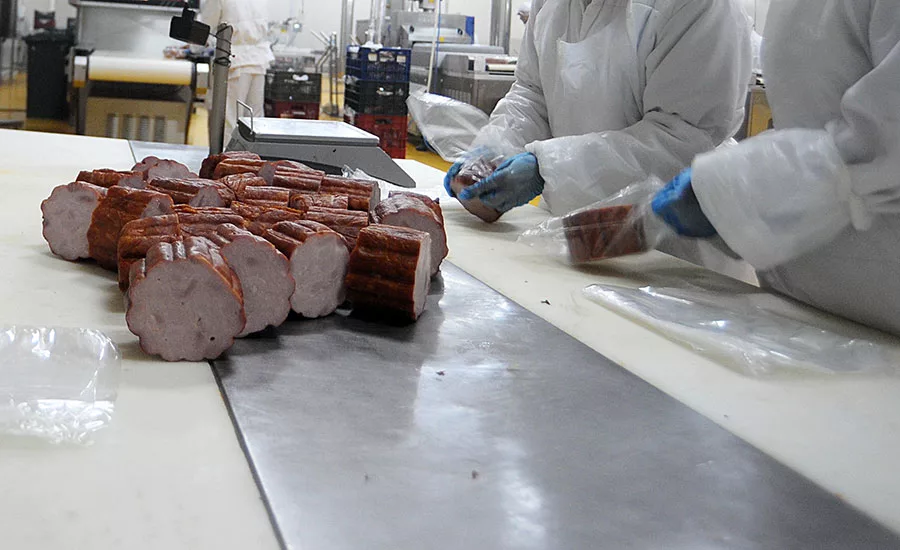
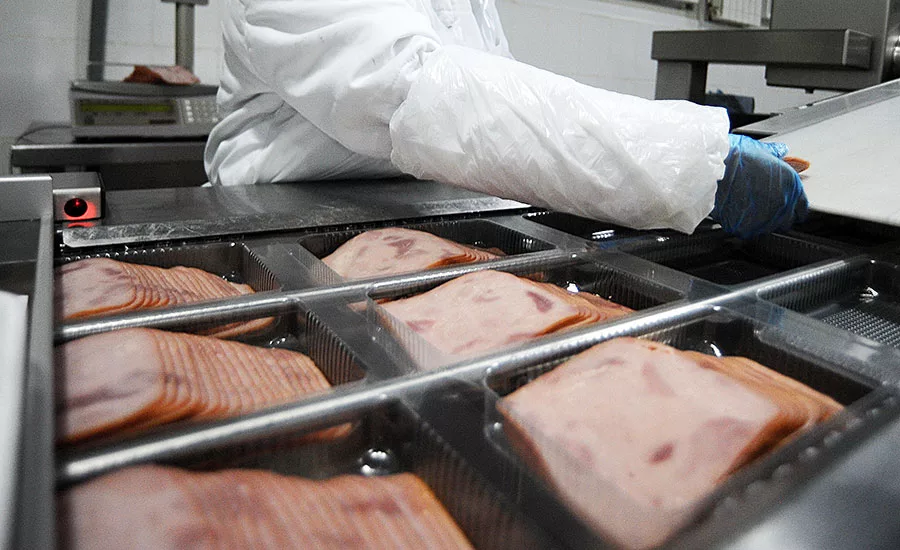
Food safety apparel is evolving.
With meat and poultry producers and supermarket meat department operators determined to protect proteins from pathogens and other contaminants, garment suppliers look to develop more effective designs.
The availability of potent protectors is just part of a safe food solution. Ensuring all workers leverage the apparel is crucial, but triggering compliance can be arduous, analysts say. It requires a strong education effort and the distribution of gear that is comfortable and functional.
Food safety apparel includes uniforms, aprons, gloves, helmets and footwear. In addition to protecting workers, the items are intended to help shield meat and poultry from bacteria and foreign objects. As a result, designs often include safeguards such as snaps instead of buttons and omit pockets.
“Plant operators have to give employees the right tools if they are to work effectively, and uniforms are tools,” says Gary Ades, president of G & L Consulting Group, a Bentonville, Ark.-based food and food safety consulting firm.
He notes employees are more likely to wear apparel that is comfortable, has a proper fit and functions properly in cold, hot and wet environments. Getting plant managers to allocate the necessary funds to purchase and regularly sanitize the proper garments, however, is often a challenge, he says.
“The operations staffers are always going to look at ways to save money and to take shortcuts, such as by requiring less equipment, so they must be shown the value in doing things properly and sometimes that is a hard sell,” Ades says.
That value includes avoiding product recalls, developing higher quality proteins with fewer rejections and averting the negative audits that can prevent potential customers from doing business with a company, he notes.
Knowledge is power
A company commitment to adopting the most effective food-safety apparel requires strong support from upper management, as well as a focus by plant supervisors and middle managers on creating a food safety culture in their facilities, says Jeannine Schweihofer, a Port Huron, Mich.-based meat quality educator for Michigan State University Extension.
Getting all workers to properly use the gear, meanwhile, is the result of “training, training, training, and retraining, retraining, retraining,” she says. Operators must pinpoint the most effective educational techniques for their specific employee base. Options include online modules with interactive formats and instruction from in-house supervisors and outside consultants, she says.
Ades adds that guidance also can come from co-workers who speak the employees’ native language as well as educational videos.
“The employees relate better to their fellow workers, and videos can demonstrate best practices and lead to an understanding of cross-contamination issues. It should tell them the whys and not just what to do,” he says.
Will Daniels, division president at Lake Forest Park, Wash.-based IEH Laboratories and Consulting Group, says having employees’ peers monitor their apparel and encourage compliance is essential.
“It’s the workers on the production floor who are running the food manufacturing show and if you can’t get them to help control requirements, it is likely going to be an uphill battle,” he says.
In addition, employees are most likely to adhere to guidelines if supervisors on the plant floors also are wearing the proper apparel, Schweihofer says. “Workers think, ‘Why should I have to wear the items if the manager isn’t?’ There cannot be individuals who are exempt from the rules,” she says.
Other factors that can cause employees to eschew apparel are a perception of overkill and having to spend personal time changing into gear before they clock in, Daniels says.
To address such issues, managers should hold regular food safety meetings with employees to discuss concerns, he says, noting that “without communication there is certainly going to be trouble.”
Because complacency in following rules also can be a problem, operators should routinely provide refresher courses to workers, which can be part of weekly or daily meetings to discuss good manufacturing practices, Ades says.
Accolades for performance
Rewarding employees for being in compliance also boosts cooperation, he says. The reward can be as simple as a meal.
“The reward doesn’t have to be expensive and it may just be to furnish pizza,” Ades says. “People like to be acknowledged for doing a good job.”
Daniels agrees: “Ninety-nine percent of the time the most effective reward is saying, ‘Hey, great job, I appreciate what you are doing and here is why.‘ As we become more obsessed with technology, operators are losing the art of communication. Verbally hearing that they are doing well goes a long way with workers.”
Employees most likely to present food safety risks include part-time and substitute workers who have not been properly instructed on the importance of apparel and, as a result, should initially work in a warehouse or other venue away from meat and poultry production lines, Ades says.
Third-party maintenance workers also are more prone to causing contamination, as “they often lack training or education on the proper clothing to do their jobs. The workers frequently don’t care if they wear clothing that is protective or not,” he says.
Even when wearing the proper apparel, however, workers still may trigger food safety incidents. To help prevent cross-contamination from the garments and personal protection equipment, operators can conduct random micro-tests that track pathogens on clean gloves and aprons. Employees also can wear different color smocks and head gear that designate specific plant areas that the individuals can access, Schweihofer says.
“We don’t want employees working in the cooked area and then going to the raw area and returning to the cooked area,” she says, pointing out operators also should focus on preventing contamination from footwear by supplying wash stations and requiring that work boots and shoes do not leave the facility. Workers can spread contaminants through contact with unsanitized apparel then transmitting the bacteria by touch, analysts say.
“Pathogens can survive on work apparel such as aprons, gloves and hats and then be transferred to other surfaces when hands contact apparel surfaces,” says Angela Fraser, assistant professor and food safety specialist in the Department of Food, Nutrition and Packaging Sciences at Clemson University, in Clemson, S.C.
A study child care providers Fraser conducted revealed the providers’ clothing was the most common surface touched over a 45-minute period.
Although the possibility of adding antimicrobials to apparel may eventually reduce that threat, she notes, “how long the antimicrobials last is unknown because cleaning and sanitizing procedures using chemicals or high temperatures can degrade the integrity of the coating.”
For the most effective food safety culture, Fraser says meat and poultry plant operators need to balance the utilization of single-use apparel, which can be detrimental to the environment, with multi-use garments that have to be continually sanitized.
It is important that operators continually educate themselves on the most appropriate food safety apparel, reports Nicole Keresztes-James, technical scheme manager of food safety management, and Elaine Vanier, animal welfare and animal feed program lead at NSF International, an Ann Arbor, Mich.-based food safety auditing firm and standards developer.
That includes weighing such options as non-absorbent items and disposable garments, including plastic aprons and coats that can be layered over other protective clothing, they say.
“However, repeated use of plastic disposable items is a concern for many organizations focused on costs and the environment,” the NSF International managers note. “As a result, traditional cloth uniforms and personal protective equipment are becoming more relevant again.”
Functionality is in fashion
Nevertheless, Keresztes-James and Vanier say food plant operators are going to demand continuous apparel improvements from their suppliers, and that cost-effective and high-quality disposable garments that are manufactured in an environmentally sustainable fashion will be in high demand.
In addition, suppliers will continue to enhance cloth uniforms, they say. Recent advances include the use of Teflon-like materials that provide greater stain resistance and can help prevent contaminants from absorbing into the cloth while also providing additional strength and endurance.
It also is important that companies use garments that can withstand multiple cleaning and sanitizing cycles, Keresztes-James and Vanier say.
“Worker clothing is guaranteed to get soiled and must be cleaned frequently to minimize cross contamination risk, including cross species contamination,” they report. “Food workers too are a prime source of product contamination, from their personal clothing to any uncovered body parts. Properly constructed garments that replace or cover personal clothing and do not fray or degrade also ensure that the food product is not exposed to loose material or microorganisms.”
While supplying workers with the most effective apparel is crucial for enhancing food safety in meat and poultry plants and retail outlets, ensuring employees understand the need to always wear the pertinent garments will remain an ongoing issue, analysts say.
“Training workers to use the food safety apparel from the beginning will cause fewer problems than if you try to fix bad habits,” Ades says. “And it is really simple: detail what can be done to avoid cross contamination. It is just a question of how operators execute that.”
Daniels says workers will deviate from apparel requirements if they can justify in their minds there is a better way to do things.
“Education is where you start, and that includes providing examples that tie personally back to the workers, such as the need to avoid making people sick from contamination, which can include their own families,” he says.
Plant operators, Daniels says, will get the behavior they tolerate from employees.
“It eventually becomes the norm when you allow workers to bend the rules,” he says. “And when that happens over time, operators will wake up one day and realize that what is occurring in their plants is far from their expectations.” NP
Looking for a reprint of this article?
From high-res PDFs to custom plaques, order your copy today!