How thermal insulation affects safety, sanitation and asset reliability in meat and poultry plants
Reassessing legacy approaches, and remaining open to newer technologies, can help processors align their thermal insulation practices with modern operational demands.
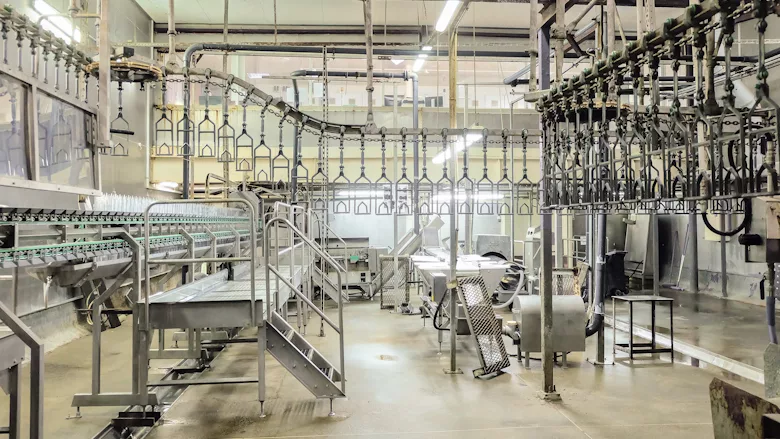
Maintaining safe, efficient and sanitary operations is a constant challenge in meat and poultry processing facilities. From scalders and cookers to chillers and refrigeration lines, processors operate equipment across extreme temperature ranges – often within the same production area. Add frequent washdowns, aggressive sanitation chemicals and high humidity, and the demands placed on thermal insulation systems become even more complex.
For decades, traditional jacketed insulation has been the default approach for controlling surface temperatures and limiting energy loss. However, as processors face increased pressure to improve worker safety, extend asset life and reduce unplanned downtime, many are taking a closer look at whether legacy insulation systems still align with today’s operational realities.
Increasingly, thermal management is being evaluated not just as an energy consideration, but as a factor that directly affects food safety, maintenance planning and total cost of ownership.
The operational challenges of traditional insulation
Industrial insulation plays a critical role in protecting employees and maintaining process stability. In meat and poultry plants, however, traditional insulation systems often introduce challenges that are magnified by sanitation requirements and production intensity.
- Corrosion under insulation in washdown environments
One of the most persistent risks associated with conventional insulation is corrosion under insulation (CUI). When moisture penetrates insulation systems and becomes trapped against metal surfaces, corrosion can progress undetected for long periods.
Meat and poultry facilities are especially susceptible due to daily (or even multiple-times-per-day) washdowns, as well as exposure to sanitizers and temperature fluctuations. Over time, moisture intrusion can compromise piping and equipment, leading to leaks, failures or emergency repairs. Identifying CUI often requires removing insulation, which is labor-intensive and may necessitate downtime in production areas that are otherwise operating as scheduled.
- Worker safety risks near hot and cold equipment
High-temperature equipment such as cookers, smokehouses, boilers and hot water piping present burn hazards for employees working in close proximity. Surface temperature control is essential to reducing injury risk and regulatory exposure.
At the opposite end of the spectrum, cold surfaces associated with refrigeration, blast freezers and chilled water systems can create condensation. In protein processing environments where floors are already wet from sanitation, condensation increases the risk of slips and falls and can contribute to microbial growth if not properly managed.
Traditional jacketed insulation systems can help mitigate these risks, but damage, gaps or degradation over time may reduce their effectiveness – especially in areas subject to frequent cleaning or mechanical impact.
- Maintenance burden and energy performance degradation
Insulation materials can degrade as they absorb moisture or experience repeated thermal cycling. As performance declines, heat loss increases, requiring more energy to maintain process temperatures. In facilities operating on tight margins, even incremental efficiency losses can add up over time.
Additionally, insulation maintenance often involves removal and reinstallation, increasing labor costs and extending maintenance windows. For meat and poultry processors with limited downtime between production runs, these activities can disrupt schedules and strain maintenance resources.
Alternative approaches to traditional insulation
In response to these challenges, some processors are exploring alternative ways to manage surface temperatures, particularly in areas where traditional insulation has proven difficult to maintain.
One approach gaining attention is the use of thermal insulative coatings (TICs). Unlike traditional insulation systems, TICs are high-performance coatings that are applied directly to the surface of piping, forming a continuous coating that provides thermal resistance without jacketing or removable layers.
Potential advantages in meat and poultry applications
- Reduced risk of hidden corrosion
Because TICs bond directly to the substrate, they eliminate the voids where moisture can become trapped. Without insulation layers to absorb water, the conditions that contribute to CUI are significantly reduced.
For meat and poultry plants with frequent sanitation cycles, this direct-bond approach can make it easier to identify surface conditions during routine walkthroughs, rather than relying on periodic insulation removal to assess asset health.
- Improved surface temperature control and operational consistency
TICs can be engineered to reduce external surface temperatures on hot equipment to levels that help mitigate burn risk. Unlike jacketed insulation systems that may shift or deteriorate, coatings cure into a uniform layer that remains in place throughout their service life.
On cold equipment, coatings can also help limit condensation by reducing temperature differentials between equipment surfaces and ambient air. This can be particularly beneficial in high-humidity processing areas where condensation contributes to slippery floors and sanitation challenges.
Additionally, by limiting heat and cold transfer, TICs can support stable process temperatures and reduce energy loss. Unlike traditional insulation materials that may lose performance as they degrade or absorb moisture, TICs are designed to maintain consistent thermal properties over time. While energy savings vary by application, consistency and reliability are often primary drivers for processors evaluating alternative thermal management strategies.
- Simplified inspection and maintenance
Visual inspection is a key advantage cited by facilities using TICs. Because the coated surface remains exposed, maintenance teams can quickly identify damage, corrosion or wear without removing insulation. For facility managers focused on predictive maintenance and asset reliability, this visibility can support more proactive planning and reduce the likelihood of surprise failures.
Evaluating the right fit for poultry processing Environments
In areas where sanitation exposure, inspection challenges or repeated insulation repairs create ongoing issues, coatings-based approaches may offer a complementary option. Evaluating thermal insulative strategies alongside safety, sanitation and maintenance goals allows processors to make more informed decisions about where alternative solutions may provide value.
Looking ahead
As meat and poultry processors face rising expectations around worker safety, uptime and asset longevity, thermal insulation is becoming a more strategic consideration. Beyond energy efficiency, the ability to reduce corrosion risk, simplify inspections and support safer working conditions is influencing how facilities think about insulation.
Reassessing legacy approaches, and remaining open to newer technologies, can help processors align their thermal insulation practices with modern operational demands while supporting long-term reliability.
Looking for a reprint of this article?
From high-res PDFs to custom plaques, order your copy today!