Provisioner logo
Provisioner logo
search
cart
facebook twitter linkedin youtube
  • Sign In
  • Create Account
  • Sign Out
  • My Account
Provisioner logo
Provisioner logo
  • NEWS
    • Industry News
    • Supplier News
    • Case Studies
    • Recalls
    • Regulations
    • New Consumer Products
  • EXCLUSIVES
    • Newsletters
    • Source Book
    • Sponsored Insights
    • Events
    • Webinars
    • Classifieds
    • White Papers
    • Provisioner Store
    • Market Research
  • MEAT PROCESSING
    • SUSTAINABILITY
    • Processing
    • Packaging
    • Ingredients
    • Formulation
    • Food Safety
    • Special Reports
    • Commentary
  • PROFILES
    • Processor Profiles
    • Processor of the Year
    • Top 100 Processors
  • MEDIA
    • Videos
    • Podcasts
  • DIRECTORY
  • MIHOF
  • INDEPENDENT PROCESSOR
  • EMAG
    • eMagazine
    • ARCHIVE ISSUES
    • Contact
    • Advertise
  • JOIN!
Meat and Poultry ProcessingFood SafetyIndependent Processor

Solving cooking deviations for processors

Deviations resulting from failure to meet lethality or stabilization critical control points
By Molly Linden
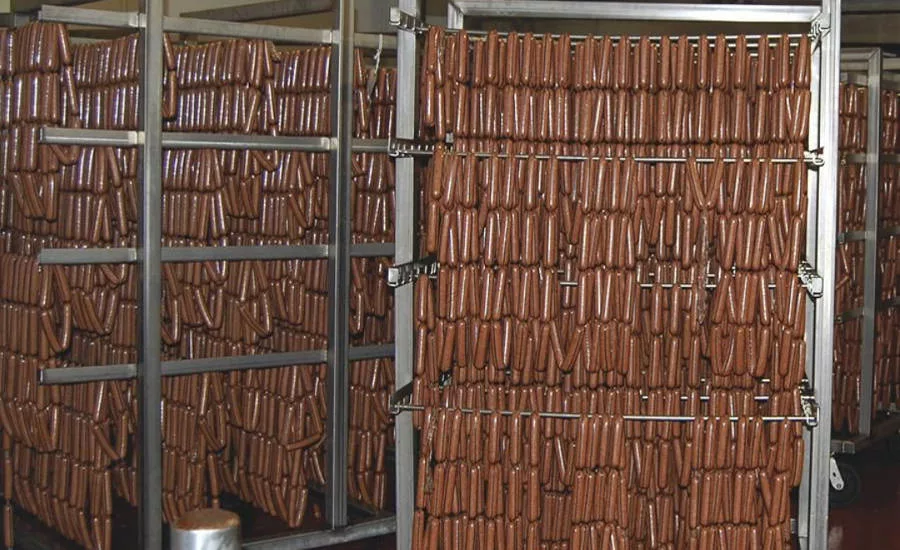
Sausages Cooling

When cooked and cooled properly, a product will contain less than 1 log10 colony forming units (CFU) of potentially pathogenic bacteria
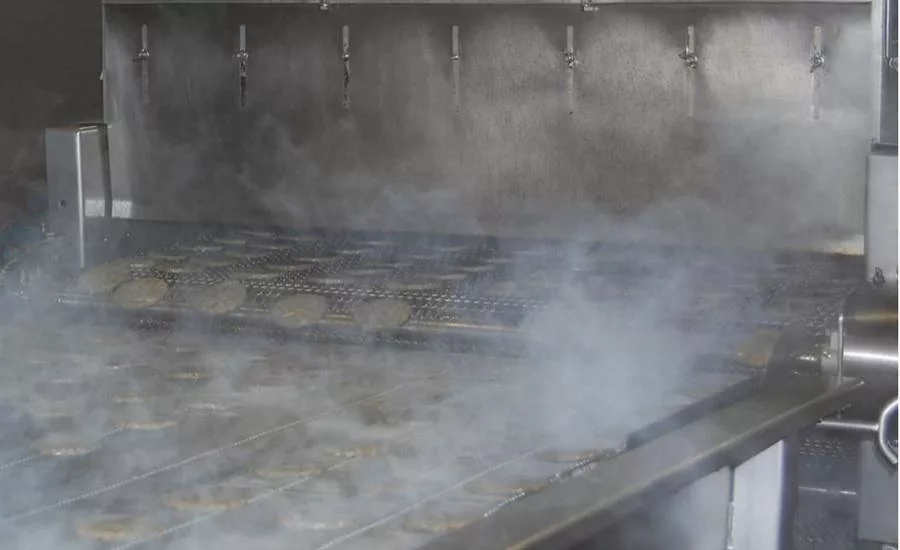
Burger Patties on Conveyor
Keeping equipment up to date and well maintained lowers the chance that a system malfunction will occur and cause a deviation.
Sausages Cooling
Burger Patties on Conveyor
February 28, 2018

The best-laid plans of mice and men often go awry. This can be the case for even the most experienced processor when lethality or stabilization critical control points are not met. The deviations caused by this failure to meet CCPs can range in severity but will undoubtedly result in a recall if product is passed into commerce before the deviation can be addressed. By learning not only how to limit the number of deviations, but also by preparing for one if it occurs, processors are more able to respond to the threats caused by these deviations.

The most common deviations described here are those that fail to meet the lethality or stabilization parameters outlined by the FSIS Guideline of Appendix A and B. Although these parameters may vary for different products, the overall intent of these guidelines is to limit the number of bacteria growing within a product. When cooked and cooled properly, a product will contain less than 1 log10 colony forming units (CFU) of potentially pathogenic bacteria. For example, the cooling guidelines of Appendix B, also called the Stabilization Guideline, aim to limit the germination of any Clostridium spores that might have survived the cooking process. For this reason, Appendix B has strict time limits for temperature ranges, ensuring that a product will cool faster than the time it takes for bacteria to become dangerous. When a product is cooled more slowly than Appendix B allows, the likelihood of bacterial growth and toxin production increases, and a deviation has occurred.

The occurrence of a deviation from Appendix A is less cut-and-dried. Although the guideline warns against cooking a product between the temperatures of 50° and 130° Fahrenheit for longer than 6 hours, it does not expressly prohibit it. This warning is grounded in the scientific evidence that exposing a bacterium, such as Staphylococcus aureus, to high temperatures for extended periods of time will cause that organism to become heat resistant. This heat resistance will increase the chances that the bacteria will survive lethal temperatures and go on to infect humans. Unlike other deviations, a product that contains heat-resistant bacteria will not benefit from being recooked and will most likely need to be discarded. Without clear time limits on rising cook temperatures, FSIS’s Appendix A has left producers to wonder exactly “How long is too long?’

If a processor suspects a deviation in either a lethality or stabilization critical control point, it is important to then assess how dangerous the deviation might have been. Although there are a number of tools that will assist in predicting bacterial growth, the USDA Agricultural Research Service supplies an online predictive software called the Pathogen Modeling Program (PMP) to help producers analyze the risk involved with a deviation. Through input of the times, temperatures, and other factors associated with the product, PMP can determine the amount of bacteria that was predicted to have grown under the specific parameters of the deviated product.

At predicted bacterial levels above 1 log10 CFU, a product is prohibited from entering commerce. At these levels, a product might still be able to be recooked to lethal temperatures, as long as toxin production in those bacteria is unlikely. Bacteria that form toxins often do not do so until at least 6 log10 CFU is grown, after which recooking will not destroy the toxin. Through the analysis of the deviated product, producers can best determine how to proceed, whether that is recooking the product, throwing it away, or sending samples to a lab for further analysis.

The most efficient way to decrease risk caused by deviations is to limit the chance of having a deviation in the first place. This can be done in a number of ways, and often simply involves following the practices outlined in a facility’s HACCP and SSOP plans. For example, by decreasing bacterial loads using safe handling practices on both raw product and food contact surfaces, producers are able to minimize the amount of bacteria on a product when it is cooked, resulting in a higher chance that all bacteria will be destroyed.

In addition, many deviations result simply from equipment failure. By keeping equipment such as smokehouses and temperature probes up to date and well maintained, the chance that a system malfunction will occur and cause a deviation is lowered.

One of the most integral parts of a well-run business is the ability to train staff to be aware of the challenges facing a facility. If operators are aware of the limitations posed by Appendix A and B, they are more likely to keep production consistent and spot deviations in time to decrease the harm caused. These, along with many other ways to reduce the number of deviations, have helped to make producers more aware of the threats faced when a lethality or stabilization CCP fails to be met.

KEYWORDS: cooking

Share This Story

Looking for a reprint of this article?
From high-res PDFs to custom plaques, order your copy today!
Molly Linden is a consultant at We R Food Safety! Visit www.werfoodsafety.com for more information.

Recommended Content

JOIN TODAY
to unlock your recommendations.

Already have an account? Sign In

  • Double Charburger

    Premiumization drives burger category

    Shoppers seek out premium meat offerings to fulfill...
    Special Reports
    By: Sammy Bredar
  • JJS Adult Pekin duck

    Poultry Report 2025: Convenience propels poultry at retail

    Despite continued economic pressures, the poultry...
    Meat and Poultry Industry News
    By: Sammy Bredar
You must login or register in order to post a comment.

Report Abusive Comment

Manage My Account
  • eMagazine Subscriptions
  • Manage My Preferences
  • Newsletters
  • Online Registration
  • Subscription Customer Service
  • Connect with The National Provisioner

More Videos

Sponsored Content

Sponsored Content is a special paid section where industry companies provide high quality, objective, non-commercial content around topics of interest to the The National Provisioner audience. All Sponsored Content is supplied by the advertising company and any opinions expressed in this article are those of the author and not necessarily reflect the views of The National Provisioner or its parent company, BNP Media. Interested in participating in our Sponsored Content section? Contact your local rep!

close
  • A smiling man carrying a grocery basket is reaching down to pick up a package of meat in a grocery store.
    Sponsored byPIC

    The Green Light: New Data Shows 12-to-1 Support for Pork from PRRS-Resistant Pigs

  • Close up of a grocery cart full of groceries, a cropped image of a couple pushing the cart and a blurred background of the vegetable aisle.
    Sponsored byPIC

    New Market Research Finds Consumers in Eight Key Pork Markets Are Likely to Purchase Pork from Gene-Edited Pigs

  • Close up of a young pig with a blurred background.
    Sponsored byPIC

    New Research Forecasts Significant Economic and Market Impacts with PRRS-Resistant Pig Adoption

Popular Stories

Spam Dog

Hormel rolls out Spam hot dog for foodservice applications

Various new Primal snack sticks on a table amongst pencils, apples, a pair of glasses, lunch bags and a water bottle.

Protein demand drives snacking occasions

Several cuts of beef, pork and chicken on a wooden board, cast iron pan and salt.

Validated thermal lethality data and a new tool for ensuring safety of RTE meats

2026 Top 100 Meat & Poultry Processors Report

Events

June 11, 2026

From Fresh to Frozen in 3 Minutes Flat: Unlocking the Secrets to Temperature Control

Join Tony Vacaro, Foods Industry Manager, and Emile Klein, Foods Market Strategy Manager at Air Products and Chemicals, Inc. , as they tackle key questions surrounding heat removal in food processing. 

January 1, 2030

Webinar Sponsorship Information

For webinar sponsorship information, visit www.bnpevents.com/webinars or email webinars@bnpmedia.com.

View All Submit An Event

Products

Food Crime: An Introduction to Deviance in the Food Industry

Food Crime: An Introduction to Deviance in the Food Industry

See More Products
From Fresh to Frozen in 3 Minutes Flat: Unlocking the Secrets to Temperature Control Webinar Sponsored by Air Products

Related Articles

  • AAMP logo

    AAMP hosts cooking and cooling deviations webinar

    See More
  • AAMP logo

    AAMP hosts cooking and cooling deviations webinar: part two

    See More
  • AAMP Membership

    Representation for processors during challenging regulatory times

    See More

Related Products

See More Products
  • advanced tech.jpg

    Advanced Technologies for Meat Processing

  • meat.jpg

    Non-Thermal Processing Technologies for the Meat, Fish, and Poultry Industries

  • food safety.jpg

    Food Safety in the Seafood Industry: A Practical Guide for ISO 22000 and FSSC 22000 Implementation

See More Products

Related Directories

  • Cook King Inc.

    Cook King Inc. is a unique and innovative designer and manufacturer of a superior line of food processing equipment. Over 30 years of experience in manufacturing Broiler/Ovens, Searing Unit, Free Standing Branders, Fryer Systems, Conveyor Systems and additional ancillary equipment has kept us on the leading edge of technology. Our unique patented systems and advanced manufacturing technology allows us to offer premium products at the lowest possible price.
×

Stay ahead of the curve. Unlock a dose of cutting-edge insights.

Receive our premium content directly to your inbox.

SIGN-UP TODAY
  • RESOURCES
    • Advertise
    • Contact Us
    • Directories
    • Store
    • Want More
  • SIGN UP TODAY
    • Create Account
    • eMagazine
    • Newsletter
    • Customer Service
    • Manage Preferences
  • SERVICES
    • Marketing Services
    • Reprints
    • Market Research
    • List Rental
    • Survey/Respondent Access
  • STAY CONNECTED
    • LinkedIn
    • Facebook
    • YouTube
    • X (Twitter)
  • PRIVACY
    • PRIVACY POLICY
    • TERMS & CONDITIONS
    • DO NOT SELL MY PERSONAL INFORMATION
    • PRIVACY REQUEST
    • ACCESSIBILITY

Copyright ©2026. All Rights Reserved BNP Media, Inc. and BNP Media II, LLC.

Design, CMS, Hosting & Web Development :: ePublishing