Provisioner logo
Provisioner logo
search
cart
facebook twitter linkedin youtube
  • Sign In
  • Create Account
  • Sign Out
  • My Account
Provisioner logo
Provisioner logo
  • NEWS
    • Industry News
    • Supplier News
    • Case Studies
    • Recalls
    • Regulations
    • New Consumer Products
  • EXCLUSIVES
    • Newsletters
    • Source Book
    • Sponsored Insights
    • Events
    • Webinars
    • Classifieds
    • White Papers
    • Provisioner Store
    • Market Research
  • MEAT PROCESSING
    • SUSTAINABILITY
    • Processing
    • Packaging
    • Ingredients
    • Formulation
    • Food Safety
    • Special Reports
    • Commentary
  • PROFILES
    • Processor Profiles
    • Processor of the Year
    • Top 100 Processors
  • MEDIA
    • Videos
    • Podcasts
  • DIRECTORY
  • MIHOF
  • INDEPENDENT PROCESSOR
  • EMAG
    • eMagazine
    • ARCHIVE ISSUES
    • Contact
    • Advertise
  • JOIN!
ChickenTurkeyExpert Commentary

Farm to Plate

Using novelty to discourage poultry aggression
By Brooke Bartz
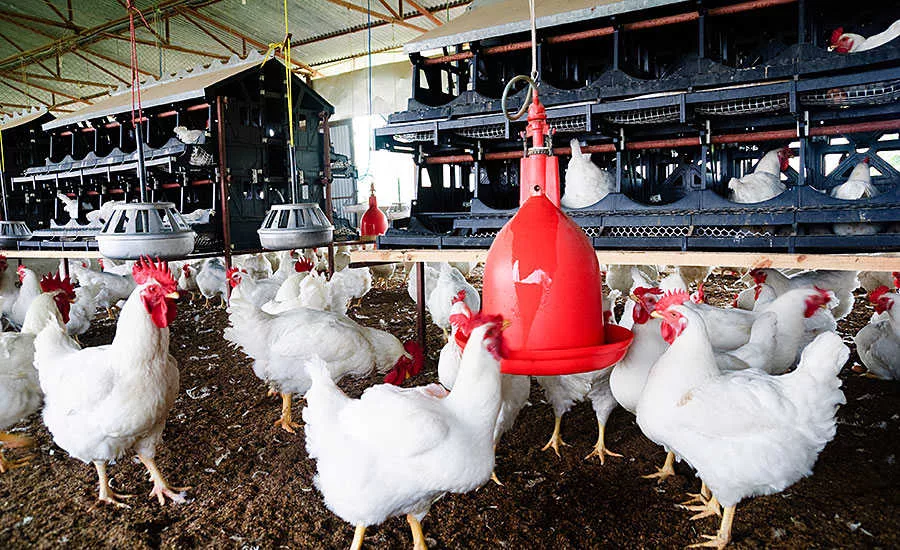
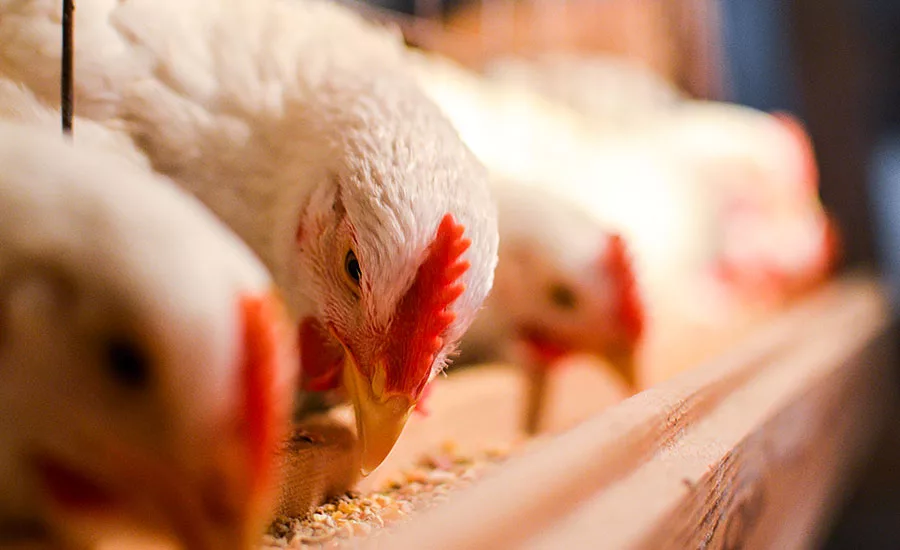
Chickens Eating at Feeding Area
Chickens Walking Around Feeders and Waterers
Chickens Eating at Feeding Area
Chickens Walking Around Feeders and Waterers
September 16, 2019

As one of my earliest memories as a child, I remember going to Six Flags Great America, where I rode my first roller coaster. This coaster had back-to-back loops and I remember having that excited and frightened butterflies-in-my-stomach feeling as we zipped around the theme park.

Thrill-seeking and novelty is not specific to humans. In fact, many animals also display this curiosity toward unknown objects. In animal behavior, this concept is called the paradox of novelty. Meaning that although something is frightful, at the same time it is also intriguing, so the animal may pursue it.

In large animals, this same concept of thrill-seeking can be observed when placing an unopened bale of hay in a pen of pigs. The pigs will circle the bale, eventually open the contents and spread them all over the place, shredding the straw in the process and rolling around in the new bedding. Cattle may be hesitant about a plastic grocery bag whipping through a pasture at the mercy of the blowing wind but be so mesmerized by it that they will follow it until it leaves the paddock. This same paradox of fright and excite can also be observed in poultry species, although their behaviors to objects are very different than those observed in large animals. Birds have been imprinted with a natural behavior of pecking. This behavior is primarily used to aid in the parent’s regurgitation of nutrients in the wild. Research has shown that in some cases, it is color dependent. Others, it may be shape of the object or movement.

When walking through a commercial poultry operation amongst the birds, it reminds me of walking through a mall. There are more interactions than you can count between you and the surrounding shoppers, people you barely glance at. But we learn a lot from each other in passing based on our non-verbal social cues such as stature, walking pace or our facial cues. When trying to squeeze through a single door into the sale section at the same time as another shopper, do you apologize and let them get the last sale item, or do you glance and push yourself through the door harder to get there first?

These same interactions occur at the poultry level, with a submissive turkey allowing a more dominant turkey to eat from the feeder first or a dominant turkey giving a peck to the submissive to get them to move away from the feeding area. If two aggressive turkeys feel like fighting over who’s in charge, they may do so for several minutes by pecking at each other and having what appears to be a sibling’s squabble. One of the most powerful ways to develop an understanding of the paradox in poultry, however, is management-related handling since we, as animal caretakers, can also alter these behaviors.

Handling birds is necessary to assess the health status of the flock, to obtain accurate body composition and to determine the welfare of the animal by observing its features. In research settings, there are several types of behavioral tests that are completed to determine how to understand bird interactions with each other and how they perceive others, such as their caretakers. For instance, an emergence test can be conducted to determine how courageous a bird might be. In this test, a bird is placed in a small, enclosed box with a sliding door on it. The door is opened and the amount of time from when the door is opened until the bird emerges from the box is measured. On average, the first time the bird is exposed to this, they may be reluctant to emerge which has been historically recorded as fear.

However, if the bird was exposed to this procedure several times, after which they received a treat, the amount of time the bird would stay in the box would decrease. Another example of this repeated exposure to a stimulus is when a tom turkey is collected for artificial insemination purposes. The birds become accustom to the same individual for collection, so much, that in some cases, they may only produce for one individual caretaker. Environment has also been shown to effect bird behavior such as stocking density, day length or type of light. Aggression can be induced by several factors and it is part of my job to determine what causes these aggressive acts to occur.

There has been on-going research to determine if adding a novel object to pens will deter these animals from conducting aggressive acts toward each another and toward the new object. Research is still being completed to determine how a novel object can alter bird behavior because it can be influenced by several factors.

I strongly encourage the addition of novelty and enrichment into commercial poultry settings because these factors will allow birds to express normal pecking behaviors without increasing aggressive pecks toward one another. NP


KEYWORDS: animal care farm to plate

Share This Story

Looking for a reprint of this article?
From high-res PDFs to custom plaques, order your copy today!


Brooke bartz headshot

Brooke Bartz is a graduate student obtaining her PhD of Poultry Science degree at North Carolina State University. For more information, contact her at brookebartz13@gmail.com.

Recommended Content

JOIN TODAY
to unlock your recommendations.

Already have an account? Sign In

  • Double Charburger

    Premiumization drives burger category

    Shoppers seek out premium meat offerings to fulfill...
    Beef
    By: Sammy Bredar
  • JJS Adult Pekin duck

    Poultry Report 2025: Convenience propels poultry at retail

    Despite continued economic pressures, the poultry...
    Meat and Poultry Industry News
    By: Sammy Bredar
You must login or register in order to post a comment.

Report Abusive Comment

Manage My Account
  • eMagazine Subscriptions
  • Manage My Preferences
  • Newsletters
  • Online Registration
  • Subscription Customer Service
  • Connect with The National Provisioner

More Videos

Sponsored Content

Sponsored Content is a special paid section where industry companies provide high quality, objective, non-commercial content around topics of interest to the The National Provisioner audience. All Sponsored Content is supplied by the advertising company and any opinions expressed in this article are those of the author and not necessarily reflect the views of The National Provisioner or its parent company, BNP Media. Interested in participating in our Sponsored Content section? Contact your local rep!

close
  • A smiling man carrying a grocery basket is reaching down to pick up a package of meat in a grocery store.
    Sponsored byPIC

    The Green Light: New Data Shows 12-to-1 Support for Pork from PRRS-Resistant Pigs

  • Close up of a grocery cart full of groceries, a cropped image of a couple pushing the cart and a blurred background of the vegetable aisle.
    Sponsored byPIC

    New Market Research Finds Consumers in Eight Key Pork Markets Are Likely to Purchase Pork from Gene-Edited Pigs

  • Close up of a young pig with a blurred background.
    Sponsored byPIC

    New Research Forecasts Significant Economic and Market Impacts with PRRS-Resistant Pig Adoption

Popular Stories

Spam Dog

Hormel rolls out Spam hot dog for foodservice applications

Various new Primal snack sticks on a table amongst pencils, apples, a pair of glasses, lunch bags and a water bottle.

Protein demand drives snacking occasions

Several cuts of beef, pork and chicken on a wooden board, cast iron pan and salt.

Validated thermal lethality data and a new tool for ensuring safety of RTE meats

2026 Top 100 Meat & Poultry Processors Report

Events

June 11, 2026

From Fresh to Frozen in 3 Minutes Flat: Unlocking the Secrets to Temperature Control

Join Tony Vacaro, Foods Industry Manager, and Emile Klein, Foods Market Strategy Manager at Air Products and Chemicals, Inc. , as they tackle key questions surrounding heat removal in food processing. 

January 1, 2030

Webinar Sponsorship Information

For webinar sponsorship information, visit www.bnpevents.com/webinars or email webinars@bnpmedia.com.

View All Submit An Event

Products

Food Crime: An Introduction to Deviance in the Food Industry

Food Crime: An Introduction to Deviance in the Food Industry

See More Products
From Fresh to Frozen in 3 Minutes Flat: Unlocking the Secrets to Temperature Control Webinar Sponsored by Air Products

Related Articles

  • A shopkeeper in an apron stands behind a deli counter displaying packaged bread, with shelves of jars and condiments lining the walls.

    Plant-based meat shifts from novelty to performance

    See More
  • Farm to Plate: Consider a bird’s-eye view

    See More
  • Chickens Inside Poultry Barn

    Poultry leg deformities: More than a 'growing' problem

    See More

Related Products

See More Products
  • Handbook of Poultry Science and Technology, Volume 1, Primary Processing

  • Handbook of Poultry Science and Technology, Two-Volume Set

  • Handbook of Meat, Poultry and Seafood Quality, second edition

See More Products

Events

View AllSubmit An Event
  • June 1, 2009

    Food Plant of the Future: Using Design to Increase Productivity and Drive Down Unit Costs

    On demand The need for food and beverage processors to drive down unit costs never ends. How can new/retrofitted plants be designed to optimize productivity?
  • July 10, 2025

    Is Your Food Safety Plan Up to Date? Insights & Innovations Shaping Meat and Poultry Safety in 2025

    On-Demand Whether you're a processor, producer, or industry stakeholder, this is your chance to gain insider knowledge that will elevate your food safety practices from compliant to exemplary.
View AllSubmit An Event

Related Directories

  • U.S. Poultry & Egg Assn.

    U.S. Poultry & Egg Association is the world’s largest poultry association, representing the entire industry as an “All Feather” Association. Membership includes producers and processors of broilers, turkeys, ducks, eggs, breeding stock, and allied companies. USPOULTRY is also the managing partner for the International Production & Processing Expo (IPPE).
×

Stay ahead of the curve. Unlock a dose of cutting-edge insights.

Receive our premium content directly to your inbox.

SIGN-UP TODAY
  • RESOURCES
    • Advertise
    • Contact Us
    • Directories
    • Store
    • Want More
  • SIGN UP TODAY
    • Create Account
    • eMagazine
    • Newsletter
    • Customer Service
    • Manage Preferences
  • SERVICES
    • Marketing Services
    • Reprints
    • Market Research
    • List Rental
    • Survey/Respondent Access
  • STAY CONNECTED
    • LinkedIn
    • Facebook
    • YouTube
    • X (Twitter)
  • PRIVACY
    • PRIVACY POLICY
    • TERMS & CONDITIONS
    • DO NOT SELL MY PERSONAL INFORMATION
    • PRIVACY REQUEST
    • ACCESSIBILITY

Copyright ©2026. All Rights Reserved BNP Media, Inc. and BNP Media II, LLC.

Design, CMS, Hosting & Web Development :: ePublishing