Achieving water authority compliance with automated wastewater treatment for food processing
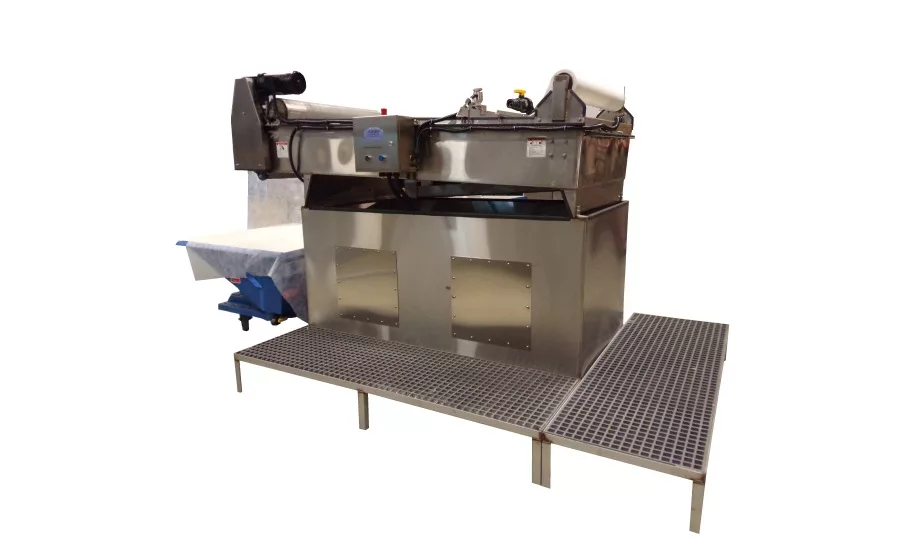
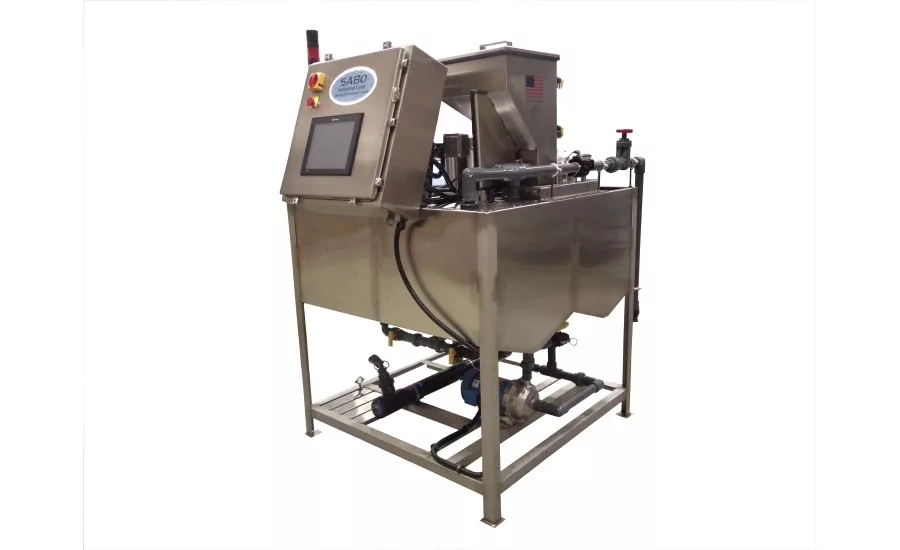

Treated industrial wastewater: after.
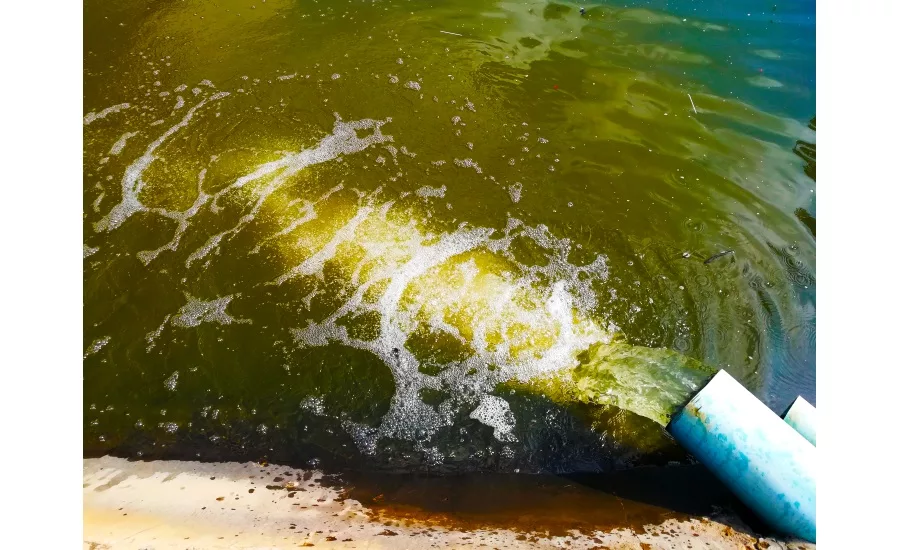
Untreated wastewater effluent pipe: before.
Food processors in the U.S. must meet wastewater effluent requirements for the EPA as well as National Pollutant Discharge Elimination System (NPDES) permits and state or municipal regulation. Under the Clean Water Act, the EPA has identified 65 pollutants and classes of pollutants as “toxic pollutants,” of which 126 specific substances have been designated “priority” toxic pollutants. Failing compliance can result in severe fines that quickly escalate.
Wastewater generated from food processing operations, however, can contain large amounts of suspended and dissolved solids, inorganics, nitrogenous organics, organic carbon, as well as nutrients. It can also have high biochemical and chemical oxygen demands. Consequently, such wastewater needs to be treated so it will not impair receiving waters or disrupt publicly owned treatment works (POTWs) when discharged to sewers.
The challenge is complicated by the wide range of food products processed, which can range from grains, sugar, confections, dairy, fruits and vegetables, fats and oils, meat and poultry, as well as beverages and brewing. So different types of wastewater contamination can require various strategies to remove the contamination.
For many food processors, this can require installing a wastewater treatment system that effectively separates the contaminants from the water so it can be legally discharged.
However, traditional wastewater treatment systems can be complex, often requiring multiple steps, a variety of chemicals and a considerable labor. Even when the process is supposedly automated, too often a technician must still monitor the equipment in person. This usually requires oversight of mixing and separation, adding of chemicals, and other tasks required to keep the process moving. Even then, the water produced can still fall below mandated requirements.
Although paying to have food processing wastewater hauled away is also an option, it is extraordinarily expensive. In contrast, it is much more cost effective to treat the wastewater at its source, so treated effluent can be legally discharged. In addition, when treated sludge can pass a TCLP (Toxicity Characteristics Leaching Procedure) test it can be disposed of as non-hazardous waste in a local landfill.
Fortunately, complying with EPA and local wastewater regulation has become much easier with more fully automated, wastewater treatment systems. Such systems not only reliably meet regulatory wastewater requirements, but also significantly reduce the cost of treatment, labor and disposal when the proper Cleartreat separating agents are also used.
(sub) Cost-effective, automated wastewater treatment
In contrast to labor-intensive multiple step processes, automated wastewater treatment can help to streamline production, usually with a one-step process while lowering costs at food processing sites.
An automated wastewater treatment system can eliminate the need to monitor equipment in person while complying with EPA and locally mandated requirements. Such automated systems separate suspended solids, emulsified oil and heavy metals, and encapsulate the contaminants, producing an easily de-waterable sludge in minutes, according to food processing industry consultants at Sabo Industrial Corp., a New York-based manufacturer, distributor and integrator of industrial waste treatment equipment and solutions, including batch and fully automated systems, Cleartreat separating agents, bag filters, and accessories.
The water is typically then separated using a de-watering table or bag filters before it is discharged onto land, into sewer systems, or further filtered for re-use as process water. Other options for de-watering include using a filter press or rotary drum vacuum. The resulting solids are non-leachable and are considered non-hazardous, so will pass all required testing.
These systems are available as manual batch processors, semi-automatic, automatic and can be designed as a closed loop system for water reuse or provide a legally dischargeable effluent. A new, fully customized system is not always required. In many cases, it can be faster and more cost effective to add to or modify a facility’s current wastewater treatment systems when this is feasible.
However, because every wastewater stream is unique to its application, each wastewater treatment solution must be specifically tailored. The first step in evaluating the potential cost savings and effectiveness of a new system is to sample the wastewater to determine its chemical make-up followed by a full review of local water authority requirements, say food processing industry consultants at Sabo Industrial.
The volume of wastewater that will be treated is also analyzed, to determine if a batch unit or flow-through system is required. Other considerations include the size restrictions, so the system fits within the food processing facility’s available footprint.
Separating agents
Despite all the advances in automating wastewater treatment equipment any such system requires effective separating agents which agglomerate with the solids in the wastewater so the solids can be safely and effectively separated out.
Because of the importance of separating agents for wastewater treatment, Sabo Industrial uses a special type of bentonite clay in a line of wastewater treatment chemicals called ClearTreat. This line of wastewater treatment chemicals is formulated to promote flocculation, agglomeration and suspended solids removal as well as break oil and water emulsion and provide heavy metals removal.
Bentonite has a large specific surface area with a net negative charge that makes it a particularly effective adsorbent and ion exchange for wastewater treatment applications to remove organic pollutants, nutrients, heavy metals, etc. As such, bentonite is essential to effectively encapsulate the materials. This can usually be achieved in one-step treatment, which lowers process and disposal costs.
In contrast, polymer-based products do not encapsulate the toxins, so systems that use that type of separating agent are more prone to having waste products leach back out over time or upon further agitation.
Today’s automated systems along with Cleartreat separating agents can provide food processors with easy, cost-effective wastewater treatment so they remain compliant with the EPA as well as state and local ordinances. Although there is a cost to these systems, they do not require much attention and can easily be more economical than paying fines or hauling.
For more information, call 845-562-5751; Fax: 845-562-5909; email: info@saboindustrial.com; visit http://saboindustrial.com; or write to Sabo Industrial at 2 Little Britain Road, Newburgh, NY 12550.
Looking for a reprint of this article?
From high-res PDFs to custom plaques, order your copy today!