Provisioner logo
Provisioner logo
search
cart
facebook twitter linkedin youtube
  • Sign In
  • Create Account
  • Sign Out
  • My Account
Provisioner logo
Provisioner logo
  • NEWS
    • Industry News
    • Supplier News
    • Case Studies
    • Recalls
    • Regulations
    • New Consumer Products
  • EXCLUSIVES
    • Newsletters
    • Source Book
    • Sponsored Insights
    • Events
    • Webinars
    • Classifieds
    • White Papers
    • Provisioner Store
    • Market Research
  • MEAT PROCESSING
    • SUSTAINABILITY
    • Processing
    • Packaging
    • Ingredients
    • Formulation
    • Food Safety
    • Special Reports
    • Commentary
  • PROFILES
    • Processor Profiles
    • Processor of the Year
    • Top 100 Processors
  • MEDIA
    • Videos
    • Podcasts
  • DIRECTORY
  • MIHOF
  • INDEPENDENT PROCESSOR
  • EMAG
    • eMagazine
    • ARCHIVE ISSUES
    • Contact
    • Advertise
  • JOIN!

Tumbling without brine inclusion: A new strategy for tenderizing beef?

Research suggests it could allow fresh beef steaks to reach desired tenderness in less time.
By Jacob Tuell, Yuan H. Brad Kim PhD
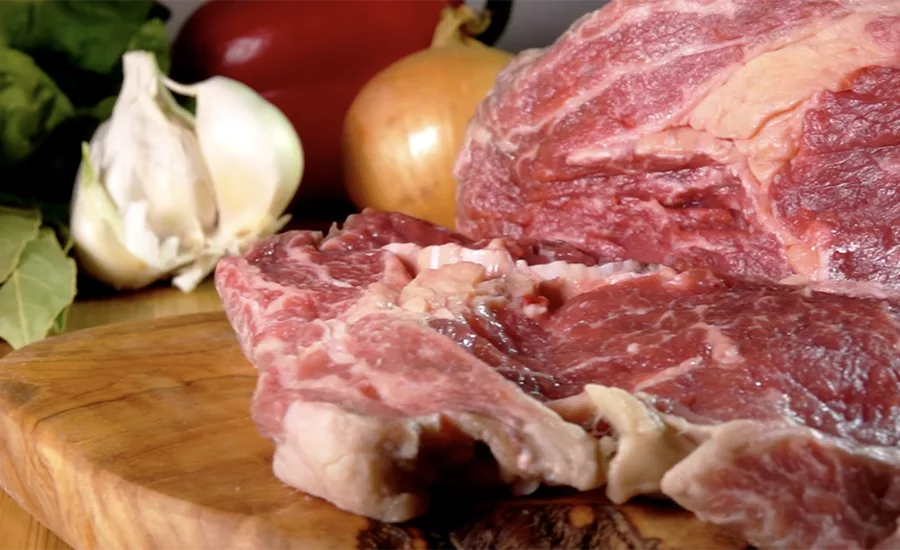
steak and vegetables
June 27, 2022

Tenderness of fresh beef is an area that has been studied extensively in meat science research. Recently, it has been assessed that if a steak is rated by a consumer to have acceptable tenderness, the likelihood of overall palatability being unacceptable would be only 10% (O’Quinn et al., 2018). Undoubtedly, the industry has made considerable progress in improving the tenderness of beef in the US, as documented by the National Beef Tenderness Surveys (Gonzalez & Phelps, 2018). However, considerable lengths of postmortem aging are often used to achieve this. For instance, the latest National Beef Tenderness Survey reported the mean post-fabrication aging time for strip loins would be 27.2 days (Martinez et al., 2017). Considering this, we began examining potential strategies that could allow fresh beef steaks to reach the same level of tenderness in a shorter time.

Taking inspiration from the meat processing industry, we examined if tumbling would have beneficial impacts on the quality attributes of fresh beef loins. Although tumbling is nearly universally applied alongside enhancement with a brine or marinade solution, we questioned if brine inclusion was truly a necessary component for fresh meat application. One previous study conducted by Morrow et al. (2019) suggested that it was. Beef flanks that were tumbled in the absence of a marinade did not have similar improvements in palatability compared to those tumbled with a marinade (Morrow et al., 2019). However, considering the flank is a sheet muscle with large muscle fibers and a high content of connective tissue, we proposed that tumbling alone could exert some positive effects on the quality attributes of beef loins. Additionally, we intended to examine if additional postmortem aging applied after the tumbling process would have added benefits, potentially showing synergism between physical disruptions and proteolytic degradation.
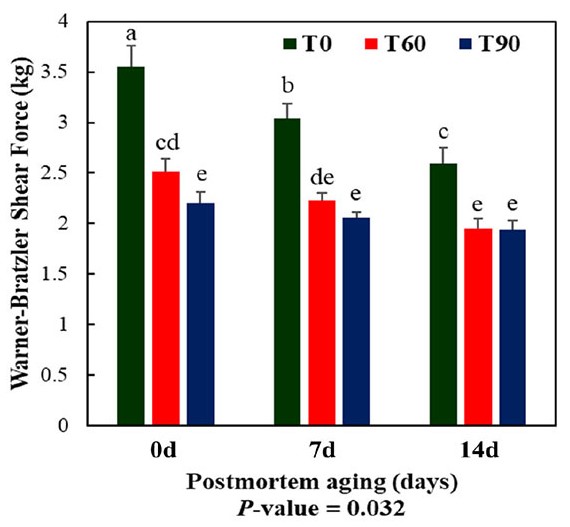
Figure 1. Warner-Bratzler shear force values of tumbled and aged beef loin steaks.

To accomplish this, we took beef loin muscles from nine USDA Select carcasses and divided each into three equal-length sections. Each section was then vacuum-packaged within two layers of 3-mil packaging to ensure the bag maintained its seal over the course of tumbling. Sections were then divided among our treatment groups: T0 (non-tumbled), T60 (tumbled for 60 min at 8.5 rpm), and T90 (tumbled for 90 min at 8.5 rpm). At the completion of tumbling, steaks were cut from each section to be further aged for an additional zero, seven or 14 days.

Tenderness was assessed by Warner-Bratzler shear force (WBSF) values. Immediately after the tumbling process, we observed a considerable decrease in WBSF in the T60 (29.0% decrease) and T90 (37.9% decrease) groups relative to the T0 controls. In fact, steaks from sections that were not tumbled took an additional 14 days of aging to reach a comparable WBSF level to what was achieved immediately after the tumbling process (Figure 1). To support these findings, we conducted several other assays related to beef tenderness. Tumbled loins had greater myofibrillar fragmentation index values, which was supported by obvious fracturing of the myofibrils when examined microscopically. Further, there was evidence to suggest that tumbling facilitates degradation of myofibrillar proteins during the aging process, shown by less abundant intact troponin-T.

Although there were obvious benefits to tenderness obtained through tumbling without brine inclusion, the method did have some drawbacks. Unsurprisingly, tumbled steaks lost significantly more moisture during the cooking process, which may be expected to negatively impact juiciness. However, since conducting this study (published in Meat and Muscle Biology; https://doi.org/10.22175/mmb.13044), we have assessed eating quality attributes through consumer panel. In our follow-up study (accepted for publication in Journal of Animal Science), consumers rated tumbled loins as having greater tenderness liking and overall liking compared to those that were not tumbled, with no negative impacts to juiciness or flavor.

Accordingly, tumbling without brine inclusion, combined with additional postmortem aging, could be an effective, novel strategy for improving beef palatability. While most loin steaks in the U.S. do reach acceptable levels of tenderness before reaching the consumer (Martinez et al., 2017), tumbling could potentially be used to achieve this sooner after harvest. We have since been conducting follow-up experiments to determine the effectiveness of the process under situations where toughness is more of an issue, including cuts from the round and sirloin primals, as well as loins from cull cows. While there is undoubtedly more work that must be done before industry application (e.g., identifying the optimal tumbling regime and assessing food safety), our research does show promise for this strategy as an effective, simple, and natural method for processors to implement to provide consumers with guaranteed tender products.

Acknowledgments

This work was supported by the U.S. Department of Agriculture’s National Institute of Food and Agriculture, Hatch-Multistate project 1006773, and funded in part by the Beef Checkoff.

References

Gonzalez, J. M., & Phelps, K. J. (2018). United States beef quality as chronicled by the National Beef Quality Audits, Beef Consumer Satisfaction Projects, and National Beef Tenderness Surveys—A review. Asian-Australasian Journal of Animal Sciences, 31(7), 1036–1042. https://doi.org/10.5713/ajas.18.0199

Martinez, H. A., Arnold, A. N., Brooks, J. C., Carr, C. C., Gehring, K. B., Griffin, D. B., Hale, D. S., Mafi, G. G., Johnson, D. D., Lorenzen, C. L., Maddock, R. J., Miller, R. K., VanOverbeke, D. L., Wasser, B. E., & Savell, J. W. (2017). National Beef Tenderness Survey–2015: Palatability and Shear Force Assessments of Retail and Foodservice Beef. Meat and Muscle Biology, 1(1), 138. https://doi.org/10.22175/mmb2017.05.0028

Morrow, S. J., Garmyn, A. J., Hardcastle, N. C., Brooks, J. C., & Miller, M. F. (2019). The Effects of Enhancement Strategies of Beef Flanks on Composition and Consumer Palatability Characteristics. Meat and Muscle Biology, 3(1), 457. https://doi.org/10.22175/mmb2019.07.0030

O’Quinn, T. G., Legako, J. F., Brooks, J. C., & Miller, M. F. (2018). Evaluation of the contribution of tenderness, juiciness, and flavor to the overall consumer beef eating experience1. Translational Animal Science, 2(1), 26–36. https://doi.org/10.1093/tas/txx008

KEYWORDS: beef beef tenderness tenderized beef

Share This Story

Looking for a reprint of this article?
From high-res PDFs to custom plaques, order your copy today!
Jacob Tuell is part of the Meat Science and Muscle Biology Lab, Department of Animal Sciences, Purdue University.

Yuan H. Brad Kim is an Assistant Professor of Animal Sciences in the Meat Science and Muscle Biology Lab, Department of Animal Sciences, Purdue University. Contact him via email at bradkim@purdue.edu.

Recommended Content

JOIN TODAY
to unlock your recommendations.

Already have an account? Sign In

  • Double Charburger

    Premiumization drives burger category

    Shoppers seek out premium meat offerings to fulfill...
    Special Reports
    By: Sammy Bredar
  • JJS Adult Pekin duck

    Poultry Report 2025: Convenience propels poultry at retail

    Despite continued economic pressures, the poultry...
    Turkey
    By: Sammy Bredar
You must login or register in order to post a comment.

Report Abusive Comment

Manage My Account
  • eMagazine Subscriptions
  • Manage My Preferences
  • Newsletters
  • Online Registration
  • Subscription Customer Service
  • Connect with The National Provisioner

More Videos

Sponsored Content

Sponsored Content is a special paid section where industry companies provide high quality, objective, non-commercial content around topics of interest to the The National Provisioner audience. All Sponsored Content is supplied by the advertising company and any opinions expressed in this article are those of the author and not necessarily reflect the views of The National Provisioner or its parent company, BNP Media. Interested in participating in our Sponsored Content section? Contact your local rep!

close
  • A smiling man carrying a grocery basket is reaching down to pick up a package of meat in a grocery store.
    Sponsored byPIC

    The Green Light: New Data Shows 12-to-1 Support for Pork from PRRS-Resistant Pigs

  • Close up of a grocery cart full of groceries, a cropped image of a couple pushing the cart and a blurred background of the vegetable aisle.
    Sponsored byPIC

    New Market Research Finds Consumers in Eight Key Pork Markets Are Likely to Purchase Pork from Gene-Edited Pigs

  • Close up of a young pig with a blurred background.
    Sponsored byPIC

    New Research Forecasts Significant Economic and Market Impacts with PRRS-Resistant Pig Adoption

Popular Stories

JBS USA logo

JBS USA closing pair of processing facilities

Various new Primal snack sticks on a table amongst pencils, apples, a pair of glasses, lunch bags and a water bottle.

Protein demand drives snacking occasions

Several cuts of beef, pork and chicken on a wooden board, cast iron pan and salt.

Validated thermal lethality data and a new tool for ensuring safety of RTE meats

2026 Top 100 Meat & Poultry Processors Report

Events

January 1, 2030

Webinar Sponsorship Information

For webinar sponsorship information, visit www.bnpevents.com/webinars or email webinars@bnpmedia.com.

View All Submit An Event

Products

Food Crime: An Introduction to Deviance in the Food Industry

Food Crime: An Introduction to Deviance in the Food Industry

See More Products
From Fresh to Frozen in 3 Minutes Flat: Unlocking the Secrets to Temperature Control Webinar Sponsored by Air Products

Related Articles

  • Beef Product Discoloration

    Ruminal bypass arginine and beef product discoloration

    See More
  • Sow resting with her three piglets.

    Impacts of in utero heat stress on carcass and meat quality traits of pork loins

    See More
  • NARA logo

    NARA urges EPA to revise Wasted Food Scale in Final Strategy for Reducing Food Loss and Waste

    See More

Related Products

See More Products
  • food safety.jpg

    Food Safety in the Seafood Industry: A Practical Guide for ISO 22000 and FSSC 22000 Implementation

  • meat.jpg

    Non-Thermal Processing Technologies for the Meat, Fish, and Poultry Industries

  • Optimizing Social Media from a B2B Perspective

See More Products

Related Directories

  • PreciPak

    PreciPak is your source for food processing and packaging. Propelling the food processing industry into the future with best-in-class equipment coupled with applications and technical support from brine preparation systems, injection, tumbling, thermal extrusion and tray sealers, we offer a wide range of food processing and packaging equipment.
  • Poly-Clip System

    Poly-clip System is the world's leading manufacturer of clip closure systems. Its products have played a major role in enabling meat, dairy and poultry processors to develop new products and open up new markets. Innovation and reliability are the pillars of the company's strategy for customer contentment.
  • A&B Ingredients

    With a deep-rooted heritage of research and development, A&B Ingredients is a clean label manufacturer and supplier of unique ingredients that enable food processors to develop new and improved products. A&B Ingredients offers a broad range of natural food ingredients that enable you to create added value food products.
×

Stay ahead of the curve. Unlock a dose of cutting-edge insights.

Receive our premium content directly to your inbox.

SIGN-UP TODAY
  • RESOURCES
    • Advertise
    • Contact Us
    • Directories
    • Store
    • Want More
  • SIGN UP TODAY
    • Create Account
    • eMagazine
    • Newsletter
    • Customer Service
    • Manage Preferences
  • SERVICES
    • Marketing Services
    • Reprints
    • Market Research
    • List Rental
    • Survey/Respondent Access
  • STAY CONNECTED
    • LinkedIn
    • Facebook
    • YouTube
    • X (Twitter)
  • PRIVACY
    • PRIVACY POLICY
    • TERMS & CONDITIONS
    • DO NOT SELL MY PERSONAL INFORMATION
    • PRIVACY REQUEST
    • ACCESSIBILITY

Copyright ©2026. All Rights Reserved BNP Media, Inc. and BNP Media II, LLC.

Design, CMS, Hosting & Web Development :: ePublishing