Provisioner logo
Provisioner logo
search
cart
facebook twitter linkedin youtube
  • Sign In
  • Create Account
  • Sign Out
  • My Account
Provisioner logo
Provisioner logo
  • NEWS
    • Industry News
    • Supplier News
    • Case Studies
    • Recalls
    • Regulations
    • New Consumer Products
  • EXCLUSIVES
    • Newsletters
    • Source Book
    • Sponsored Insights
    • Events
    • Webinars
    • Classifieds
    • White Papers
    • Provisioner Store
    • Market Research
  • MEAT PROCESSING
    • SUSTAINABILITY
    • Processing
    • Packaging
    • Ingredients
    • Formulation
    • Food Safety
    • Special Reports
    • Commentary
  • PROFILES
    • Processor Profiles
    • Processor of the Year
    • Top 100 Processors
  • MEDIA
    • Videos
    • Podcasts
  • DIRECTORY
  • MIHOF
  • INDEPENDENT PROCESSOR
  • EMAG
    • eMagazine
    • ARCHIVE ISSUES
    • Contact
    • Advertise
  • JOIN!
Meat and Poultry Industry News

Winter is time to plan to beat the "summer slump"

Drought is now the rule rather than the exception in Missouri, says University of Missouri Extension state forage specialist Harley Naumann.

By Industry News
Photo taken on July 12, 2018, in Linn County, Missouri, illustrating that native warm-season annual grasses can ensure good forage supplies during drought.
Photo courtesy Harley Naumann
January 9, 2023

Winter is the time for livestock producers to prepare pastures for drought, says University of Missouri Extension state forage specialist Harley Naumann.

Drought is now the rule rather than the exception in Missouri, Naumann says. According to the U.S. Drought Monitor, somewhere in the state experienced drought every year but one since 2000.
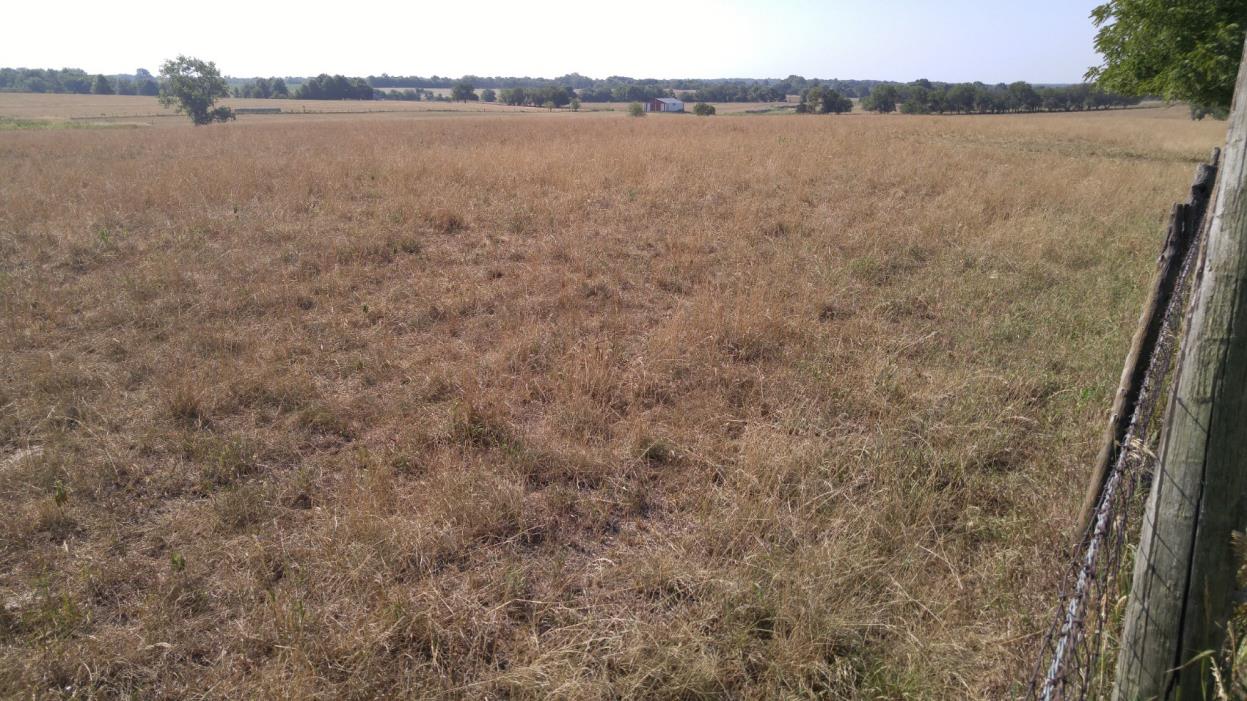
GrassesSame day, same drought: These photos taken July 12, 2018, in Linn County, Missouri, illustrate that native warm-season annual grasses (main image) can ensure good forage supplies during drought. Photo courtesy Harley Naumann.

Naumann urges producers to add warm-season forages to rotational grazing systems. They grow during the warm, dry conditions of midsummer known as the “summer slump,” when cool-season grasses become less productive.

In addition to protecting against inevitable drought, warm-season forages provide high nutritive value and extend the growing season, he says.

Native warm-season grasses excelled in a 2007 University of Tennessee study of drought and forage. They tolerated drought exceptionally well and produced up to 8 tons of dry matter per acre, according to the study.

Deep-rooted warm-season grasses provided similar results during a 2018 study of pastures in Linn County, Missouri. While cool-season grasses browned, warm-season grasses flourished. Southwest Missouri forage producers also saw this in the 2022 drought. Warm-season grass growers were “belly deep in green grass” while cool-season grasses stopped growing, Naumann says.

Warm-season grasses offer another benefit: They cost less to fertilize. Warm-season grasses need 60 pounds of nitrogen per acre to produce 4–5 tons of forage, while cool-season grasses require 180 pounds of nitrogen for similar tonnage.

Other bonuses include better animal performance and an extended grazing season. Grazing warm-season forages allows the cool-season grasses to rest and stockpile for winter grazing. According to a study by MU Extension agribusiness specialist Wes Tucker, cool-season grass stockpiling costs 86 cents per day to feed a cow, compared to $1.76 to feed hay.

Native warm-season grasses also reduce risk of fescue toxicosis, a disease that reduces calving rates, weaning weights and average daily growth.

Johnson grass, a non-native, drought-resilient warm-season grass, establishes and spreads well in most Missouri soils. Producers often have a “love-hate relationship” with it because of its competitive and sometimes toxic nature, says Naumann.

Naumann recommends testing forages containing Johnson grass for nitrates and prussic acid, which accumulate during dry periods. Cyanide-producing prussic acid appears in immature plants after early frost. Producers should avoid grazing pastures with Johnson grass for two weeks after a killing frost. Nitrates remain in cured hay, while prussic acid does not.

Tests at MU’s Southwest Research Center in Mount Vernon, Missouri, from 1996 to 1998 showed advantages of other native warm-season grasses, Naumann says. Bermuda grass varieties Ozark, Midland 99 and Tifton 44 tolerated drought well and produced exceptional tonnage. Annuals such as Sudan grass, pearl millet and crabgrass also perform well and provide a long grazing period.

Naumann noted that crabgrass, commonly considered a weed, works well as a warm-season annual and allows grazing as early as 40 days post-emergence. It offers 1.6 pounds average daily gain (ADG) compared to tall fescue’s 0.9 pounds ADG.

Annual lespedeza, a legume, tolerates poor soils and low-phosphorus soils and fixes nitrogen. It mixes well with cool-season grasses but requires careful management to encourage persistence. Korean lespedeza can be frost seeded in February or later.

Sunn hemp is a vigorous grower that tolerates drought and low-fertility soils extremely well and increases carrying capacity, Naumann says. It offers 20–25% crude protein and is 90% digestible. It increased cattle gain per acre by 17%, according to Naumann’s research.

Naumann’s six-year research at the MU Forage Systems Research Center at Linneus, Missouri, shows that sunn hemp provides a boost during summer slump. It grows as much as an inch per day to heights of 9 feet.

Even if drought does not occur this year, producers will still enjoy the benefits of warm-season annuals such as high nutritive value, a longer grazing period and cost savings, Naumann says.

Naumann recommends converting 30% or less of pastures to perennial warm-season grasses. The process puts that portion of pastureland out of production for one season, but there are many advantages, he says.

For more information, the MU Extension guide “Warm-Season Annual Forage Crops” is available for free download at extension.missouri.edu/g4661. More information is available from the Alliance for Grassland Renewal at www.grasslandrenewal.org. The alliance includes partners from university, government, industry and nonprofit groups.

More resources

  • MU Extension drought resources: mizzou.us/DroughtResources
  • MU Integrated Pest Management drought resources: ipm.missouri.edu/drought

Source: Harley Naumann, 573-882-9896

KEYWORDS: drought grazing MU Extension producers

Share This Story

Looking for a reprint of this article?
From high-res PDFs to custom plaques, order your copy today!


Recommended Content

JOIN TODAY
to unlock your recommendations.

Already have an account? Sign In

  • Double Charburger

    Premiumization drives burger category

    Shoppers seek out premium meat offerings to fulfill...
    Burgers
    By: Sammy Bredar
  • JJS Adult Pekin duck

    Poultry Report 2025: Convenience propels poultry at retail

    Despite continued economic pressures, the poultry...
    Chicken
    By: Sammy Bredar
You must login or register in order to post a comment.

Report Abusive Comment

Manage My Account
  • eMagazine Subscriptions
  • Manage My Preferences
  • Newsletters
  • Online Registration
  • Subscription Customer Service
  • Connect with The National Provisioner

More Videos

Sponsored Content

Sponsored Content is a special paid section where industry companies provide high quality, objective, non-commercial content around topics of interest to the The National Provisioner audience. All Sponsored Content is supplied by the advertising company and any opinions expressed in this article are those of the author and not necessarily reflect the views of The National Provisioner or its parent company, BNP Media. Interested in participating in our Sponsored Content section? Contact your local rep!

close
  • A smiling man carrying a grocery basket is reaching down to pick up a package of meat in a grocery store.
    Sponsored byPIC

    The Green Light: New Data Shows 12-to-1 Support for Pork from PRRS-Resistant Pigs

  • Close up of a grocery cart full of groceries, a cropped image of a couple pushing the cart and a blurred background of the vegetable aisle.
    Sponsored byPIC

    New Market Research Finds Consumers in Eight Key Pork Markets Are Likely to Purchase Pork from Gene-Edited Pigs

  • Close up of a young pig with a blurred background.
    Sponsored byPIC

    New Research Forecasts Significant Economic and Market Impacts with PRRS-Resistant Pig Adoption

Popular Stories

Spam Dog

Hormel rolls out Spam hot dog for foodservice applications

Various new Primal snack sticks on a table amongst pencils, apples, a pair of glasses, lunch bags and a water bottle.

Protein demand drives snacking occasions

Several cuts of beef, pork and chicken on a wooden board, cast iron pan and salt.

Validated thermal lethality data and a new tool for ensuring safety of RTE meats

2026 Top 100 Meat & Poultry Processors Report

Events

June 11, 2026

From Fresh to Frozen in 3 Minutes Flat: Unlocking the Secrets to Temperature Control

Join Tony Vacaro, Foods Industry Manager, and Emile Klein, Foods Market Strategy Manager at Air Products and Chemicals, Inc. , as they tackle key questions surrounding heat removal in food processing. 

January 1, 2030

Webinar Sponsorship Information

For webinar sponsorship information, visit www.bnpevents.com/webinars or email webinars@bnpmedia.com.

View All Submit An Event

Products

Food Crime: An Introduction to Deviance in the Food Industry

Food Crime: An Introduction to Deviance in the Food Industry

See More Products
From Fresh to Frozen in 3 Minutes Flat: Unlocking the Secrets to Temperature Control Webinar Sponsored by Air Products

Related Articles

  • HACCP Validation – It is time to get your documents in order

    See More
  • Big Ass Fans Cold Front

    Big Ass Fans “Cold Front” arrives just in time to beat summer heat

    See More
  • Is it time to refit your tool belt?

    See More

Events

View AllSubmit An Event
  • July 10, 2025

    Is Your Food Safety Plan Up to Date? Insights & Innovations Shaping Meat and Poultry Safety in 2025

    On-Demand Whether you're a processor, producer, or industry stakeholder, this is your chance to gain insider knowledge that will elevate your food safety practices from compliant to exemplary.
  • June 11, 2026

    From Fresh to Frozen in 3 Minutes Flat: Unlocking the Secrets to Temperature Control

    Join Tony Vacaro, Foods Industry Manager, and Emile Klein, Foods Market Strategy Manager at Air Products and Chemicals, Inc. , as they tackle key questions surrounding heat removal in food processing. 
View AllSubmit An Event
×

Stay ahead of the curve. Unlock a dose of cutting-edge insights.

Receive our premium content directly to your inbox.

SIGN-UP TODAY
  • RESOURCES
    • Advertise
    • Contact Us
    • Directories
    • Store
    • Want More
  • SIGN UP TODAY
    • Create Account
    • eMagazine
    • Newsletter
    • Customer Service
    • Manage Preferences
  • SERVICES
    • Marketing Services
    • Reprints
    • Market Research
    • List Rental
    • Survey/Respondent Access
  • STAY CONNECTED
    • LinkedIn
    • Facebook
    • YouTube
    • X (Twitter)
  • PRIVACY
    • PRIVACY POLICY
    • TERMS & CONDITIONS
    • DO NOT SELL MY PERSONAL INFORMATION
    • PRIVACY REQUEST
    • ACCESSIBILITY

Copyright ©2026. All Rights Reserved BNP Media, Inc. and BNP Media II, LLC.

Design, CMS, Hosting & Web Development :: ePublishing