Researchers measure ranching industry's environmental impact
University of Nebraska–Lincoln aims to better gauge the environmental impact of the ranching industry with a new grant.
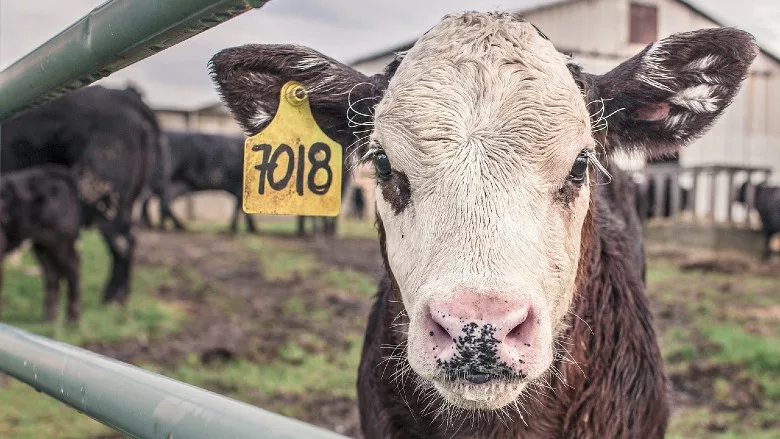
Photo courtesy of Ryan McGuire/Pixabay
The University of Nebraska–Lincoln aims to better gauge the environmental impact of the ranching industry with a new $5 million grant.
“We’re asking beef producers to make changes without the science to know it is beneficial, and not being able to accurately measure whether their change worked,” said Galen Erickson, professor of ruminant nutrition and leader of the Beef Innovation hub at the University of Nebraska–Lincoln.
Erickson’s team recently received a five-year, $5 million Grand Challenges grant from the university to address that issue. The project will establish scientific processes and develop technology to accurately measure greenhouse gas emissions from grazing cattle.
Researchers will study cattle in grazing systems at three of the university’s research facilities — the Eastern Nebraska Research, Extension and Education Center near Mead; Barta Brothers Ranch, southeast of Ainsworth; and Gudmundsen Sandhills Laboratory, near Whitman.
The Grand Challenges initiative is funded by the University of Nebraska–Lincoln Office of the Chancellor and the Office of Research and Innovation. The grants are open only to Husker faculty and must address one of seven thematic areas. This grant, called Advancing Development of Assessments, Practices and Tools (ADAPT) to Produce Climate Smart Beef in Grazing Systems, addresses three of those priorities — climate resilience, sustainable food and water security, and science and technology literacy for society.
“The goal of the project is to develop tools that can be easily and economically employed to help predict the benefits and any situations where we can improve relative to greenhouse gas in grazing systems,” Erickson said. “We want to provide tools that allow producers to say this is or isn’t a practice that will have a positive effect on the environment.”
The ADAPT team includes researchers in grazing systems; human dimensions; remote sensing, including drone technology; data modeling and management; greenhouse gas flux; ecosystem resilience; communications; plant ecophysiology; soil science; and agronomy.
“This project brings together a diverse team with a wide variety of expertise,” Erickson said. “There are people working in beef systems on this project who never thought they’d be working in beef systems.”
Derek McLean, dean of the University of Nebraska–Lincoln's Agricultural Research Division, said the university recognizes how important the beef industry is to the state economically and ecologically.
“For more than a century, UNL has provided research-based recommendations to the beef industry so they can more responsibly and profitably do business,” McLean said. “We will continue that support as the beef industry works to understand their environmental footprint. UNL is committed to furthering efforts that are scientifically accurate and data-backed, so we look forward to seeing the ADAPT project add information to the beef sustainability conversation.”
Homer Buell, a beef producer from Rose, Neb., and former co-chair of the Beef Innovation hub, was involved in the grant proposal. “It’s really important that we know what impact we are having on greenhouse gases,” Buell said. “There are so many things we can do within our industry, but we really need to know how we’re affecting the environment so we can tell our story.”
The ADAPT project focuses on how much the greenhouse gas levels around grazing cattle change, rather than just how much the cattle produce. The growing vegetation and soil in a grazing system take up greenhouse gases, which affects how much greenhouse gas is in the atmosphere.
The cow-calf sector has been largely ignored in the studies surrounding greenhouse gas emissions, partly because of the variety and complexity of the grazing systems that produce beef.
In closed-confinement systems like feedlots, only recently has the technology been developed to accurately measure greenhouse gas production by individual animals. Even in buildings that are climate controlled, animal size, genetics, diet, stress and other factors can cause variation in greenhouse gas production.
A grazing system includes all those variables, plus temperature, wind, soil moisture, forage quantity and quality, and daily travel distance.
The ADAPT project will use satellite, airborne and on-the-ground remote sensing to measure how greenhouse gas levels vary when cattle are in an area.
“We have the expertise, the track record, and we’ve already done many of these methods, just not in a collaborative way,” Erickson said. “The science is accepted, but we’re applying unique science in ways it hasn’t been used before. It’s advanced science, but it’s well accepted in the research community.”
The technology leverages established research from the nationwide Long-Term Agroecosystem Research Network and tools that have been used for years to measure variation in the gases associated with crop production.
The “carbon” in many environmental conversations refers to carbon dioxide, the greenhouse gas plants convert into oxygen. The system of carbon credits is offered as an income opportunity for some cattle producers with grazing systems.
However, carbon contracts are based on assumptions about how much carbon dioxide is being absorbed by the soil versus how much is being produced. The ADAPT project is designed to provide some certainty for establishing practices that positively affect greenhouse gas levels so if producers do enter those contracts, the expectations are realistic and science based.
Cross-discipline collaboration and the process of gathering producer and beef industry input are easier since the development of the Beef Innovation hub, which brings together researchers, industry associates and beef producers to discuss issues and set priorities for the university’s research.
“That partnership has given us access to voices and perspectives we might not otherwise have heard,” Erickson said. “It has resulted in collaborative research that moves our understanding ahead more quickly and efficiently, with a focus on practical outcomes.”
The diverse team is bringing unique perspectives to the research.
“We need to not only be able to do the research and find the answers; we need to understand what the beef industry and consumers need from this project and deliver the results in a way that they understand and can use,” Erickson said. “One of the biggest priorities in this project is to make sure the technology we develop is accurate, economical and will have a legitimate use in the industry.”
A producer panel will gather feedback to meet that goal so the research can be adjusted accordingly. The producers who have been involved so far are looking forward to having data and guidelines to make decisions about practices that may affect their environmental impact and their bottom line.
“Part of the problem has been research that was not done or not done right, so things came out that maybe weren’t real,” Buell said. “We have to find out what’s real and affect that as positively as we can.”
Source: University of Nebraska–Lincoln
Looking for a reprint of this article?
From high-res PDFs to custom plaques, order your copy today!