Provisioner logo
Provisioner logo
search
cart
facebook twitter linkedin youtube
  • Sign In
  • Create Account
  • Sign Out
  • My Account
Provisioner logo
Provisioner logo
  • NEWS
    • Industry News
    • Supplier News
    • Case Studies
    • Recalls
    • Regulations
    • New Consumer Products
  • EXCLUSIVES
    • Newsletters
    • Source Book
    • Sponsored Insights
    • Events
    • Webinars
    • Classifieds
    • White Papers
    • Provisioner Store
    • Market Research
  • MEAT PROCESSING
    • SUSTAINABILITY
    • Processing
    • Packaging
    • Ingredients
    • Formulation
    • Food Safety
    • Special Reports
    • Commentary
  • PROFILES
    • Processor Profiles
    • Processor of the Year
    • Top 100 Processors
  • MEDIA
    • Videos
    • Podcasts
  • DIRECTORY
  • MIHOF
  • INDEPENDENT PROCESSOR
  • EMAG
    • eMagazine
    • ARCHIVE ISSUES
    • Contact
    • Advertise
  • JOIN!
Meat and Poultry Industry NewsMeat and Poultry Processing

New X-ray inspection technology targets tiny fish bones

The latest generation of X-ray inspection technology is proving a game changer.
By Dr. Richard Parmee
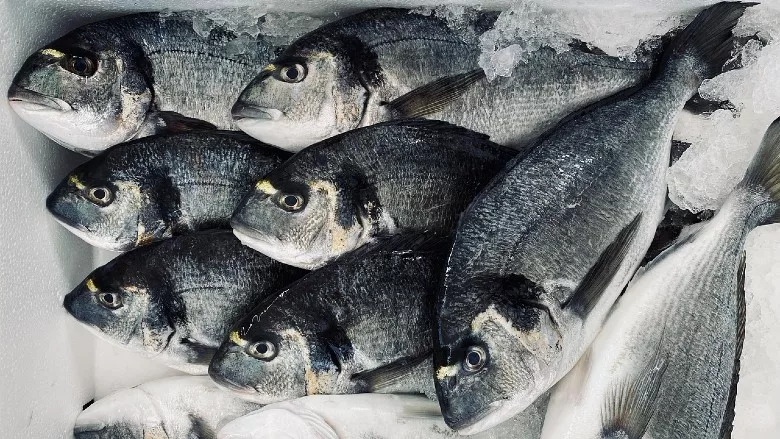
Fish
Pixabay
March 28, 2025

Fish bones are one of the most common foreign body ingestions encountered in hospital emergency departments. Often long, thin and sharp, they can pose a serious health risk if they get stuck in the throat.

Yet fish is an important part of a healthy diet —  a lean source of protein, as well as a rich source of vitamins, minerals and fatty acids. And major improvements in processing, refrigeration, ice making and transportation mean we can all enjoy a greater variety of fish products than ever before.

With the global market for seafood predicted to reach $134 billion by 2026, the pressure is on to produce fish products that are free of bones. And that is where technology comes to the rescue.

Automatic deboners swiftly and efficiently take care of most of the problem for processors — but even the very best machines inevitably let the odd bone through. Often the deboner lifts the bone and removes a section of it, leaving a smaller section behind — making it even more challenging to detect. But the latest generation of X-ray inspection technology is proving a game changer.

When low-energy X-rays are passed through a product, different elements absorb different amounts of X-ray — so, in the resulting images, metal, glass and bone appear darker than the surrounding fish. However, because fish bones are very thin and low density, with low mineral content, they are difficult to detect and likely to be missed by standard end-of-line X-ray inspection equipment that uses a 0.4 mm or 0.8 mm resolution sensor to detect contaminants.

To detect tiny pin bones and other sub-mm diameter bones requires a 0.05 mm (50 micron) resolution area sensor more typically seen in the medical or electronics industries. This unparalleled level of resolution, combined with low-energy X-ray generators, gives rise to images which can reliably show even the smallest of bones in fish.

Once a high-quality image of the fish — and potentially the bone — has been created, it is processed via automatic inspection software requiring no human interaction. At its most simple level, this involves looking for features which follow a straight or slightly curved line. However, the separation of muscle fibers in fish means there are long straight features present naturally. The software must therefore be able to differentiate between the dark features which are caused by bone and the lighter features caused by the natural texture. This process is made more difficult if the fish has been frozen and then defrosted — or has been excessively processed — as this can cause separation of the muscle, giving rise to false rejects. 

Once any bones have been identified, manufacturers have a choice — the production line can be programmed to reject any products that are shown to contain bones, or additional control procedures can be put in place. This may simply involve informing the operator that the deboning machine has fallen out of range and needs attention. Alternatively, the technology can identify which region of the fish still has bones in — and determine whether this is a high-risk area where no bones can be tolerated or a lower-risk region where the bones are likely to disappear during cooking. 

In addition to being able to select a maximum bone size — most food standard agencies and retailers allow very small bones which pose little threat to health — it is also possible to count the number of bones, thereby allowing through a certain number of bones. Additionally, this information can be used to grade fish – sending truly bone-free fish along lane one, while products containing a low number of bones go to lane two, leaving fish with a large number of bones to go to lane three and be reworked.

If fish is reworked, the X-ray image can be sent to a rework station — providing operators with an image showing the location of the bone, and so speeding up the process. A return conveyor can then be used to reinspect the fish, ensuring all the bones have been removed correctly.

Metal contaminant detection has long been the primary reason for installing X-ray equipment. But the ability to detect ever-smaller bones is now playing a key role in the constant battle to improve product quality. X-ray inspection is giving suppliers a new perspective when it comes to satisfying public demand for bone-free fish.

KEYWORDS: automation deboning x-ray

Share This Story

Looking for a reprint of this article?
From high-res PDFs to custom plaques, order your copy today!


Richardparmee

Dr. Richard Parmee is founder and CEO of X-ray inspection technology specialist Sapphire Inspection Systems.

Recommended Content

JOIN TODAY
to unlock your recommendations.

Already have an account? Sign In

  • Double Charburger

    Premiumization drives burger category

    Shoppers seek out premium meat offerings to fulfill...
    Ingredients
    By: Sammy Bredar
  • JJS Adult Pekin duck

    Poultry Report 2025: Convenience propels poultry at retail

    Despite continued economic pressures, the poultry...
    Meat and Poultry Industry News
    By: Sammy Bredar
You must login or register in order to post a comment.

Report Abusive Comment

Manage My Account
  • eMagazine Subscriptions
  • Manage My Preferences
  • Newsletters
  • Online Registration
  • Subscription Customer Service
  • Connect with The National Provisioner

More Videos

Sponsored Content

Sponsored Content is a special paid section where industry companies provide high quality, objective, non-commercial content around topics of interest to the The National Provisioner audience. All Sponsored Content is supplied by the advertising company and any opinions expressed in this article are those of the author and not necessarily reflect the views of The National Provisioner or its parent company, BNP Media. Interested in participating in our Sponsored Content section? Contact your local rep!

close
  • A smiling man carrying a grocery basket is reaching down to pick up a package of meat in a grocery store.
    Sponsored byPIC

    The Green Light: New Data Shows 12-to-1 Support for Pork from PRRS-Resistant Pigs

  • Close up of a grocery cart full of groceries, a cropped image of a couple pushing the cart and a blurred background of the vegetable aisle.
    Sponsored byPIC

    New Market Research Finds Consumers in Eight Key Pork Markets Are Likely to Purchase Pork from Gene-Edited Pigs

  • Close up of a young pig with a blurred background.
    Sponsored byPIC

    New Research Forecasts Significant Economic and Market Impacts with PRRS-Resistant Pig Adoption

Popular Stories

Various new Primal snack sticks on a table amongst pencils, apples, a pair of glasses, lunch bags and a water bottle.

Protein demand drives snacking occasions

Spam Dog

Hormel rolls out Spam hot dog for foodservice applications

Several cuts of beef, pork and chicken on a wooden board, cast iron pan and salt.

Validated thermal lethality data and a new tool for ensuring safety of RTE meats

2026 Top 100 Meat & Poultry Processors Report

Events

June 11, 2026

From Fresh to Frozen in 3 Minutes Flat: Unlocking the Secrets to Temperature Control

Join Tony Vacaro, Foods Industry Manager, and Emile Klein, Foods Market Strategy Manager at Air Products and Chemicals, Inc. , as they tackle key questions surrounding heat removal in food processing. 

January 1, 2030

Webinar Sponsorship Information

For webinar sponsorship information, visit www.bnpevents.com/webinars or email webinars@bnpmedia.com.

View All Submit An Event

Products

Food Crime: An Introduction to Deviance in the Food Industry

Food Crime: An Introduction to Deviance in the Food Industry

See More Products
From Fresh to Frozen in 3 Minutes Flat: Unlocking the Secrets to Temperature Control Webinar Sponsored by Air Products

Related Articles

  • Eagle Quadview Pro

    Staying competitive in challenging times: How new X-ray inspection technology can help

    See More
  • X6 Series

    Mettler-Toledo introduces new X-ray inspection system

    See More
  • Mekitec Sidemeki X-Ray

    Mekitec releases a new X-ray inspection system for beverages, liquids & solid foods

    See More

Related Products

See More Products
  • GlobalData_logo_blue_header.png

    Fish & Seafood in the United States

  • meat.jpg

    Non-Thermal Processing Technologies for the Meat, Fish, and Poultry Industries

  • emerging.jpg

    Emerging Technologies in Meat Processing: Production, Processing and Technology

See More Products

Related Directories

  • Eagle Product Inspection

    Eagle Product Inspection, part of METTLER TOLEDO since 2011, specializes in advanced x-ray inspection technologies, including dual energy, photon-counting, and fat analysis systems. Eagle pairs deep expertise with the global reach and innovation leadership of METTLER TOLEDO to deliver solutions that enhance product safety and quality across markets worldwide.
  • ProSpection Solutions

    Prospection Solutions delivers AI-powered X-ray inspection systems for meat processors, including Dual Energy X-Ray (“Bone Hunter”) and the Eliminator Grinder. Our technology detects bone and foreign material while ensuring product integrity and compliance. From grind to packaging, we help maximize yield, reduce risk, and protect food safety - finding what others miss.
×

Stay ahead of the curve. Unlock a dose of cutting-edge insights.

Receive our premium content directly to your inbox.

SIGN-UP TODAY
  • RESOURCES
    • Advertise
    • Contact Us
    • Directories
    • Store
    • Want More
  • SIGN UP TODAY
    • Create Account
    • eMagazine
    • Newsletter
    • Customer Service
    • Manage Preferences
  • SERVICES
    • Marketing Services
    • Reprints
    • Market Research
    • List Rental
    • Survey/Respondent Access
  • STAY CONNECTED
    • LinkedIn
    • Facebook
    • YouTube
    • X (Twitter)
  • PRIVACY
    • PRIVACY POLICY
    • TERMS & CONDITIONS
    • DO NOT SELL MY PERSONAL INFORMATION
    • PRIVACY REQUEST
    • ACCESSIBILITY

Copyright ©2026. All Rights Reserved BNP Media, Inc. and BNP Media II, LLC.

Design, CMS, Hosting & Web Development :: ePublishing