Provisioner logo
Provisioner logo
search
cart
facebook twitter linkedin youtube
  • Sign In
  • Create Account
  • Sign Out
  • My Account
Provisioner logo
Provisioner logo
  • NEWS
    • Industry News
    • Supplier News
    • Case Studies
    • Recalls
    • Regulations
    • New Consumer Products
  • EXCLUSIVES
    • Newsletters
    • Source Book
    • Sponsored Insights
    • Events
    • Webinars
    • Classifieds
    • White Papers
    • Provisioner Store
    • Market Research
  • MEAT PROCESSING
    • SUSTAINABILITY
    • Processing
    • Packaging
    • Ingredients
    • Formulation
    • Food Safety
    • Special Reports
    • Commentary
  • PROFILES
    • Processor Profiles
    • Processor of the Year
    • Top 100 Processors
  • MEDIA
    • Videos
    • Podcasts
  • DIRECTORY
  • MIHOF
  • INDEPENDENT PROCESSOR
  • EMAG
    • eMagazine
    • ARCHIVE ISSUES
    • Contact
    • Advertise
  • JOIN!
Meat and Poultry Industry NewsRegulationsBeef

USDA researchers seek preventive measures for liver abscesses in cattle

The prevalence of liver abscess formations in cattle continues to raise concerns for beef producers.
By Industry News
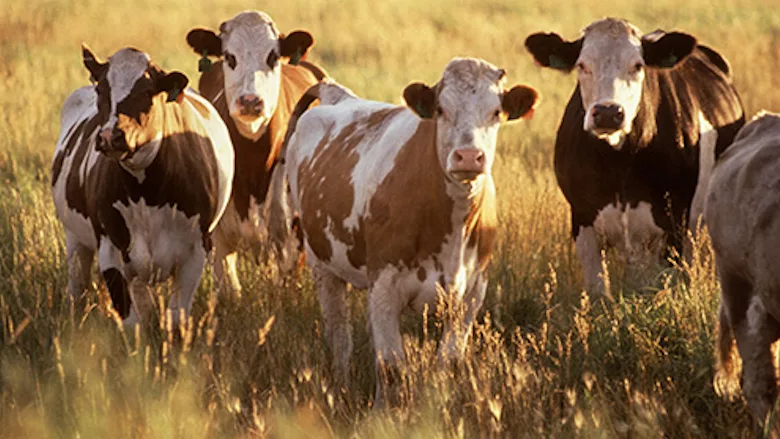
Cattle in a field

Photo credit: USDA

June 24, 2025

Researchers at the USDA’s Agricultural Research Service (ARS) are looking to help the U.S. food industry save millions annually by reducing liver abscess formations in cattle.

The prevalence of liver abscess formations in cattle continues to raise concerns among dairy and beef producers. This problem also remains a challenge for researchers, as the primary factors driving formations are not yet fully understood.

Reducing liver abscess formation is even more critical in calves born from dairy cows mated with beef sires (“dairy-beef crossbred cattle”). These crossbred calves are becoming a greater percentage of the total beef population in the beef industry and are also shown to be more susceptible to this problem [close to 50% vs 20% for traditionally raised beef cattle].

Rand Broadway, a research microbiologist with the USDA ARS’ Livestock Issues Research Unit (LIRU) and researchers at Texas Tech University, Kansas State University, and West Texas A&M University, has studied the relationship between liver abscess formation in dairy-beef crossbred cattle for the past 5years in relation to diet type, ruminal acidosis (caused by high grain diet), and the bacteria community in the digestive system.

The researchers have made significant progress in isolating the primary drivers contributing to this problem through a series of breakthroughs, with their latest study disproving the long-held belief that acidosis and high energy diet intake are the sole cause for the development of liver abscesses.

“We confirmed that acidosis and aggressive grain feeding is not the only driver of liver abscess development, and our research indicates that pathogen presence alone is sufficient to cause an abscess,” said Broadway. “Therefore, if we can reduce the pathogen load and block its pathway to the liver, we can control the problem.”

Scientists are focusing next on identifying which bacterial pathogens are causing liver abscess formation, and where these bacteria can be found. Species of Fusobacterium and Salmonella bacteria were detected in the abscesses studied in the laboratory at LIRU. Since these bacteria can be found in the cattle environments, they can reach the animal’s liver if they gain access to the circulatory system through lacerations in any part of the animal’s digestive system.

Animals are particularly more vulnerable under some types of stress. This could be due to weather [heat/cold] stress, gastrointestinal disruptions, illnesses, or the presence of other pathogens that cause inflammation of the gastrointestinal tract.  Management during weaning and relocation, most calves are shipped to new locations after weaning, may also trigger these conditions.

This study reveals that the nutritional management alone plays a less critical role in liver abscesses formations than previously believed. This insight helps producers make more informed decisions about diet management practices focusing on efficiency. Additionally, it allows researchers to redirect their efforts toward understanding the pathogens involved and the pathway(s) they use to enter the animal’s body [and get to the liver]. This shift in focus has become increasingly important for researchers and time is of the essence for producers, as every minute incurs costs.

Source: USDA

KEYWORDS: animal health animal welfare cattle livestock USDA ARS

Share This Story

Looking for a reprint of this article?
From high-res PDFs to custom plaques, order your copy today!

Recommended Content

JOIN TODAY
to unlock your recommendations.

Already have an account? Sign In

  • Double Charburger

    Premiumization drives burger category

    Shoppers seek out premium meat offerings to fulfill...
    Ingredients
    By: Sammy Bredar
  • JJS Adult Pekin duck

    Poultry Report 2025: Convenience propels poultry at retail

    Despite continued economic pressures, the poultry...
    Turkey
    By: Sammy Bredar
You must login or register in order to post a comment.

Report Abusive Comment

Manage My Account
  • eMagazine Subscriptions
  • Manage My Preferences
  • Newsletters
  • Online Registration
  • Subscription Customer Service
  • Connect with The National Provisioner

More Videos

Sponsored Content

Sponsored Content is a special paid section where industry companies provide high quality, objective, non-commercial content around topics of interest to the The National Provisioner audience. All Sponsored Content is supplied by the advertising company and any opinions expressed in this article are those of the author and not necessarily reflect the views of The National Provisioner or its parent company, BNP Media. Interested in participating in our Sponsored Content section? Contact your local rep!

close
  • A smiling man carrying a grocery basket is reaching down to pick up a package of meat in a grocery store.
    Sponsored byPIC

    The Green Light: New Data Shows 12-to-1 Support for Pork from PRRS-Resistant Pigs

  • Close up of a grocery cart full of groceries, a cropped image of a couple pushing the cart and a blurred background of the vegetable aisle.
    Sponsored byPIC

    New Market Research Finds Consumers in Eight Key Pork Markets Are Likely to Purchase Pork from Gene-Edited Pigs

  • Close up of a young pig with a blurred background.
    Sponsored byPIC

    New Research Forecasts Significant Economic and Market Impacts with PRRS-Resistant Pig Adoption

Popular Stories

Spam Dog

Hormel rolls out Spam hot dog for foodservice applications

Colorado Premium logo

Colorado Premium acquires Old Hickory Smokehouse

Niman Ranch Uncured Grass-Fed Beef Bacon

Niman Ranch introduces beef bacon

2026 Top 100 Meat & Poultry Processors Report

Events

June 11, 2026

From Fresh to Frozen in 3 Minutes Flat: Unlocking the Secrets to Temperature Control

Join Tony Vacaro, Foods Industry Manager, and Emile Klein, Foods Market Strategy Manager at Air Products and Chemicals, Inc. , as they tackle key questions surrounding heat removal in food processing. 

January 1, 2030

Webinar Sponsorship Information

For webinar sponsorship information, visit www.bnpevents.com/webinars or email webinars@bnpmedia.com.

View All Submit An Event

Products

Food Crime: An Introduction to Deviance in the Food Industry

Food Crime: An Introduction to Deviance in the Food Industry

See More Products
From Fresh to Frozen in 3 Minutes Flat: Unlocking the Secrets to Temperature Control Webinar Sponsored by Air Products

Related Articles

  • USDA logo

    Scientists collaborate to study cause of liver abscesses in cattle

    See More
  • USPOULTRY logo

    Iowa State researchers develop vaccines for spotty liver disease in poultry

    See More
  • USDA Logo

    USDA announces updated performance measures for AMS grant programs

    See More

Related Products

See More Products
  • food safety.jpg

    Food Safety in the Seafood Industry: A Practical Guide for ISO 22000 and FSSC 22000 Implementation

  • advances.jpg

    Advances in Meat Processing Technology

  • preservation.jpg

    Emerging Technologies in Food Preservation

See More Products
×

Stay ahead of the curve. Unlock a dose of cutting-edge insights.

Receive our premium content directly to your inbox.

SIGN-UP TODAY
  • RESOURCES
    • Advertise
    • Contact Us
    • Directories
    • Store
    • Want More
  • SIGN UP TODAY
    • Create Account
    • eMagazine
    • Newsletter
    • Customer Service
    • Manage Preferences
  • SERVICES
    • Marketing Services
    • Reprints
    • Market Research
    • List Rental
    • Survey/Respondent Access
  • STAY CONNECTED
    • LinkedIn
    • Facebook
    • YouTube
    • X (Twitter)
  • PRIVACY
    • PRIVACY POLICY
    • TERMS & CONDITIONS
    • DO NOT SELL MY PERSONAL INFORMATION
    • PRIVACY REQUEST
    • ACCESSIBILITY

Copyright ©2026. All Rights Reserved BNP Media, Inc. and BNP Media II, LLC.

Design, CMS, Hosting & Web Development :: ePublishing