Gray explains design process for world's first LEED-certified beef harvest facility
Brett Goode, Gray executive vice president, food & beverage market, discusses the design-build process for America's Heartland Packing beef harvest facility.

World’s first LEED-certified beef harvest facility
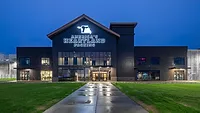
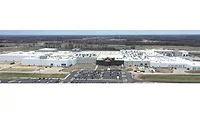
Design-builder Gray recently completed the world's first-ever LEED-certified beef harvest facility for America's Heartland Packing, an American Foods Group company.
The 800,000-square-foot facility is designed to process up to 2,400 head of cattle per day.
Gray's scope for the project included harvest facility design and construction to meet the LEED-certification standards. Throughout the design and construction process, Gray partnered closely with American Foods Group.
To further explore the design-build process for this new beef harvest facility, The National Provisioner sat down with Brett Goode, Gray executive vice president, food & beverage market.
What design considerations were unique to a beef harvest facility compared to other food processing projects Gray has undertaken?
Brett Goode: Gray’s experience in the food and beverage market, specifically the harvest sector, made this project a good fit for our design-build approach. One of the unique considerations of this project was the customer’s challenge to design and build a beef harvest facility unlike any other. This facility was also built for flexibility and expandability. It can receive fed cattle, cows, and bulls on a single shift and has the capacity to expand to a double shift.
What was the collaborative process like between Gray and America’s Heartland Packing throughout this project? Did America’s Heartland Packing bring any unique goals or challenges that shaped the final facility?
Brett Goode: From the start of the project, you couldn’t tell Gray team members from American Foods Group team members– the collaboration was seamless. Early in the process, both sides established what was needed for success, and each team was eager to jump into action.
Designing flexibility and future technology within the facility was a challenge. Without knowing what the future may bring, Gray designed the facility to be able to accommodate potential future automated equipment. That’s always a challenge, and we’re careful to add space responsibly and not add unnecessary capital investment for “what-if” scenarios.
How did you balance operational efficiency with food safety and humane handling in the facility’s layout?
Brett Goode: AHP and Gray consider food safety, humane handling and ergonomic workspace priorities. Ultimately, proper processes and waste streams dictate the facility’s layout, guided by temperature control, hygienic adjacencies and deliberate segregation. We worked closely with AFG’s food safety team, consulted experts in the field - Temple Grandin - and drew on our experience building similar facilities. With a “no concession” approach to food safety, humane handling and employee welfare, those principles became the foundation for the design.
What specific strategies helped this facility achieve LEED certification—a rarity in the meat processing world?
Brett Goode: LEED certification was a goal for this facility from the very beginning. If it had not been clearly identified and set, I do not feel like we would have achieved the certification. It went into almost every design conversation and decision from inception, and complete buy-in from all stakeholders made this certification possible.
How did the design reduce the facility’s energy and water consumption, especially considering the demands of beef processing?
Brett Goode: The biggest contributor to the energy reduction was the building envelope itself. We incorporated required temperature coordination, proper insulation separation, and ceiling height adjustments to limit the volume of production space that needed refrigeration. In addition, we use controls and programming that allow building systems to operate efficiently in an “on demand” format.
How do you see sustainable facility design impacting the future of meat processing operations, especially in harvest facilities?
Brett Goode: Unfortunately, the meat processing industry receives a negative view from the general public based on an incorrect perception of its operations. This facility is a great reminder to the public that meat processing operations are just as forward thinking and environmentally aware in their approach to construction and operations as other industries.
What advice would you give to other processors considering LEED for their new or retrofitted plants?
Brett Goode: Make the decision early with complete buy in from everyone. LEED certification is a financial and personnel investment that should be considered in the overall business model from the onset. It cannot be pursued haphazardly or lightly.
Looking for a reprint of this article?
From high-res PDFs to custom plaques, order your copy today!