Prices continue to increase in the meat department through January 2026
Fresh meat prices grow 6% in January compared with 2.8% for processed meat.
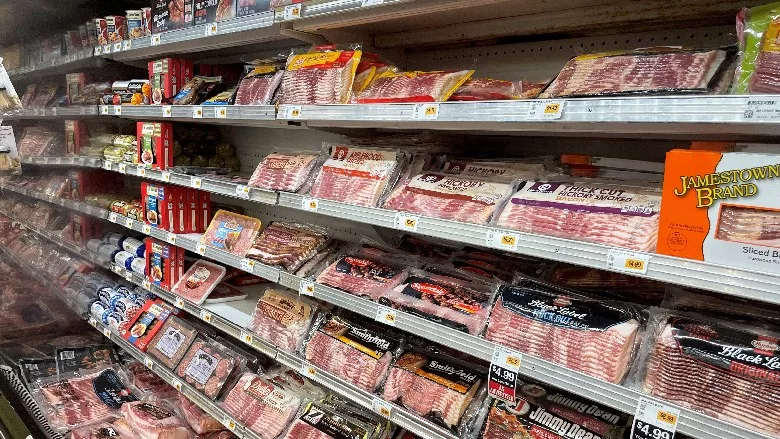
Photo credit: Fred WIlkinson
Inflation insights
Retail total food and beverage price growth eased to 1.7% in January 2026 (the five weeks ending 2/1/2026). Many center-store aisles continued to show price growth acceleration in January. Price movements in the perimeter were mixed with egg and vegetable prices falling, but continued inflation in beef and chicken. The average price per unit in the Circana MULO+ universe was $4.27, up 1.7% year-over-year.
Center-store prices averaged $4.01, an increase of 3.6% year-over-year.
Perishable prices averaged $4.32 per unit, down slightly, at -0.2% compared with January 2025.
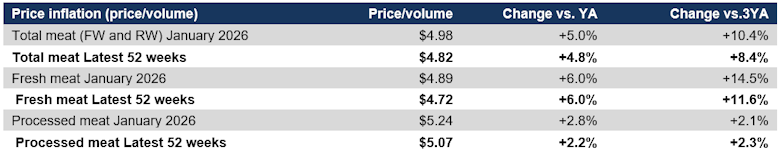
Prices continued to increase in the meat department. Fresh meat prices grew 6% in January compared with 2.8% for processed meat. The January rate of inflation is in line with the price growth in the full-year view.
 Circana, Integrated Fresh, Total US, MULO+
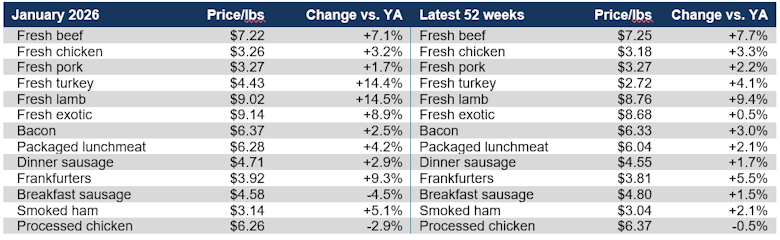
Fresh meat inflation was predominantly driven by turkey and lamb, followed by beef. The average price per pound for lamb rose above the $9 mark, whereas beef averaged $7.22 across all cuts. On the processed meat side, inflation was driven by frankfurters and smoked ham.
 Circana, Integrated Fresh, Total US, MULO+
Meat sales
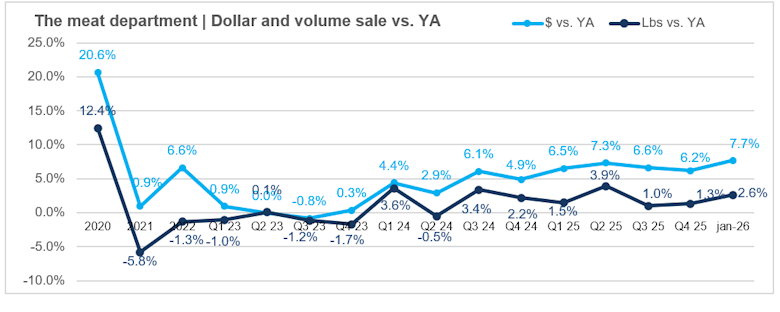
January marked yet another month of dollar, unit and pound growth for the meat department. Pound sales grew 2.6% over year ago levels with gains for both fresh and processed meat. In the full year view, the meat department reached $112.7 billion in sales, which was up 6.8% in dollars and 2.0% in pounds — making meat the biggest and fastest-growing of all perimeter departments.
 Circana, Integrated Fresh, Total US, MULO+
Meat department sales have been positive since the fourth quarter of 2023, with increases ranging from 0.3% to 7.7%. In all cases, dollar gains were a combination of inflation and demand growth. The second quarter of 2025 benefitted from the late Easter timing, while December sales do not include the final three days of the year, pushing some of the New Year’s meal dollars into the January report.
 Circana, Integrated Fresh, Total US, MULO+
January’s overall stellar performance masks some demand softness in everyday demand, a pattern also seen in December. The first, second, third and fifth week of January, pound sales were down year-on-year for the total meat department as well as the two biggest sellers, beef and chicken. The arctic storm that impacted many states led to sold-out meat cases and a 31% surge in dollar sales the week ending January 25. Volume rose by more than 25%, with beef volume climbing even higher, at +30.3% over the same week in 2025.
Fresh meat sales by protein
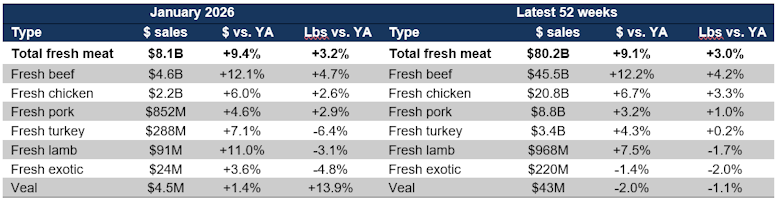
All fresh meat categories grew dollar sales year-over-year in January. Pound performances were more mixed. Lamb was unable to recover from its second-half of the year softness, with pounds falling 3.1% in January. Turkey and fresh exotic (including bison) also lost ground in pounds.
 Circana, Integrated Fresh, Total US, MULO+
Processed meat
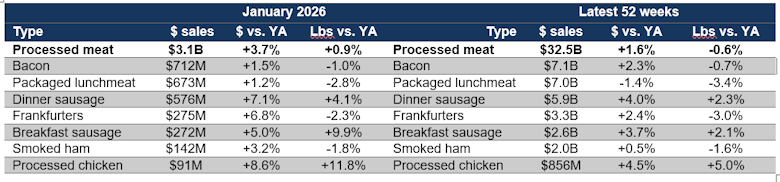
Patterns were mixed for processed meat with mostly dollar gains but ups and downs in pound performance.
 Circana, Integrated Fresh, Total US, MULO+
Sausage and processed chicken had a good month, while bacon, packaged lunchmeat, smoked ham and hot dogs fell behind year-ago levels. Breakfast sausage, in particular, had a very strong start to the year, with an increase of 5.0% in dollars and 9.9% in pounds. The patterns were similar in the full-year view.
Grinds
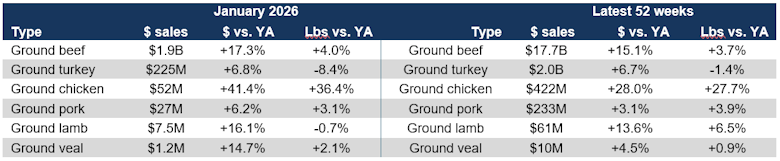
Grinds had a strong month, especially ground beef, chicken and pork. Ground turkey dollar sales increased but pounds fell short.
 Circana, Integrated Fresh, Total US, MULO+
What’s next?
- The newly-released 2025-2030 Dietary Guidelines for Americans delivered a significant update to federal nutrition policy. Key changes include guidance prioritizing nutrient-dense and balanced diets. The guidelines recommend higher protein targets and signal a shift from previous low-fat guidance toward healthy fats from whole food sources.
- Online grocery sales hit $12.7 billion in December 2025, according to Brick Meets Click. This reflects a 32% YOY increase, signaling that grocery e-commerce is becoming an ingrained habit rather than an alternative channel.
- Retailers are expanding accessibility. For instance, Kroger rolled out on-demand grocery delivery nationwide through a partnership with Uber.
- Brick Meets Click found that 50% of online shoppers placed at least three orders during December, a new high level.
- At the same time, grocery retail media continues its growth with more digital advertising and engagement.
Date ranges:
2025: 52 weeks ending 12/28/2025
Q4 2025: 13 weeks ending 12/28/2025
January 2026: 5 weeks ending 02/01/2026
Looking for a reprint of this article?
From high-res PDFs to custom plaques, order your copy today!