Culinary trends: Retailers embrace flavor and consumer education to drive engagement
Retailers lean into global flavors and in-store education to inspire cooking at home and strengthen customer loyalty.
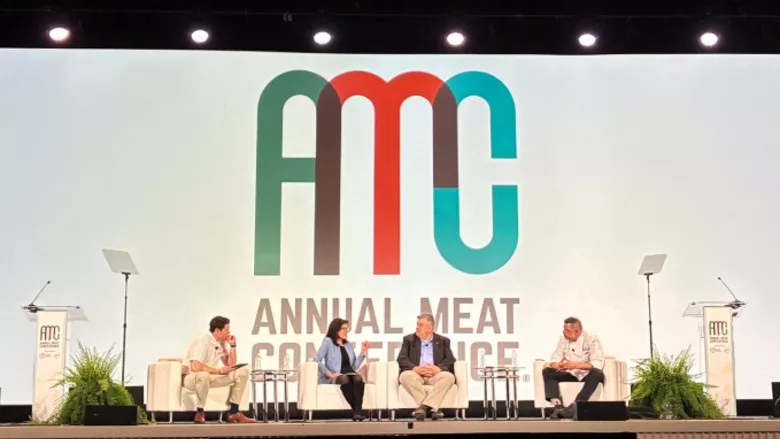
AMC culinary educational session
NATIONAL HARBOR, Md. — At the 2026 Annual Meat Conference, industry leaders highlighted how evolving culinary trends are reshaping the way meat departments engage shoppers and create value. With consumers increasingly adventurous in their palates while facing rising grocery costs, retailers are leaning into global flavors and in-store education to inspire cooking at home and strengthen customer loyalty.
On day one of the 2026 AMC, an educational session titled Culinary Trends: Navigating Flavor, Innovation, and Retail Education took a deep dive into culinary innovation at retail. The session featured Heinens' James Mowcomber, corporate chef, Circana's Sally Lyons Wyatt, global EVP and chief advisor, consumer goods and foodservice insights, and The Culinary Institute of America's David Kamen, director - CIA consulting client engagement. Each speaker brought a unique perspective to the forward-looking discussion: Mowcomber with insights from the store floor, Lyons Wyatt with retail and data-driven perspectives and Kamen with expertise on culinary exploration and innovation.
Before exploring any specific trends, Mowcomber urged retailers to understand their customers; he noted that introducing trends without understanding the customer base is simply trend hopping. Once a retailer has that essential background established, they can begin leaning into culinary trends, but only those that resonate with their customers.
Mowcomber went on to explain that retailers are increasingly serving as culinary educators, helping consumers navigate meal preparation. Tools such as in-store demonstrations, recipe cards and digital content can empower shoppers to cook more confidently at home.
For foodservice, Lyons Watt emphasized the pressure on the category, noting that "Flat is the new black for foodservice." For both retail and foodservice, Kamen said millenial and Gen Z consumers are driving interest in customization and convenience, fueled by social media engagement and app-based ordering.
From Korean and Latin influences to Mediterranean and fusion trends, global cuisine continues to shape meat merchandising. Mowcomber emphasized that retailers can stay ahead by translating these flavors into approachable, ready-to-cook offerings. Prepared meats, marinated cuts and curated recipe kits allow shoppers to experiment without intimidation, while giving stores an opportunity to differentiate their meat programs in crowded grocery aisles.
Rising food prices have accelerated interest at-home cooking, a trend retailers can support with clear guidance and convenient solutions. By offering flavor-forward products and actionable cooking advice, meat departments can position themselves as partners in helping families stretch budgets while getting quality meats.
Over the next five years, culinary innovation is expected to remain a key driver of meat department success. Retailers that anticipate flavor trends, embrace prepared and value-added products and integrate consumer education into their merchandising strategies are poised to capture growing interest and sales.
Looking for a reprint of this article?
From high-res PDFs to custom plaques, order your copy today!