RMC 2026 workshop details costs related to meat discoloration
Researcher shares findings on the role of spoilage microbes in meat color as well as consumer perception and behavior regarding meat discoloration.
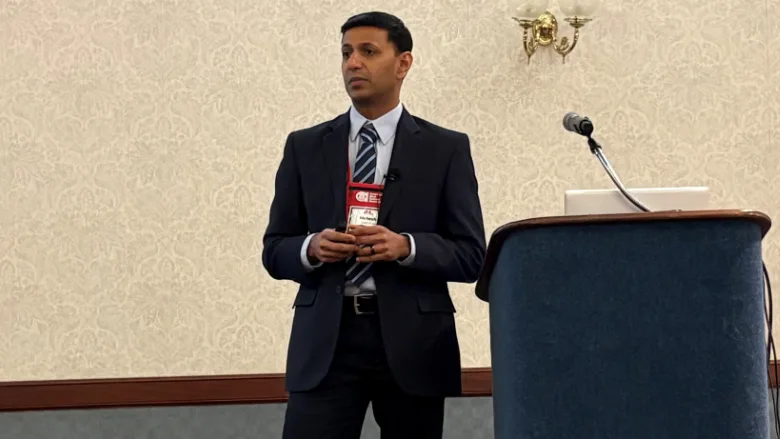
Dr. Mahesh Nair shares findings regarding consumer beef purchase behavior and meat discoloration as part of the Advances in Meat Color Research educational workshop during the 79th Annual Reciprocal Meat Conference in Amarillo, Texas.
AMARILLO, Texas — During the Advances in Meat Color Research educational workshop at the 79th Annual Reciprocal Meat Conference on June 21-24, 2026, Dr. Mahesh Nair of Colorado State University shared research insights on the role of spoilage microbes in meat color as well as consumer perception and behavior regarding meat discoloration.
Even slightly discolored beef may require at least a 50% discount at retail, Nair’s research suggests, and 15% of retail beef is discounted due to discoloration. About 2.5% of beef is discarded due to discoloration.
“When you look at the economic impact of that, it is significant,” Nair said. Meat discarded due to discoloration represents an annual loss of $3.73 billion in revenue and 780,000 animals.
Nair said consumers associate discolored beef with toughness, dryness and food safety concerns, adding that consumer-focused educational efforts and price discounts can influence consumer purchasing behavior.
Translating that to the grocery store meat case, after seven days on display consumers may accept beef with price discounts but after nine days the product is hardly marketable, he said. “As the time went on, their willingness to pay went down.”
Women tend to be more color sensitive than men, who ranked price and eating quality more important than color.
"Female participants we're less willing to pay for discolored product,” Nair said.
Upstream from how retail display can affect beef color, he said various production factors can influence beef coloration:
- Production — species, diet, stress
- Handling — muscle temperature, processing temperature, rate of pH decline
- Processing — post-mortem age, ground vs. whole muscle, packaging
- Bacteria — presence of Pseudomonas spp. and lactic acid bacteria most implicated.
Nair said that a 1% reduction in beef waste can save 23.95 billion liters of water and 400,000 tons of C02 equivalent emissions.
RMC 2026 was organized by the American Meat Science Association. For 2027, RMC will convene June 13-16, in Madison, Wisc.
Looking for a reprint of this article?
From high-res PDFs to custom plaques, order your copy today!
.webp?height=96&t=1647275041&width=96)