Special Report
2014 Burger Report: Movin’ on up
Burgers continue to get the upscale treatment, giving consumers a wide variety of product options and price points to enjoy an All-American classic.
Think of a hamburger, and you typically imagine a patty of ground beef on a bun, maybe with some cheese or ketchup for garnish. Tasty and filling, but certainly nothing that you would call “fancy” or “gourmet.”
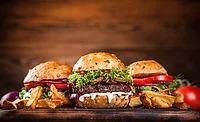
In recent years, though, the hamburger has been undergoing a makeover, becoming more and more upscale. Different cuts of meat, different proteins, fancier toppings, restaurants dedicated to nothing but upscale burgers — the hamburger, once the domain of quick-service restaurants and backyard barbecues, has gone high-class.
“The current trends in foodservice aren’t focused on reinventing the burger,” says Katrina Fajardo, Mintel foodservice analyst. “Instead, they are highlighting the creative, healthy and natural ways it can be menued in order to re-energize customers’ interest in burgers.”
Going out for burgers isn’t a jacket-and-tie event — yet — but there has been massive growth in the upscale burger restaurant category. Along with established chains such as Red Robin and Five Guys Burger & Fries, there are seemingly dozens of chains popping up across the country: BurgerFi, Shake Shack, Smash Burger, Cheeburger Cheeburger, The Counter, etc. etc.
“A hamburger is an All-American classic that never goes out of style or loses its appeal,” says Susan Saltalamacchio, spokesperson for Cheeseburger Bobby’s, a burger chain with nine locations around the Atlanta area. Founded by brothers Richard and Bobby Stoll in 2007, the restaurant features a “Build Your Own Burger Bar,” which takes the concept of customization to a new level.
“With our customization options, there are over one million ways to customize your burger,” she says. “We also offer fresh-cut bottomless French fries. Our competitors don’t offer what we have.”
Cheeseburger Bobby’s features only fresh, Black Angus beef. Saltalamacchio notes that the burgers are cooked fresh to order, meaning that the burger patty never touches the grill until a customer places an order.
“This is one of the reasons we will never have a drive-thru at any of our locations,” she adds.
The mission statement of Cheeseburger Bobby’s clearly resonates with its customers, as the company has seen double-digit sales increases in each of the last four years. It is planning on doubling the number of units within the next year.
The growth in the upscale burger category is due to a change in eating habits for the Millennial generation and Gen Y, says Jamie Schweid, executive vice president, sales for Burger Maker. The Carlstadt, N.J., processor specializes in producing high-quality burgers to foodservice customers across the United States.
|
Online-only content
|
“Our parents enjoyed a fine-dining experience that was in a formalized environment,” he says. “What our generation is looking for is a more casual, yet quality-driven product.”
A top-quality hamburger, he notes, is still at a price point that is reasonable for many consumers. He expects to eventually see some contraction in the market, but for the next couple of years, the growth in the gourmet burger market should continue.
Schweid says that the latest trend that has emerged in the burger sector is the growth of “pucks”. A puck is different from a patty in that it is a portion of ground beef that is meant to be smashed on a grill to create a delicious charred exterior. This also decreases the cook time on each patty when served.
The interest in upscale burgers continues to be seen in the quick-service restaurant sector as well. QSRs have, in the past made efforts to add an upscale burger (at an upscale price point) to their menus, with varying success. McDonald’s experiment with 1/3-pound Angus burgers ended when the company dropped them from the menu and replaced them with new varieties of its popular Quarter Pounder. Fajardo notes that Wendy’s has had the most success in upping its burger offerings. One such item is its Steakhouse Jr. Cheeseburger Deluxe, which features a beef patty with steakhouse seasoning, melted cheese and a garlic aioli sauce made with roasted garlic, onion and Dijon mustard.
“What sets this offer apart from the other big quick-service burger players is the price,” she notes. “The Steakhouse Jr. burger is comfortably priced at $1.49, which allows value-conscious consumers (the core of QSR) to comfortably ‘splurge’ on steakhouse flavors without breaking the bank.”
Fajardo says that Wendy’s success was a multi-faceted effort. The company offered its premium burgers on special buns while also revamping its value menu and are pushing to remodel the majority of its restaurants to match the upscale persona.
“While this may have worked for Wendy’s, that doesn’t mean that all burger operators need to menu upscale burgers at a higher price point,” she says.
McDonald’s is currently testing a BYOB (Build Your Own Burger) program in select areas, hoping that customizable burgers can help grow its customer base. However, the value menu at a fast-food restaurant still has legs. Mintel’s Quick Service Restaurants — U.S., August 2013 report showed that 23 percent of Americans surveyed stated that they had increased their use of the value menu. That number jumps to 30 percent for the 18- to 34-year-old demographic. For those consumers, a burger restaurant may lose its appeal if it moves to upscale, pricier burgers.
When it comes to independent restaurants or small chains, the sky is truly the limit for hamburgers. Mintel research noted that beef was still the overwhelming favorite when it comes to burgers, but the growth of beef used in burgers has remained flat over the last three years. Alternative proteins including turkey, chicken, buffalo and pork have all increased in usage since 2011.
“The use of non-beef patties and proteins allows operators to differentiate themselves from their competition,” explains Fajardo. “Additionally, consumers seem to like taking ‘breaks’ from beef, so offering alternative proteins fits in well with their lifestyle choices.”
Along with a variety of proteins, restaurants are experimenting with all manner of sauces, cheeses and other toppings to create unique dishes. For example, Burger Lounge, a burger chain with a dozen locations in southern California, features the “Game Changer,” a grass-fed elk burger topped with creamy goat cheese, baby watercress and bacon-onion jam.
Butterball Foodservice has recently introduced a full line of turkey burgers to help restaurants provide a little variety on the menu. The burgers are meant to be customizable to fit a wide variety of flavor profiles and customer taste preferences.
The All-American Grill Turkey Burger is made with all dark meat, while the Savory White Turkey Burger is made with all white meat. The All Natural Turkey Thigh Burger is Butterball’s most premium burger, and the Mediterranean Turkey Burger combines white meat with a light seasoning of garlic and pepper. The company also features recipes on its Web site, www.butterballfoodservice.com, to help chefs with menu ideas.
Richie Jenkins, Butterball Foodservice’s senior director of marketing, said in the product’s news release that turkey is not only a cost-effective alternative to beef, but its versatility makes it valuable to the foodservice operator.
“Whether it’s a chef seeking a customizable platform for specialty burgers or patrons seeking new flavorful burger offerings, conditions are right for 2014 to be the summer of turkey burgers,” he said.
Bringing the high-end home
The retail market, too, has seen its share of changes, as consumers look to replicate their restaurant dining experiences in their own kitchen. That desire for a gourmet burger at home led Burger Maker to enter the retail market for the first time in its history.
“We really feel like we’re looking at a market that is underserved, with regard to premium ground beef,” Schweid says. “I think there has not yet been a replication [in retail] of the better burger category that’s been created in foodservice.”
|
Comments from Birchwood Foods
Wayne Wehking, vice president of Sales and Marketing for Birchwood Foods, offers his thoughts on the current state of the burger marketplace:
Burger Trends
Beef Prices
Opportunities moving forward
|
The burgers, marketed under the Schweid & Sons brand, bring fresh, premium burgers to the retail marketplace. The burgers are made with Certified Angus Beef; Schweid says that aligning with CAB helps to convey the message that the burgers are premium items. The company’s “Custom Blend” burger is made from whole-muscle chuck and brisket, and the “One Percenter” uses certified Prime chuck. They come in 5.3-ounce and 2-ounce “slider” sizes.
The Schweid family — father David is the president, and brother Brad is the executive vice president, operations — had discussed the idea of going into retail for several years before taking the plunge in 2014. So far, Jamie says, the response among retailers has been overwhelming.
“The retailers are really understanding where this product fits in the marketplace,” he adds. “It’s been a surprise to my father, brother and I as far as how well it’s taken off. We know we make great products, and we take a lot of time and effort for the packaging and the naming of the burgers, but it’s really been a successful beginning.”
Along with premium beef burgers, the retail marketplace has seen a rise in non-beef products as well. This April, al fresco, a brand of chicken sausage manufactured by Kayem Foods, entered into the frozen burger category with its Gourmet Chicken Grillers line of uncooked frozen chicken burgers. Available in three flavors — Sweet Italian, Caramelized Onion and Buffalo & Blue Cheese — the grillers tout the health benefits on the box. Each patty contains less than half the fat of a traditional beef patty.
“Grilling outside is the perfect way to gather friends and family, but preparation can be time-consuming, and many traditional options are high in calories, fat and sodium,” said Sarah Crowley, director of marketing for al fresco and Kayem Foods, in the product’s release. “This new line is a stress-free, healthier option to pack flavor into your meals in minutes this summer.”
For a new item that tries to capture the best of both worlds, there is the Cluck ‘n Moo burger, a blend of beef and chicken that promises the taste of a traditional beef hamburger but the health benefits of chicken. The product, which entered the marketplace last year, is the brainchild of Steve Gold, a marketing and poultry industry veteran. He says that consumers have struggled to replicate the “better burger” foodservice experience at home because the foodservice burgers have a higher percentage of fat than the ground beef people buy at the supermarket.
“People go to the supermarket, and they want to buy healthier, so they’ll buy a 90/10 or 95/5 burger, and they’ll take it home and don’t understand why it’s so dry,” he explains.
The idea for Cluck ‘n Moo came from Gold’s wife, who wanted to enjoy a home-cooked, restaurant-quality burger without any of the guilt. That led him to start thinking about combining ground beef with ground chicken, even though, to Gold’s knowledge, it had never been done before.
“I made some samples with my processor, who said to me that I’m crazy,” Gold recalls. “We went ahead and did it anyway, and we got it to a formulation that we thought was perfect. With the right process and the right way of forming the patty, we were able to produce a burger that tastes great but has 52 percent less fat and 34 percent fewer calories [than an all-beef burger.]
“With the proliferation of people looking to eat healthier, we felt this was the perfect time to introduce this product to the marketplace,” he adds.
The Cluck ‘n Moo burger tastes like a beef burger, albeit with a lighter bite. Thanks to the patent-pending production process, the moisture that is released by the beef while the burger cooks is taken in by the chicken, so the cooked product stays moist.
The Cluck ‘n Moo burgers were tested last summer at some retailers, and about 80 percent of the people who tasted them ended up buying the product. The distribution has expanded this year to include Publix supermarkets.
“The reorders were very good, and the stores were pleased with how well a new product that never existed before is doing,” he says.
Gold is working on several new products to further expand the brand, including other ground products like meatballs. There is also a turkey/beef burger (Gobble ‘n Moo) in the works, as well as a pork/beef burger (Oink ‘n Moo).
The foodservice industry is also taking an interest in Cluck ‘n Moo, not only for the health attributes but also because it has a lower price point than an all-beef burger.
“Also, we’re finding that there is very little shrink with our burgers, so when they purchase a 4-ounce Cluck ‘n Moo burger, they’re almost getting back 4 ounces. It usually takes a 5- or 6-ounce beef patty to get to a 4-ounce burger,” he adds.
The Cluck ‘n Moo burgers, in addition to having reduced calories and fat, are grass-fed beef, and Gold is currently working to have a line of certified non-GMO, organic products as well. Those attributes, he notes, are increasingly in demand among younger consumers.
“I visit supermarkets just to see what people are doing, and the younger generations, teens and up, are looking at labels. I don’t remember, when I was that age, ever looking at labels,” he says. “They are very concerned about what the ingredients are, and they want to know about the company and that what we have on our packaging is true.”
Ultimately, though, the taste of the burger is the driving force behind its success or failure. A burger with all of the right health claims and desirable attributes still needs be delicious.
“Sometimes you can have all the hype in the world, but if the product doesn’t taste good, it doesn’t mean anything,” Gold notes. “The claims are great to have on the box, but you have to back it up. Consumers will buy it once, and maybe they’ll give it a second chance, but if they don’t like it, they’ll never buy it again.”
Looking for a reprint of this article?
From high-res PDFs to custom plaques, order your copy today!