Guest Commentary
Feed consumers the facts
A refresher on the feed process for cattle that you can take to your customers and consumers.
Has there ever been a point in history when consumers have so actively demanded an information exchange about the foods we eat? Well, perhaps. After all, we used to hunt and forage for our foods, which was a pretty direct engagement. However, this age of social media and immediate argument both for and against food production may seem like the biggest barrage that we’ve ever faced as an industry.
Consumer confidence, relative to global meat production, is often shaken or undermined by shared misinformation. Regardless of its intent (deliberate or misguided), misinformation really provides opportunity for development of a forum for our industry to tell our story. For years the meat industry has resided in the wings in hopes that our meat products and our brands would speak for themselves. And they did, to a point.
Starting on the farm, where meat originates, it is feasible to construct a factual response to consumer concerns that is both chronological in order and easy to appreciate. Meat production and processing needn’t apologize for feeding the masses but must ensure confidence in what we do and reiterate that we do it with passion and purpose in accordance with good practices and modern agriculture.
As with any business, meat processors want customers and ultimately consumers to be aware of their brand. Processors need a positive emotional attachment to evolve, which becomes the brand’s equity. When it seems the battle is all uphill, perhaps we can gain strength and momentum by collaborating with our partners. After all, each has a vested interest in the success of one other.
Beef producers are no different. They want to share the “good news” about how they care for and are passionate about the cattle they raise that in turn produce world-class beef products. Starting with vibrant and robust animals that have been raised with the utmost care and attention to detail, the rest of the industry has a starting point that is enhanced by the very origins of this beef. Great genetics, proper care and handling, monitoring for disease and herd-health issues and exceptional feeding practices all help to provide the building blocks for processing, foodservice and retail to profit from rave reviews and repeat business.
So for openers, it is topical to reinforce accurate information about grain feeding beef cattle.
What Canada beef cattle eat
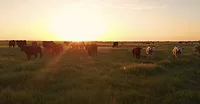
For most of their lives, beef cattle eat a diet of mostly forages. Forages is the technical term for pasture grass and plants such as clover and alfalfa, which they eat in the spring and summer, and the hay — the same kind of grasses and plants, only dried for easy storage on the farm — they eat rest of the year.
Once calves are weaned, they are typically kept on pasture eating grass or housed over the winter with access to barns where they are fed a grass-based diet including hay or silage. Silage is similar to hay in that it contains plants and grasses, but the difference is it’s naturally fermented instead of dried before being stored on-farm.
Some farmers also feed grain, but only in small amounts because they don’t want their cattle to gain weight too quickly. This process, which beef farmers call backgrounding, continues until the animals weigh about 900 pounds.
Moving to the feedlot
When they’re 9 to 11 months old, cattle are moved from the open range and pastures to feedlots, a type of large, fenced yard for more controlled feeding. When they’ve reached 1,300 pounds, which is called their finished weight, they will be ready to go to market.
During this time, they gradually switch from eating mostly forages to a high-energy diet that is about 90 percent grains, such as barley and corn. This results in a greater level of marbling in the meat, which is what helps give beef its flavor. Grains used in cattle feed are often of lower quality than what is acceptable for humans to eat, so this gives grain farmers an added market for crops that may have been damaged by frost, drought or other weather conditions.
Farmers may also add extra protein to the feed in the form of soybean or canola meal. The practice of feeding cattle meat and bone meal from ruminant animals as a protein source was never widespread in Canada and has been banned since 1997. This feeding practice was banned as it increases the risk of spreading a cattle disease known as Bovine Spongiform Encephalopathy (BSE, or more commonly known as Mad Cow Disease).
Vitamins, minerals and other supplements
Cattle need more salt, minerals and vitamins than they can normally obtain from hay and grains, so farmers will provide salt blocks for them to lick whenever they like, called salt licks. They’ll also top up the feed with vitamin and mineral supplements to make sure their cattle are getting the best nutrition.
Ionophores are a special type of antibiotic given to beef cattle along with their feed to aid in digestion and encourage growth. Ionophores are not used in human medicine. Ionophores make it easier for cattle to absorb energy and protein, reducing digestive problems and decreasing methane production. Methane is a greenhouse gas produced in cattle stomachs during their normal digestion process.
Other antibiotics may sometimes be added to feed for a short amount of time when there is an illness in the herd, or animals from several herds are mixed together. These are stressful situations for cattle and the supplements can either make them healthy again or keep them from getting sick in the first place.
Ensuring safe feed for beef animals
The Canadian Food Inspection Agency (CFIA) keeps a watchful eye on livestock feed through the Federal Feeds Act. Its inspectors ensure livestock feed imported or manufactured and sold in Canada is safe and effective. As part of its feed program, CFIA monitors manufactured feeds for harmful levels of pesticides, heavy metals or medications. It also routinely inspects feed mills — businesses preparing livestock feed for farmers — to ensure feed is properly manufactured, labeled and stored.
Now that I’ve reinforced the facts for you in this column, approach your customers and consumers and either educate or remind them of the realities of beef feeding practices, giving them the connection to your brand that they crave today, and the facts needed to make an educated choice about the proteins they eat.
Looking for a reprint of this article?
From high-res PDFs to custom plaques, order your copy today!