Provisioner logo
Provisioner logo
search
cart
facebook twitter linkedin youtube
  • Sign In
  • Create Account
  • Sign Out
  • My Account
Provisioner logo
Provisioner logo
  • NEWS
    • Industry News
    • Supplier News
    • Case Studies
    • Recalls
    • Regulations
    • New Consumer Products
  • EXCLUSIVES
    • Newsletters
    • Source Book
    • Sponsored Insights
    • Events
    • Webinars
    • Classifieds
    • White Papers
    • Provisioner Store
    • Market Research
  • MEAT PROCESSING
    • SUSTAINABILITY
    • Processing
    • Packaging
    • Ingredients
    • Formulation
    • Food Safety
    • Special Reports
    • Commentary
  • PROFILES
    • Processor Profiles
    • Processor of the Year
    • Top 100 Processors
  • MEDIA
    • Videos
    • Podcasts
  • DIRECTORY
  • MIHOF
  • INDEPENDENT PROCESSOR
  • EMAG
    • eMagazine
    • ARCHIVE ISSUES
    • Contact
    • Advertise
  • JOIN!
Food Safety

Food Safety

Sanitation and sanitary design

By Lynn Knipe
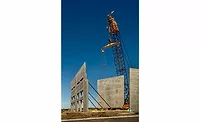
0116NP_106_foodsafety_img1.jpg
January 26, 2016

When making ready-to-eat (RTE) meat products, the processing step that poses the greatest biological hazard is the post-lethality handling step. It is when meat products are handled after cooking and packaging that they are at the greatest risk for environmental contamination from L. monocytogenes. And how do you control this hazard? I can’t think of a critical control point (CCP) that would effectively control it. 

A Listeria program would work better for controlling the Listeria hazard at this step than a CCP.  The purpose of a Listeria Control Program (LCP) is to verify the effectiveness of your sanitation program by microbial sampling and testing the environment to identify sources of Listeria contamination that may exist after cleaning and sanitizing.  

Historically, cleaning and sanitation wasn’t a priority for most meat processors, because it was typically done by second- or third-shift employees, who had the least training and work experience. Today, top management of RTE meat-processing companies must appreciate the importance of effective cleaning and sanitation of equipment and facilities to prevent niche growth of Listeria. Developing a sanitary culture in RTE facilities is vital. Proper employee training, equipment and supplies are mandatory for proper cleaning and sanitizing. Using written good manufacturing practices (GMPs) for the training is helpful and verifying these GMPs are being implemented as intended is very important. Is the sanitizer concentration correct? Is the water temperature for the sanitizer correct?       

In addition, proper design of equipment and facilities are important to facilitate the work of the cleaning and sanitizing crews. Existing equipment may present some challenges as it may not have been designed with proper sanitation in mind. When buying new equipment, particularly equipment that will be used in an RTE packaging room, it is important to avoid new equipment that is not properly designed for cleaning and sanitizing. And existing equipment can be retrofitted to improve cleanability.

The North American Meat Institute, in collaboration with a number of its members, developed a list of design principles for equipment and facilities. For equipment, the 10 principles include: equipment must be cleanable; must be made of compatible materials; must be easy to disassemble so all parts are accessible; there should be no collection of product or liquids; hollow areas should be hermetically sealed or eliminated; surfaces and covers should be free of pits and cracks, which can serve as growth niches for bacteria; equipment should not contribute to unsanitary conditions when running; maintenance enclosures need to be hygienic; should have hygienic compatibility with other plant systems, such as steam, air, water, etc.; and should have a validated, written cleaning procedure.

For facilities, the principles for sanitary design include: establish strict hygienic zones of control; establish control of the flow of people and materials between zones of control; prevent free-standing water in clean rooms; maintain cold temperatures while preventing condensation; control incoming air flow and quality; design the exterior of your facility to reduce contaminates entering the facility; employ an impervious design of building skin; allow adequate space around equipment to facilitate cleaning and sanitizing; use building components (curbs, hidden pipes/conduit, etc) that facilitate cleaning and sanitizing; and integrate sanitation into room design.

A CCP is not nearly as effective in preventing environmental contamination of Listeria as good sanitation, and that requires good people, good practices and good design of equipment and facilities. A good Listeria control program can verify that this sanitation system is effective. NP

KEYWORDS: sanitary meat plant design sanitation sanitation best practices

Share This Story

Looking for a reprint of this article?
From high-res PDFs to custom plaques, order your copy today!

Lynn Knipe is the Extension Processed Meats Specialist and Associate Professor in Food Science and Technology, and Animal Sciences at Ohio State University. He is also a member of The National Provisioner Editorial Board. For more information, contact him at knipe.1@osu.edu or (614) 292-4877.

Recommended Content

JOIN TODAY
to unlock your recommendations.

Already have an account? Sign In

  • Double Charburger

    Premiumization drives burger category

    Shoppers seek out premium meat offerings to fulfill...
    Burgers
    By: Sammy Bredar
  • JJS Adult Pekin duck

    Poultry Report 2025: Convenience propels poultry at retail

    Despite continued economic pressures, the poultry...
    Meat and Poultry Industry News
    By: Sammy Bredar
You must login or register in order to post a comment.

Report Abusive Comment

Manage My Account
  • eMagazine Subscriptions
  • Manage My Preferences
  • Newsletters
  • Online Registration
  • Subscription Customer Service
  • Connect with The National Provisioner

More Videos

Sponsored Content

Sponsored Content is a special paid section where industry companies provide high quality, objective, non-commercial content around topics of interest to the The National Provisioner audience. All Sponsored Content is supplied by the advertising company and any opinions expressed in this article are those of the author and not necessarily reflect the views of The National Provisioner or its parent company, BNP Media. Interested in participating in our Sponsored Content section? Contact your local rep!

close
  • A smiling man carrying a grocery basket is reaching down to pick up a package of meat in a grocery store.
    Sponsored byPIC

    The Green Light: New Data Shows 12-to-1 Support for Pork from PRRS-Resistant Pigs

  • Close up of a grocery cart full of groceries, a cropped image of a couple pushing the cart and a blurred background of the vegetable aisle.
    Sponsored byPIC

    New Market Research Finds Consumers in Eight Key Pork Markets Are Likely to Purchase Pork from Gene-Edited Pigs

  • Close up of a young pig with a blurred background.
    Sponsored byPIC

    New Research Forecasts Significant Economic and Market Impacts with PRRS-Resistant Pig Adoption

Popular Stories

JBS USA logo

JBS USA closing pair of processing facilities

Various new Primal snack sticks on a table amongst pencils, apples, a pair of glasses, lunch bags and a water bottle.

Protein demand drives snacking occasions

Several cuts of beef, pork and chicken on a wooden board, cast iron pan and salt.

Validated thermal lethality data and a new tool for ensuring safety of RTE meats

2026 Top 100 Meat & Poultry Processors Report

Events

January 1, 2030

Webinar Sponsorship Information

For webinar sponsorship information, visit www.bnpevents.com/webinars or email webinars@bnpmedia.com.

View All Submit An Event

Products

Food Crime: An Introduction to Deviance in the Food Industry

Food Crime: An Introduction to Deviance in the Food Industry

See More Products
From Fresh to Frozen in 3 Minutes Flat: Unlocking the Secrets to Temperature Control Webinar Sponsored by Air Products

Related Articles

  • There are several basic design features that are considered essential for all types of food processing facilities

    Designed to shine?: Sanitary design and construction

    See More
  • Construction of New Meat Facility

    Sanitary design in meat and poultry facilities

    See More
  • Are you the weakest link

    Are you the weakest link in the sanitary design chain?

    See More

Related Products

See More Products
  • Food Plant Sanitation: Design, Maintenance, and Good Manufacturing Practices, Second Edition

  • Handbook of Food Products Manufacturing: Health, Meat, Milk, Poultry, Seafood, and Vegetables, Volume 2

  • Handbook of Poultry Science and Technology, Volume 2, Secondary Processing

See More Products

Events

View AllSubmit An Event
  • March 1, 2010

    Food Plant of the Future: Advancing Food Safety through Sanitary Design

    On demand Food and beverage companies work hard to consistently deliver safe products because they understand that the stakes are extremely high for the public and for their companies.
  • March 1, 2012

    RMC Sponsors Food Safety Sanitation Forum on West Coast

    Rochester Midland Corporation (RMC) is sponsoring an all day Food Safety Sanitation Forum on March 1 at Ayres Hotel, Chino Hills, CA. The forum will focus on food sanitation hot topics such as fungal and biofilm issues, allergen control, hygienic design issues, sustainability, GFSI Pros and Cons, and CIP/COP systems. Speakers include Margaret Kolk of National Sanitation Foundation (NSF), Gabe Miller and Mike Brandt from Sanimatic Corp., as well as Charles Giambrone, Technology and Regulatory Manager and Newton Green, Sustainability Engineer, both from RMC.
View AllSubmit An Event
×

Stay ahead of the curve. Unlock a dose of cutting-edge insights.

Receive our premium content directly to your inbox.

SIGN-UP TODAY
  • RESOURCES
    • Advertise
    • Contact Us
    • Directories
    • Store
    • Want More
  • SIGN UP TODAY
    • Create Account
    • eMagazine
    • Newsletter
    • Customer Service
    • Manage Preferences
  • SERVICES
    • Marketing Services
    • Reprints
    • Market Research
    • List Rental
    • Survey/Respondent Access
  • STAY CONNECTED
    • LinkedIn
    • Facebook
    • YouTube
    • X (Twitter)
  • PRIVACY
    • PRIVACY POLICY
    • TERMS & CONDITIONS
    • DO NOT SELL MY PERSONAL INFORMATION
    • PRIVACY REQUEST
    • ACCESSIBILITY

Copyright ©2026. All Rights Reserved BNP Media, Inc. and BNP Media II, LLC.

Design, CMS, Hosting & Web Development :: ePublishing