Provisioner logo
Provisioner logo
search
cart
facebook twitter linkedin youtube
  • Sign In
  • Create Account
  • Sign Out
  • My Account
Provisioner logo
Provisioner logo
  • NEWS
    • Industry News
    • Supplier News
    • Case Studies
    • Recalls
    • Regulations
    • New Consumer Products
  • EXCLUSIVES
    • Newsletters
    • Source Book
    • Sponsored Insights
    • Events
    • Webinars
    • Classifieds
    • White Papers
    • Provisioner Store
    • Market Research
  • MEAT PROCESSING
    • SUSTAINABILITY
    • Processing
    • Packaging
    • Ingredients
    • Formulation
    • Food Safety
    • Special Reports
    • Commentary
  • PROFILES
    • Processor Profiles
    • Processor of the Year
    • Top 100 Processors
  • MEDIA
    • Videos
    • Podcasts
  • DIRECTORY
  • MIHOF
  • INDEPENDENT PROCESSOR
  • EMAG
    • eMagazine
    • ARCHIVE ISSUES
    • Contact
    • Advertise
  • JOIN!
Meat and Poultry Industry NewsSpecial Reports

Farm to Plate

Research Perspective: LAPS could set humane standard

Poultry stunning method continues to gain support as an innovative way to humanely stun animals for slaughter.
By Kaleiah Schiller, Kurt D. Vogel PhD
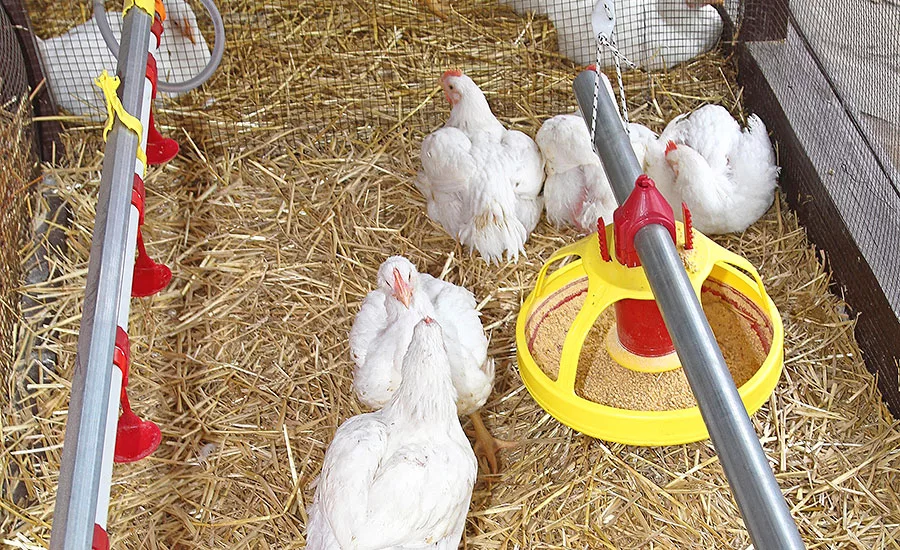
The poultry stunning method called Low Atmospheric Pressure Stunning (LAPS) is gaining support
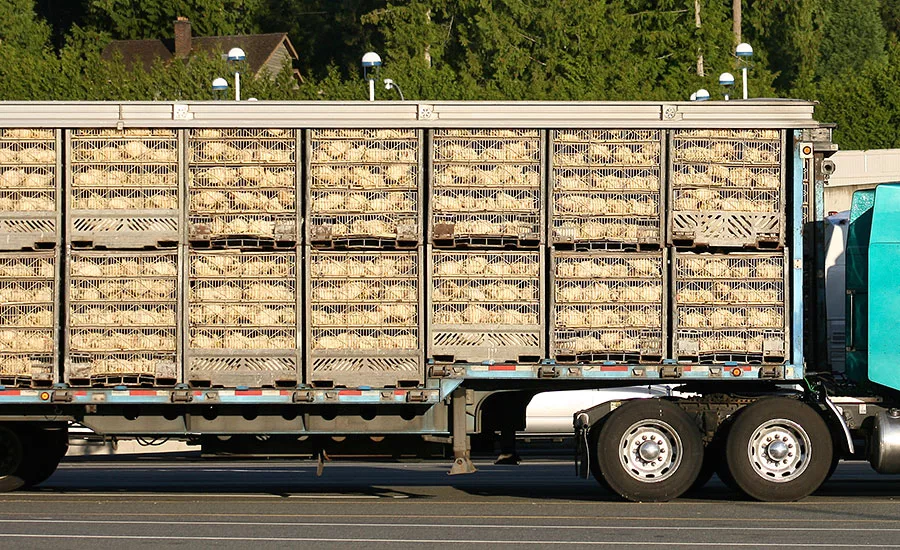
Chickens being transported to slaughter
The poultry stunning method called Low Atmospheric Pressure Stunning (LAPS) is gaining support
Chickens being transported to slaughter
January 28, 2016

The aim behind humane methods of slaughter in processing plants is to ensure the welfare of any animal subject to pre-slaughter stunning by means of diminishing stress levels and eliminating any pain felt during slaughter.

To sustain these criteria for humane slaughter is the drive behind a remarkable and novel system, called Low Atmospheric Pressure Stunning (LAPS). This technology completely eliminates the use of gas stunning and live shackling, which are usually compromising factors to the bird’s welfare. In addition, LAPS holds the capacity to drastically reduce slaughter costs while improving worker safety, and it could set the standard of humaneness achieved during slaughter of poultry in modern processing plants.

We had the opportunity to reach out to Randolph Cheek, manager of Techno Catch LLC (owners of the technology), to learn more about the origin, research & development, and current state of LAPS. Cheek has been close to this technology since its inception. The origins of LAPS trace back to the early 1990s, when Hollis Cheek, Randolph’s father, and Bruno Cattaruzzi, of Cattaruzzi International (an Italian poultry-processing equipment co.) began to ponder methods of poultry stunning alternative to electricity or controlled-atmosphere, gas-stunning systems. Having previous experience with aviation, Cheek was well aware of how altitudes greater than 12,000 feet can affect a biological system. This marked the beginning of investigation into low atmospheric pressure stunning.

The pilot prototype system was tested for the first time in June 2005. Cheek described this mockup as a simple, cylindrical-like structure with viewing access through a window at the top. The basic method of this stunning technique was to drop atmospheric pressure in the chamber, containing the bird, by pulling the atmospheric gases from the chamber with a vacuum pump, rendering the animal unconscious, and eventually to a state of non-recovery.

Dr.Yvonne Vizzier-Thaxton, Director of the Center for Food Animal Wellbeing at the University of Arkansas, also has been a part of this technology from the start. She and her late husband, Dr. J. Paul Thaxton, organized over a dozen pilot trials and published studies to optimize the LAPS system. As she reflected on her early experience with LAPS, Dr. Vizzier-Thaxton explained that she was skeptical that it would work.

To her surprise, the birds in the early trials displayed behaviors very similar to birds in gas stunning systems, which included rapid loss of posture followed by involuntary wing flapping and convulsions. Although the observed behaviors were acceptable and expected, researchers believed the rate of decompression could be optimized to further secure the welfare of the bird and prevent carcass damage. With additional equipment development, they were able to achieve this goal.

In order to bring this system into a commercial setting, TechnoCatch approached OK Foods Co., to see if the company was interested in accommodating space for the research and development of this new technology. With “No Objection” status from the USDA, TechnoCatch had the green light to run its system at the commercial level. Cheek describes this relationship as a “win-win” for both TechnoCatch and OK Foods.

Today, LAPS has attained “No Objection” status in Canada as well as the U.S., and it is currently under review by the European Commission (EC). The European Food Safety Authority (EFSA) is handling the assessment to ensure that LAPS meets animal-welfare requirements set in regulation 1099/2099 (On the protection of animals at the time of killing).

Cheek explained that “the biggest challenge was designing studies to answer EFSA’s questions,” but noted the active research effort underway to fully investigate the impact of LAPS on bird welfare. As part of regulation 1099/2009, all petitions for new stunning methods must include sound scientific evidence that animals do not suffer during the process. Cheek hopes that approval will be granted by the EC by January 2016 (after this issue goes to press).

In describing recent studies on LAPS, Cheek explains that technology used is new, extremely accurate and unbiased. In order to get a good baseline for the research, the birds were put in a dark (absent of light) holding area to calm them, then were tested in LAPS. Electroencephalogram (EEG) technology, used to monitor brain-wave activity, allowed the team to distinguish between states of awareness in the bird.

It was able to recognize that, in a dark chamber, the bird began in sleep mode, phased to sedative, anesthetized, unconscious and finally to a state of non-recovery, all in the absence of any pain response. Cheek believes the research on LAPS will help it achieve status as the most humane stunning system, and shall be introduced to all marketplaces.

If research continues to show a benefit to the humane handling of animals just prior to slaughter beyond current methods and systems, LAPS could set a new animal-welfare standard for the industry.  NP

KEYWORDS: humane handling research

Share This Story

Looking for a reprint of this article?
From high-res PDFs to custom plaques, order your copy today!


Kaleiah Schiller is a graduate research assistant at the University of California-Davis.
Kurt vogel 20191209

Dr. Kurt D. Vogel is the director of the Humane Handling Institute and a professor of animal welfare and behavior at the University of Wisconsin-River Falls. If you have any questions or comments, you can reach out to Dr. Vogel by email: kurt.vogel@uwrf.edu or phone: (715) 425-4704.

Recommended Content

JOIN TODAY
to unlock your recommendations.

Already have an account? Sign In

  • Double Charburger

    Premiumization drives burger category

    Shoppers seek out premium meat offerings to fulfill...
    Beef
    By: Sammy Bredar
  • JJS Adult Pekin duck

    Poultry Report 2025: Convenience propels poultry at retail

    Despite continued economic pressures, the poultry...
    Meat and Poultry Industry News
    By: Sammy Bredar
You must login or register in order to post a comment.

Report Abusive Comment

Manage My Account
  • eMagazine Subscriptions
  • Manage My Preferences
  • Newsletters
  • Online Registration
  • Subscription Customer Service
  • Connect with The National Provisioner

More Videos

Sponsored Content

Sponsored Content is a special paid section where industry companies provide high quality, objective, non-commercial content around topics of interest to the The National Provisioner audience. All Sponsored Content is supplied by the advertising company and any opinions expressed in this article are those of the author and not necessarily reflect the views of The National Provisioner or its parent company, BNP Media. Interested in participating in our Sponsored Content section? Contact your local rep!

close
  • A smiling man carrying a grocery basket is reaching down to pick up a package of meat in a grocery store.
    Sponsored byPIC

    The Green Light: New Data Shows 12-to-1 Support for Pork from PRRS-Resistant Pigs

  • Close up of a grocery cart full of groceries, a cropped image of a couple pushing the cart and a blurred background of the vegetable aisle.
    Sponsored byPIC

    New Market Research Finds Consumers in Eight Key Pork Markets Are Likely to Purchase Pork from Gene-Edited Pigs

  • Close up of a young pig with a blurred background.
    Sponsored byPIC

    New Research Forecasts Significant Economic and Market Impacts with PRRS-Resistant Pig Adoption

Popular Stories

JBS USA logo

JBS USA closing pair of processing facilities

Several cuts of beef, pork and chicken on a wooden board, cast iron pan and salt.

Validated thermal lethality data and a new tool for ensuring safety of RTE meats

New products include ready-to-heat proteins, flavor-forward lunchmeats and additions to the brand’s bacon portfolio.

Applegate Farms expands portfolio across deli, refrigerated and breakfast categories

2026 Top 100 Meat & Poultry Processors Report

Events

July 16, 2026

Strengthening Food Safety Plans for Modern Processing Operations

The live webinar will explore the latest technologies, emerging risks, and practical strategies shaping food safety programs across meat and poultry processing operations. Attendees will hear from industry experts on key challenges impacting processors today, along with approaches for strengthening and updating food safety plans across their facilities.

January 1, 2030

Webinar Sponsorship Information

For webinar sponsorship information, visit www.bnpevents.com/webinars or email webinars@bnpmedia.com.

View All Submit An Event

Products

Food Crime: An Introduction to Deviance in the Food Industry

Food Crime: An Introduction to Deviance in the Food Industry

See More Products
From Fresh to Frozen in 3 Minutes Flat: Unlocking the Secrets to Temperature Control Webinar Sponsored by Air Products

Related Articles

  • Humane handling teachable moments

    Humane handling: Teachable moments from 2020

    See More
  • Cattle stock image

    Teachable moments from 2022

    See More
  • Close-up of Cow

    Data pinpoints need for a continued focus on stunning efficacy and management

    See More

Related Products

See More Products
  • Optimizing Social Media from a B2B Perspective

  • Handbook of Poultry Science and Technology, Two-Volume Set

  • Handbook of Poultry Science and Technology, Volume 1, Primary Processing

See More Products

Events

View AllSubmit An Event
  • April 4, 2013

    A Systematic Approach to Humane Handling

    Learn to ensure your animal handling system qualifies in NAMA’s next webinar!
View AllSubmit An Event
×

Stay ahead of the curve. Unlock a dose of cutting-edge insights.

Receive our premium content directly to your inbox.

SIGN-UP TODAY
  • RESOURCES
    • Advertise
    • Contact Us
    • Directories
    • Store
    • Want More
  • SIGN UP TODAY
    • Create Account
    • eMagazine
    • Newsletter
    • Customer Service
    • Manage Preferences
  • SERVICES
    • Marketing Services
    • Reprints
    • Market Research
    • List Rental
    • Survey/Respondent Access
  • STAY CONNECTED
    • LinkedIn
    • Facebook
    • YouTube
    • X (Twitter)
  • PRIVACY
    • PRIVACY POLICY
    • TERMS & CONDITIONS
    • DO NOT SELL MY PERSONAL INFORMATION
    • PRIVACY REQUEST
    • ACCESSIBILITY

Copyright ©2026. All Rights Reserved BNP Media, Inc. and BNP Media II, LLC.

Design, CMS, Hosting & Web Development :: ePublishing