Provisioner logo
Provisioner logo
search
cart
facebook twitter linkedin youtube
  • Sign In
  • Create Account
  • Sign Out
  • My Account
Provisioner logo
Provisioner logo
  • NEWS
    • Industry News
    • Supplier News
    • Case Studies
    • Recalls
    • Regulations
    • New Consumer Products
  • EXCLUSIVES
    • Newsletters
    • Source Book
    • Sponsored Insights
    • Events
    • Webinars
    • Classifieds
    • White Papers
    • Provisioner Store
    • Market Research
  • MEAT PROCESSING
    • SUSTAINABILITY
    • Processing
    • Packaging
    • Ingredients
    • Formulation
    • Food Safety
    • Special Reports
    • Commentary
  • PROFILES
    • Processor Profiles
    • Processor of the Year
    • Top 100 Processors
  • MEDIA
    • Videos
    • Podcasts
  • DIRECTORY
  • MIHOF
  • INDEPENDENT PROCESSOR
  • EMAG
    • eMagazine
    • ARCHIVE ISSUES
    • Contact
    • Advertise
  • JOIN!
Meat and Poultry Processing

Supplier Perspectives

The benefits of single point automatic lubricators
By Toby Porter
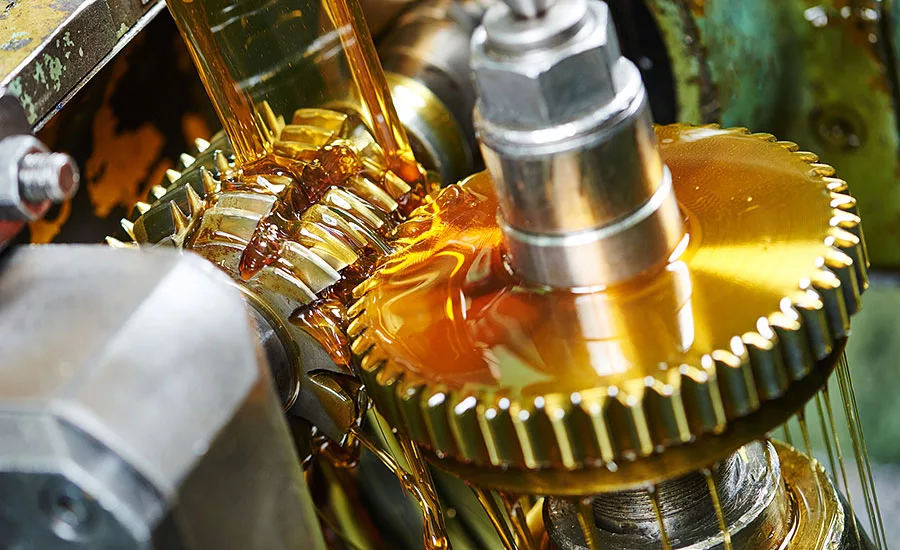
Single Point Automatic Lubricator (SPAL)

The use of a SPAL can lead to increased uptime for machinery and can help improve food safety.

January 16, 2017

When it comes to enhancements in food safety from a lubricant perspective, previously unknown terms such as NSF H1 and CFIA have become common place. Even ISO 21469, which refers to the hygienic manufacturing process for a food-grade lubricant, is becoming well known throughout the industry. It accounts for the lubricant and its ingredients, as well as the manufacturing process, handling, packaging and storage. The goal of this holistic approach is to ensure the lubricant is not only manufactured in accordance with the standards, but that it is also delivered intact and free from outside contaminants.

One aspect of these programs that is often overlooked is the application of food-grade and ISO 21469 certified lubricants once the grease cartridge and/or oil pail is inside a facility. One option to consider is the use of a single-point automatic lubricator (SPAL). A SPAL delivers the correct amount of lubricant at the appropriate interval over the lifetime of the applicator. When combined with the optimum lubricant, this can reduce the operating temperature of a component and avoid other issues that can occur due to under-lubrication. It is important to understand the benefits that can come from a SPAL, not only from a maintenance and safety standpoint, but also from a quality and reliability standpoint. 

Maintenance

The use of a SPAL can lead to increased uptime for machinery by offering continuous, uninterrupted lubrication for various components. These units can work to avoid common issues, such as:

  • Cross-contamination with incompatible materials
  • Ingress of water into a lubrication point
  • Missed or over-lubrication of key components
  • Excessive downtime for maintenance
  • Increased labor costs from manual lubrication

These issues can significantly impact the bottom line by reducing productivity and can also lead to unexpected and/or premature machinery failures. 

Quality

R&D within the lubricant industry has advanced in recent years. Products available today now cover applications that were thought to be possible only from non-H1 materials. Many organizations are now realizing it is not just about the decision to go to a food-grade program, but to ensure that the application of these products is done in a controlled manner. Using a SPAL can help improve food safety by avoiding the following:

  • Improper mixing with non-food-grade materials
  • Contamination coming from an open system and/or lubricant container

With these units, quality managers can be confident that the NSF H1 (food-grade) lubricant is being used in the location identified as a potential food contamination risk.

A number of SPALs are available in the marketplace, but it is important to understand that the proper lubricants are being used that can handle a specific application, while also providing adequate food safety properties. For example, one system can provide grease from one reservoir to multiple bearings – another can deliver oil from one tank that can feed different drip nozzles for a baking oven chain. SPALs may be recommended to provide a slow but continuous and defined volume of lubricant to an application point to minimize outside contamination.

The next step, which is equally as important, is to ensure the lubricants are being applied in a manner that continues along the food safety path in which they were manufactured. This is where the use of a SPAL can become vital to maintenance and quality programs. The use of a SPAL combined with NSF ISO 21469-certified lubricants ensure that the holistic approach to quality and safety has been continued beyond the production walls of the manufacturer and straight through to the application point of a component.  NP

KEYWORDS: lubricants lubrication supplier perspectives

Share This Story

Looking for a reprint of this article?
From high-res PDFs to custom plaques, order your copy today!


Toby Porter is a Food Market Manager and Sales Engineer at Klüber Lubrication NA LP. For more information, contact him at toby.porter@us.kluber.com.

Recommended Content

JOIN TODAY
to unlock your recommendations.

Already have an account? Sign In

  • Double Charburger

    Premiumization drives burger category

    Shoppers seek out premium meat offerings to fulfill...
    Special Reports
    By: Sammy Bredar
  • JJS Adult Pekin duck

    Poultry Report 2025: Convenience propels poultry at retail

    Despite continued economic pressures, the poultry...
    Meat and Poultry Industry News
    By: Sammy Bredar
You must login or register in order to post a comment.

Report Abusive Comment

Manage My Account
  • eMagazine Subscriptions
  • Manage My Preferences
  • Newsletters
  • Online Registration
  • Subscription Customer Service
  • Connect with The National Provisioner

More Videos

Sponsored Content

Sponsored Content is a special paid section where industry companies provide high quality, objective, non-commercial content around topics of interest to the The National Provisioner audience. All Sponsored Content is supplied by the advertising company and any opinions expressed in this article are those of the author and not necessarily reflect the views of The National Provisioner or its parent company, BNP Media. Interested in participating in our Sponsored Content section? Contact your local rep!

close
  • A smiling man carrying a grocery basket is reaching down to pick up a package of meat in a grocery store.
    Sponsored byPIC

    The Green Light: New Data Shows 12-to-1 Support for Pork from PRRS-Resistant Pigs

  • Close up of a grocery cart full of groceries, a cropped image of a couple pushing the cart and a blurred background of the vegetable aisle.
    Sponsored byPIC

    New Market Research Finds Consumers in Eight Key Pork Markets Are Likely to Purchase Pork from Gene-Edited Pigs

  • Close up of a young pig with a blurred background.
    Sponsored byPIC

    New Research Forecasts Significant Economic and Market Impacts with PRRS-Resistant Pig Adoption

Popular Stories

Spam Dog

Hormel rolls out Spam hot dog for foodservice applications

Various new Primal snack sticks on a table amongst pencils, apples, a pair of glasses, lunch bags and a water bottle.

Protein demand drives snacking occasions

Several cuts of beef, pork and chicken on a wooden board, cast iron pan and salt.

Validated thermal lethality data and a new tool for ensuring safety of RTE meats

2026 Top 100 Meat & Poultry Processors Report

Events

June 11, 2026

From Fresh to Frozen in 3 Minutes Flat: Unlocking the Secrets to Temperature Control

Join Tony Vacaro, Foods Industry Manager, and Emile Klein, Foods Market Strategy Manager at Air Products and Chemicals, Inc. , as they tackle key questions surrounding heat removal in food processing. 

January 1, 2030

Webinar Sponsorship Information

For webinar sponsorship information, visit www.bnpevents.com/webinars or email webinars@bnpmedia.com.

View All Submit An Event

Products

Food Crime: An Introduction to Deviance in the Food Industry

Food Crime: An Introduction to Deviance in the Food Industry

See More Products
From Fresh to Frozen in 3 Minutes Flat: Unlocking the Secrets to Temperature Control Webinar Sponsored by Air Products

Related Articles

  • Rocket Rack

    Robroy Raceways introduces new catalog detailing the benefits of Rocket Rack

    See More
  • Employee Matters: The Benefits Challenge

    See More
  • New study highlights benefits of the partnership between contract farmers and chicken companies

    See More

Events

View AllSubmit An Event
  • November 7, 2013

    Food Plant of the Future: The Future of Wastewater Management

    Available On-Demand Effective management of wastewater is becoming increasingly critical to food and beverage processors as the cost for incoming water increases...
  • April 26, 2012

    Food Plant of the Future: Raising the Bar on Plant Air Quality

    On demand Exclusively for thought-leaders in food and beverage processing facility management, Food Plant of the Future webinars are presented by Hixson, a leading design and engineering firm of food processing facilities in North America.
View AllSubmit An Event
×

Stay ahead of the curve. Unlock a dose of cutting-edge insights.

Receive our premium content directly to your inbox.

SIGN-UP TODAY
  • RESOURCES
    • Advertise
    • Contact Us
    • Directories
    • Store
    • Want More
  • SIGN UP TODAY
    • Create Account
    • eMagazine
    • Newsletter
    • Customer Service
    • Manage Preferences
  • SERVICES
    • Marketing Services
    • Reprints
    • Market Research
    • List Rental
    • Survey/Respondent Access
  • STAY CONNECTED
    • LinkedIn
    • Facebook
    • YouTube
    • X (Twitter)
  • PRIVACY
    • PRIVACY POLICY
    • TERMS & CONDITIONS
    • DO NOT SELL MY PERSONAL INFORMATION
    • PRIVACY REQUEST
    • ACCESSIBILITY

Copyright ©2026. All Rights Reserved BNP Media, Inc. and BNP Media II, LLC.

Design, CMS, Hosting & Web Development :: ePublishing