Provisioner logo
Provisioner logo
search
cart
facebook twitter linkedin youtube
  • Sign In
  • Create Account
  • Sign Out
  • My Account
Provisioner logo
Provisioner logo
  • NEWS
    • Industry News
    • Supplier News
    • Case Studies
    • Recalls
    • Regulations
    • New Consumer Products
  • EXCLUSIVES
    • Newsletters
    • Source Book
    • Sponsored Insights
    • Events
    • Webinars
    • Classifieds
    • White Papers
    • Provisioner Store
    • Market Research
  • MEAT PROCESSING
    • SUSTAINABILITY
    • Processing
    • Packaging
    • Ingredients
    • Formulation
    • Food Safety
    • Special Reports
    • Commentary
  • PROFILES
    • Processor Profiles
    • Processor of the Year
    • Top 100 Processors
  • MEDIA
    • Videos
    • Podcasts
  • DIRECTORY
  • MIHOF
  • INDEPENDENT PROCESSOR
  • EMAG
    • eMagazine
    • ARCHIVE ISSUES
    • Contact
    • Advertise
  • JOIN!
Food SafetyExpert Commentary

Consultants Corner

Navigating FSMA's supplier management requirements
By Andrew Lorenz
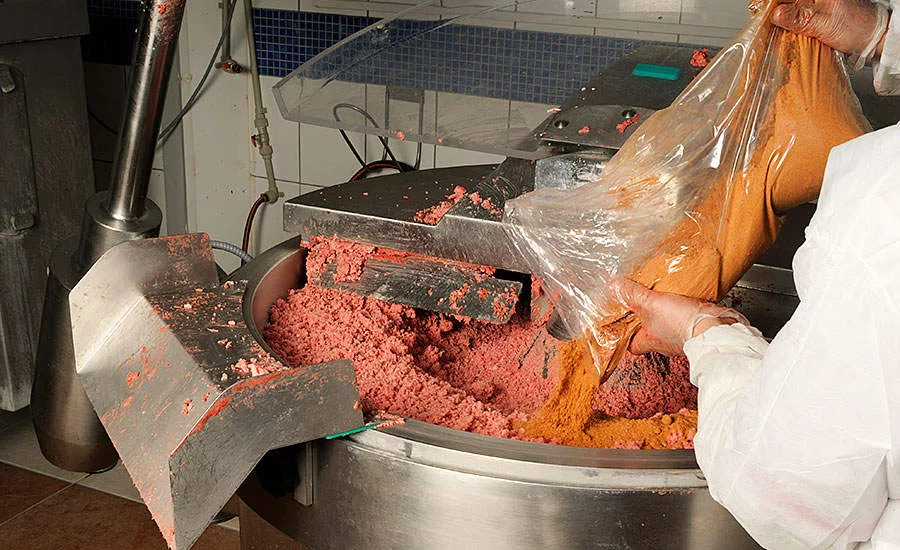
A process mixes ingredients into meat
January 15, 2018

So, your auditor comes in and asks for your supply chain program. You ask, “What is that?”

Welcome to the world of the USDA Food Safety Modernization Act (FSMA) and/or Global Food Safety Initiative (GFSI). Both require you to have a supplier management program. We will examine some of the requirements based on FSMA, but please realize if you are being audited by the Safe Quality Food Institute (SQF), the British Retail Consortium (BRC), etc., auditors may ask for additional items in your program. Remember, if you are a dual-jurisdiction facility, you may fall under FSMA. If so, your regulatory burden just got a lot bigger.

What is the purpose of the supply chain program? The intent is for the manufacturer to analyze all ingredients it uses for potential risk, then determine where those risks are being controlled in the supply chain. Once you know where they are being controlled, you are required to verify those controls are being done and that they are effective in greatly minimizing or preventing the hazard.  

For example: You use dried spices as an ingredient in your product. We know there have been Salmonella outbreaks associated with dried spices. How does your spice supplier address that risk? Maybe it irradiates, heat treats, pressure pasteurizes, etc., but you must verify your supplier is doing it and that its system is adequate to address the hazard by significantly minimizing it or preventing it. Another example is that you use a cure powder, and you say too much nitrite is a hazard. How does your supplier know it isn’t putting too much nitrite in the product? Again, you must verify it.

The supply chain is everything before you and everything after you. But you don’t have to physically verify all the way back to the ingredient’s origin. The company that supplies you verifies its supplier and you review its supply chain program to make sure it is verifying the requirements before it gets to them. But it’s not quite as simple as it sounds. The premise is that each step in the supply chain makes sure the one before it is doing everything it needs to in order to significantly minimize or prevent food safety hazards. But if they aren’t, you have to.

When do you not need to have a program? The answer is straightforward, if you control the hazards in your facility or at a subsequent processing facility (which provides verification).  

Example 1: You are a cooking facility that has identified E. coli O157:H7 as a hazard on your risk analysis of incoming product, but you cook these products to lethality — you would not need a program.

Example 2: You produce a raw pork sausage product and have identified Salmonella as a potential hazard on the raw pork you receive. You produce and package the product and ship it to a high-pressure pasteurization company which subsequently labels the product and sends you a confirmation certificate of the validated pasteurization process.

So, what are the basic requirements of the written program? The U.S. Food and Drug Administration (FDA) created a bit of a monster with rule 21 CFR 117.410, where you can find the general requirements. The basics that must be included in your written plan include:

  1. Stating that you are using approved suppliers.
  2. How you verify your suppliers are following the requirements.
  3. How you document your verification
  4. How you verify supplier-applied controls at establishments other than the supplier or your establishment, and how you verify it.
  5. How the supplier chain identifies how any hazard controlled in the supply chain has been significantly minimized or prevented.
  6. You must also have written procedures for receiving raw materials and other ingredients and they must include how you verify that you only receive products from approved suppliers.
  7. The plan must be written.

You have a lot of options concerning implementation of your program. The rule is designed to rely heavily on audits. An entire auditing industry was born out of the rule. For small and mid-size processors relying on suppliers, third-party audits may be the only way to go.

If you haven’t gone over these requirements in the regulation, I strongly suggest you do so.  If you are required to have a program under the FSMA, it is a law — one you don’t want to get sideways of.

To access it online, click here.  NP

KEYWORDS: consultants corner food safety best practices FSMA

Share This Story

Looking for a reprint of this article?
From high-res PDFs to custom plaques, order your copy today!


Andrew Lorenz is president of We R Food Safety! For more information, email him at andrew@werfoodsafety.com.

Recommended Content

JOIN TODAY
to unlock your recommendations.

Already have an account? Sign In

  • Double Charburger

    Premiumization drives burger category

    Shoppers seek out premium meat offerings to fulfill...
    Special Reports
    By: Sammy Bredar
  • JJS Adult Pekin duck

    Poultry Report 2025: Convenience propels poultry at retail

    Despite continued economic pressures, the poultry...
    Meat and Poultry Industry News
    By: Sammy Bredar
You must login or register in order to post a comment.

Report Abusive Comment

Manage My Account
  • eMagazine Subscriptions
  • Manage My Preferences
  • Newsletters
  • Online Registration
  • Subscription Customer Service
  • Connect with The National Provisioner

More Videos

Sponsored Content

Sponsored Content is a special paid section where industry companies provide high quality, objective, non-commercial content around topics of interest to the The National Provisioner audience. All Sponsored Content is supplied by the advertising company and any opinions expressed in this article are those of the author and not necessarily reflect the views of The National Provisioner or its parent company, BNP Media. Interested in participating in our Sponsored Content section? Contact your local rep!

close
  • A smiling man carrying a grocery basket is reaching down to pick up a package of meat in a grocery store.
    Sponsored byPIC

    The Green Light: New Data Shows 12-to-1 Support for Pork from PRRS-Resistant Pigs

  • Close up of a grocery cart full of groceries, a cropped image of a couple pushing the cart and a blurred background of the vegetable aisle.
    Sponsored byPIC

    New Market Research Finds Consumers in Eight Key Pork Markets Are Likely to Purchase Pork from Gene-Edited Pigs

  • Close up of a young pig with a blurred background.
    Sponsored byPIC

    New Research Forecasts Significant Economic and Market Impacts with PRRS-Resistant Pig Adoption

Popular Stories

Spam Dog

Hormel rolls out Spam hot dog for foodservice applications

Various new Primal snack sticks on a table amongst pencils, apples, a pair of glasses, lunch bags and a water bottle.

Protein demand drives snacking occasions

Several cuts of beef, pork and chicken on a wooden board, cast iron pan and salt.

Validated thermal lethality data and a new tool for ensuring safety of RTE meats

2026 Top 100 Meat & Poultry Processors Report

Events

June 11, 2026

From Fresh to Frozen in 3 Minutes Flat: Unlocking the Secrets to Temperature Control

Join Tony Vacaro, Foods Industry Manager, and Emile Klein, Foods Market Strategy Manager at Air Products and Chemicals, Inc. , as they tackle key questions surrounding heat removal in food processing. 

January 1, 2030

Webinar Sponsorship Information

For webinar sponsorship information, visit www.bnpevents.com/webinars or email webinars@bnpmedia.com.

View All Submit An Event

Products

Food Crime: An Introduction to Deviance in the Food Industry

Food Crime: An Introduction to Deviance in the Food Industry

See More Products
From Fresh to Frozen in 3 Minutes Flat: Unlocking the Secrets to Temperature Control Webinar Sponsored by Air Products

Related Articles

  • Eagle RMI 400 with TraceServer

    Seafood processors prep for FSMA requirements with Eagle RMI 400

    See More
  • sara bratager interview.png

    Evolving traceability recordkeeping requirements under FSMA Section 204

    See More
  • Two Meat Plant Workers Wearing Food Safety Apparel

    Which FS+Q works best for you?

    See More

Related Products

See More Products
  • Food Plant Sanitation: Design, Maintenance, and Good Manufacturing Practices, Second Edition

  • Handbook of Food Products Manufacturing: Health, Meat, Milk, Poultry, Seafood, and Vegetables, Volume 2

  • Handbook of Poultry Science and Technology, Volume 2, Secondary Processing

See More Products

Events

View AllSubmit An Event
  • November 7, 2013

    Food Plant of the Future: The Future of Wastewater Management

    Available On-Demand Effective management of wastewater is becoming increasingly critical to food and beverage processors as the cost for incoming water increases...
View AllSubmit An Event
×

Stay ahead of the curve. Unlock a dose of cutting-edge insights.

Receive our premium content directly to your inbox.

SIGN-UP TODAY
  • RESOURCES
    • Advertise
    • Contact Us
    • Directories
    • Store
    • Want More
  • SIGN UP TODAY
    • Create Account
    • eMagazine
    • Newsletter
    • Customer Service
    • Manage Preferences
  • SERVICES
    • Marketing Services
    • Reprints
    • Market Research
    • List Rental
    • Survey/Respondent Access
  • STAY CONNECTED
    • LinkedIn
    • Facebook
    • YouTube
    • X (Twitter)
  • PRIVACY
    • PRIVACY POLICY
    • TERMS & CONDITIONS
    • DO NOT SELL MY PERSONAL INFORMATION
    • PRIVACY REQUEST
    • ACCESSIBILITY

Copyright ©2026. All Rights Reserved BNP Media, Inc. and BNP Media II, LLC.

Design, CMS, Hosting & Web Development :: ePublishing
