State of the Latin American meat & poultry market

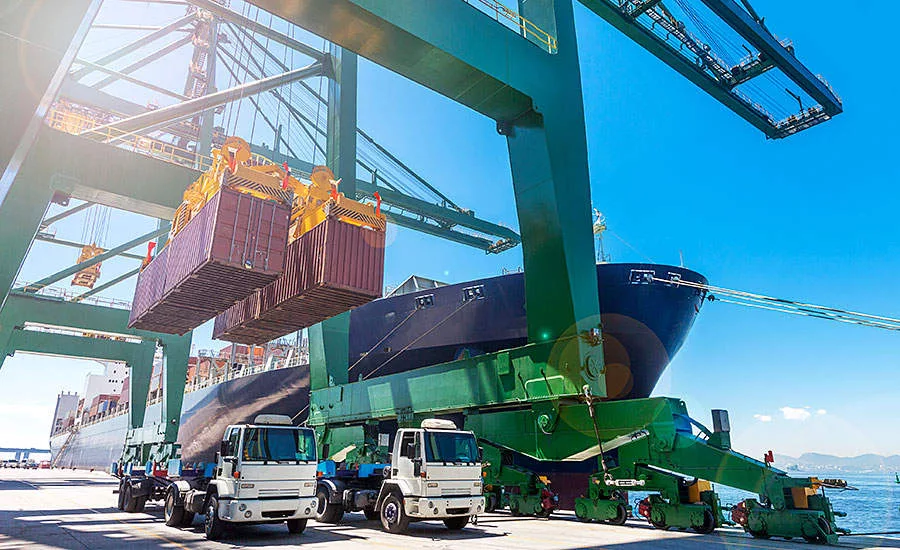
For the Latin American meat and poultry marketplace, the year 2017 has been marked by the political uncertainty generated by the United States. NAFTA and its renegotiation will especially affect the region because of the effects of possible export and import limitations. Brazil continues to be the key player in both production and export numbers while other Latin American producing nations look for new export markets to strengthen the sector.
Meat
The production and consumption of meat at a global level continues a growth that started in 1960s. The type of meat that is most consumed is pork, followed by poultry and beef/buffalo. Meat producers in Latin America aspire to gain larger export market shares, while some nations such as Argentina struggle to regain their lost position with the Latin American meat export markets. Other economies such as Brazil have struggled with food safety scandals that tainted the entire industry and, as a result, some export markets have imposed temporary bans on meat and poultry from Brazil in this past year. Globally, 66 percent of beef/buffalo meat comes from the United States, Australia, Brazil and India; however, within Latin America — despite the Argentinian recovery — Uruguay and Paraguay exported twice as much meat as Argentina, while Brazil exported six times more.
According to the Institute for the Promotion of Argentine Beef (IPCVA), Argentine beef cannot aggressively seek exports of meat to international markets, but must do so gradually and steadily. The South American country concentrated 2 percent of total beef exported in volume worldwide in 2016. According to the figures of the private sector, it’s estimated that the country will export a total of 300,000 tons of meat in all of 2017, which would mean an annual increase of close to 25 percent. The encouraging figures in the industry point to the recovery caused by the change in export legislation, which has not only affected the Argentine meat sector but also many other economic sectors.
During the first quarter of 2017, sales in export markets of fresh meat cuts from Argentina were 53,931 tons. These figures, provided by SENACA, also highlight that the main receiving markets were China (27,652 tons at an average of U.S. $5,073 per ton), Chile (8,768 to 5,722), Israel (7,538 to 5,917) and Russia (4,269 to 3,358).
Despite the meat scandal in Brazil by two of the most important producers in the country, Brazil is the main exporter of meat globally. Annually, the South American giant exports U.S. $5,500 million of beef and U.S. $6,500 million in chicken. It is also the country that exports to the greatest number of world destinations, almost 150 countries. The main importers of Brazilian meat from are China and Hong Kong with purchases from January to May of 2017 of 155,405 tons, followed by Russia with 58,749 tons, Iran with 43,178 tons, Egypt with 27,408 tons, Saudi Arabia with 23,322 tons and Chile with 21,103 tons.
Since 2005, Paraguay has enjoyed great results due to the public-private collaboration that takes place in the country and has achieved incremental meat exports. In 2015, the country exported more meat to the world than Argentina, a country historically known for the production and export of meat. This plan, which has achieved prolific results, has been based on the improvement of agricultural health, higher quality and productivity, livestock certifications and traceability, better infrastructure and control of transport of livestock from the field to refrigerators, and international marketing and promotion.
Paraguay exported 103,523 tons of beef for a total value of U.S. $440 million for the period spanning from January to May 2017. The export capacity of the country, however, is reduced because of the lack of access to the Chinese market. Paraguay is one of the countries that recognizes Taiwan as a nation and therefore enters into political conflict with China. Chile, Brazil, Vietnam and Israel are the main export destinations for Paraguayan meats.
Exports of beef from Uruguay have grown during the first half of the year by 14 percent in volume and 13 percent in turnover with respect to the same period of 2016 (according to data from the National Meat Institute). Uruguayan meat has a strong reputation within the international marketplace, and producers have been able to take advantage of political situations such as the sanctions against Russia. In this case Uruguayan exports have grown six fold in comparison with the time before the sanctions were imposed. But China, USA and Israel remain the most important destinations for Uruguayan beef exports.
Poultry
The chicken-producing countries of Latin America represent 44 percent of the chicken that is produced globally, although the pace of growth has been slower than that of some other regions globally. Brazil, the leading producer and exporter within Latin America, compiled through its Ministry of Agriculture, Livestock and Supply (Map) and Brazilian Agricultural Research Company (EMBRAPA) a report on the projection of agricultural growth for the next decade. The report’s projections expect the industry growth to be of 33.4 percent (2.8 percent per year), going from 13,440 thousand tons in 2017 to 17,930 thousand tons in 2027.
The growth of production also relies, apart from exports, on domestic consumption in the region. The lower cost of chicken compared with other types of proteins, along with the ease of access to this type of meat at the point of sale, present the two key factors in the growth of poultry sales for the next decade. According to the Latin American Poultry Association (ALA), Brazil leads the consumption of chicken meat with 45 kilograms per person (per capita) per year. They are followed by Venezuela (41 kg), Argentina (40.5 kg), Peru (39 kg) and Bolivia (37 kg), a position that is shared with Panama.
These figures not only draw the attention of the countries of the region, but have also put international investors in the spotlight. During 2017, Pollos Bucanero, one of the largest chicken producers in Colombia, was bought by the American giant Cargill. This purchase, which places the Colombian company in the spotlight, shows interest in the region. The acquisitions also respond to a strategic need to better serve the region’s customers, taking advantage not only of production but also of commercial and distribution networks.
Pork
Pork continues to be the most consumed protein in Western nations. China continues to be the largest export market for Latin American pork producers despite seeing slight decrease in demand in 2017. Meanwhile, the U.S. is seeing better export data mainly due to demand from Mexico. Despite the uncertainty generated by the result of NAFTA, Mexican companies continue to expand production and capabilities. As an example of this, Granjas Carroll, Mexico’s largest pork producer, announced that it will double its sows for production for the next four years, investing more than U.S. $550 million. Mexico is not the only country that sees an increase in production. The Argentine company Cabaña las Lilas will also make an investment in pork production. The company’s core business is beef production, but top company executives think there are ample opportunities in pork production.
Once again, despite the meat scandal, Brazil continues to be one of the most important producers on the global scene. The pork industry does not expect to have major changes because of the scandal or because of the natural conditions of the market. Even so, Brazil added a new export destination to its portfolio: Peru. But in turn, Peru also opened the doors to the Bolivian market, one that shows great growth potential in the consumption of this type of meat. Although the Peruvian market is not the most important, Argentina and Uruguay continue to be the main consumers of Brazilian pork. According to USDA data, Brazil is expected to increase its pork meat production figures by 3 percent.
Mexican producers produced almost 1.4 million tons of pork meat in the past year. Almost 90 percent of export capacity goes to the U.S., and as long as NAFTA remains on the same terms, that figure should stay consistent for the coming year. The year 2016 saw total exports increase 9.5 percent over the previous year and the opening of some markets of less importance and large potential: South Korea, Japan and China. It is also expected that for the total of the year 2017 there will be an increase in the production of pork of 4.2 percent. NP
Editor’s Note: This information originally appeared as part of an article on the State of the Industry in the December 2017 issue of Industria Alimenticia,
a sister publication in the BNP Media portfolio. To read more about the Latin American food industry, visit www.industriaalimenticia.com.
Looking for a reprint of this article?
From high-res PDFs to custom plaques, order your copy today!