Provisioner logo
Provisioner logo
search
cart
facebook twitter linkedin youtube
  • Sign In
  • Create Account
  • Sign Out
  • My Account
Provisioner logo
Provisioner logo
  • NEWS
    • Industry News
    • Supplier News
    • Case Studies
    • Recalls
    • Regulations
    • New Consumer Products
  • EXCLUSIVES
    • Newsletters
    • Source Book
    • Sponsored Insights
    • Events
    • Webinars
    • Classifieds
    • White Papers
    • Provisioner Store
    • Market Research
  • MEAT PROCESSING
    • SUSTAINABILITY
    • Processing
    • Packaging
    • Ingredients
    • Formulation
    • Food Safety
    • Special Reports
    • Commentary
  • PROFILES
    • Processor Profiles
    • Processor of the Year
    • Top 100 Processors
  • MEDIA
    • Videos
    • Podcasts
  • DIRECTORY
  • MIHOF
  • INDEPENDENT PROCESSOR
  • EMAG
    • eMagazine
    • ARCHIVE ISSUES
    • Contact
    • Advertise
  • JOIN!
Supplier News

Low Temperature Evaporation: an efficient complement to traditional drying
By Industry News
HRS Heat Exchangers Profood Tech
August 20, 2019

By Matt Hale, International Sales and Marketing Director, HRS Heat Exchangers

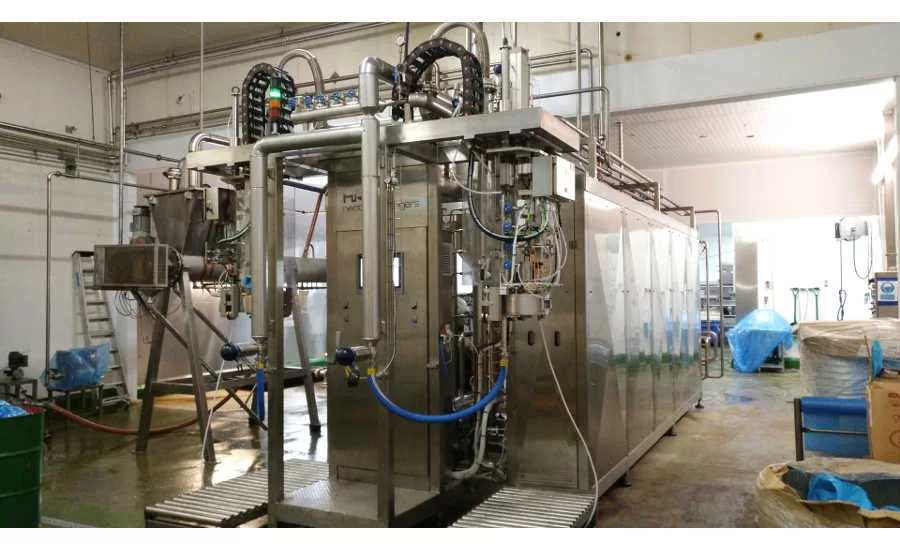
There are two main methods of reducing the water content of food products and ingredients: drying and evaporation. Materials with a low dry matter have often been dried, while liquids are more frequently evaporated. However, as the food industry develops new and innovative products which are often not truly solid, these traditional divisions are becoming less clear cut. Consequently, many food processors are now combining low temperature evaporation with drying to provide an efficient and energy-saving moisture removal process for a variety of products, not just liquids.

Why dry and concentrate?
There are many reasons for reducing or removing water from food, from shelf life extension and preventing spoilage, to quality preservation or as part of the manufacturing process, such as concentrating or dehydrating products. As a result, a number of different drying systems have been developed, with the main technique being spray drying. Other less common techniques include tunnel drying and drum drying, but all these methods are designed to move air over the product to dry it without damage. Other specialist techniques including freeze drying and vacuum drying may also be employed in certain situations.

Drying rates will vary with the method used, but general considerations include:

1. The nature of the material, including its physical and chemical composition, moisture content, etc.

2. The size, shape, and arrangement of the materials to be dried

3. The relative humidity, or partial pressure of water vapor, in the air being used for drying

4. Air temperature

As well as the energy required, other factors such as preserving product quality or preventing a barrier layer (which will inhibit the drying process) from forming, need to be considered.

One thing that most types of drying process used in food production have in common is the use of direct or indirect heat to drive moisture from the product. This is frequently inefficient in terms of energy use, requiring high inputs and taking a relatively long time to achieve the required level of moisture reduction. The Carbon Trust has therefore recommended considering alternatives to conventional process heating, such as, microwave drying (which is expensive and not suitable for many products) or using lower temperature processes, such as evaporation. There is also an increasing overlap between using evaporation and drying techniques, and a combined approach is becoming more common.

Evaporation to complement drying
Drying is extremely energy intensive. However, by using evaporation to reduce the water content of fluid products before they are sent to a spray drier, the overall amount of energy used by the process can be significantly reduced, improving efficiencies and lowering both the cost and environmental impact of the process. In some cases using such a combined technique can double the throughput of an existing spray dryer.

Low temperature evaporation combines the use of a vacuum to reduce the boiling point of the liquid to be removed, together with traditional high temperature evaporators based on heat exchanger technology.

Using a vacuum in the system to reduce the boiling point not only reduces the amount of energy required, but can preserve the quality of some products which would be damaged by high temperatures.

Combining systems into a multiple-effect evaporator allows larger quantities of water to be removed for the same initial heat input. Each evaporator is held at a lower pressure than the previous one: because the boiling temperature of water decreases as pressure decreases, the vapor boiled off in one vessel can be used to heat the next–only the first vessel requires an external source of heat, which can be taken from another process elsewhere or generated specifically for the purpose.

Selecting the right heat exchanger
The type of heat exchanger used will depend on the nature of the products being treated. For materials with low or medium viscosities, such as brines, sugar solutions or evaporated milk, using the HRS K Series as an evaporator module provides high heat transfer rates with good resistance to fouling. For more challenging and viscous materials, such as purees, malt extracts, liquid cheeses and whey protein concentrates, the HRS Unicus Series contains a self-cleaning scraper mechanism which reduces fouling and maintains heat transfer rates (and therefore operational efficiency).

While both the K Series and Unicus Series are commonly used in the type of multi-effect evaporation system described above, both heat exchanger models can also be used in other types of evaporator design if required.

As can be seen, for non-solid materials with low water content, such as gels, jellies and some emulsions, low temperature evaporation can significantly reduce running costs compared with other drying systems. Where you have a process which requires the removal of water from a food product it may be worth speaking to a heat exchange specialist before you commit to traditional drying methods.

For more information visit www.hrs-heatexchangers.com.

KEYWORDS: hrs heat exchangers

Share This Story

Looking for a reprint of this article?
From high-res PDFs to custom plaques, order your copy today!

Recommended Content

JOIN TODAY
to unlock your recommendations.

Already have an account? Sign In

  • Double Charburger

    Premiumization drives burger category

    Shoppers seek out premium meat offerings to fulfill...
    Special Reports
    By: Sammy Bredar
  • JJS Adult Pekin duck

    Poultry Report 2025: Convenience propels poultry at retail

    Despite continued economic pressures, the poultry...
    Turkey
    By: Sammy Bredar
You must login or register in order to post a comment.

Report Abusive Comment

Manage My Account
  • eMagazine Subscriptions
  • Manage My Preferences
  • Newsletters
  • Online Registration
  • Subscription Customer Service
  • Connect with The National Provisioner

More Videos

Sponsored Content

Sponsored Content is a special paid section where industry companies provide high quality, objective, non-commercial content around topics of interest to the The National Provisioner audience. All Sponsored Content is supplied by the advertising company and any opinions expressed in this article are those of the author and not necessarily reflect the views of The National Provisioner or its parent company, BNP Media. Interested in participating in our Sponsored Content section? Contact your local rep!

close
  • A smiling man carrying a grocery basket is reaching down to pick up a package of meat in a grocery store.
    Sponsored byPIC

    The Green Light: New Data Shows 12-to-1 Support for Pork from PRRS-Resistant Pigs

  • Close up of a grocery cart full of groceries, a cropped image of a couple pushing the cart and a blurred background of the vegetable aisle.
    Sponsored byPIC

    New Market Research Finds Consumers in Eight Key Pork Markets Are Likely to Purchase Pork from Gene-Edited Pigs

  • Close up of a young pig with a blurred background.
    Sponsored byPIC

    New Research Forecasts Significant Economic and Market Impacts with PRRS-Resistant Pig Adoption

Popular Stories

Various new Primal snack sticks on a table amongst pencils, apples, a pair of glasses, lunch bags and a water bottle.

Protein demand drives snacking occasions

Several cuts of beef, pork and chicken on a wooden board, cast iron pan and salt.

Validated thermal lethality data and a new tool for ensuring safety of RTE meats

Cargill logo

Cargill initiates lockout at Fort Morgan beef plant after union rejects contract

2026 Top 100 Meat & Poultry Processors Report

Events

January 1, 2030

Webinar Sponsorship Information

For webinar sponsorship information, visit www.bnpevents.com/webinars or email webinars@bnpmedia.com.

View All Submit An Event

Products

Food Crime: An Introduction to Deviance in the Food Industry

Food Crime: An Introduction to Deviance in the Food Industry

See More Products
From Fresh to Frozen in 3 Minutes Flat: Unlocking the Secrets to Temperature Control Webinar Sponsored by Air Products

Related Articles

  • Low-Temperature Processing

    Stampede Culinary Partners rolls out Low-Temperature Processing technology

    See More
  • oil skimmer

    Turning fat, oil and grease in wastewater into an efficient profit center

    See More
  • Energy Efficient Refrigerant System

    How to jumpstart an energy efficient refrigerant system

    See More

Related Products

See More Products
  • food-crime.jpg

    Food Crime: An Introduction to Deviance in the Food Industry

  • GlobalData_logo_blue_header.png

    Frozen Meat (Meat) Market in the United States of America - Outlook to 2023...

See More Products

Events

View AllSubmit An Event
  • June 11, 2026

    From Fresh to Frozen in 3 Minutes Flat: Unlocking the Secrets to Temperature Control

    On Demand Join Tony Vacaro, Foods Industry Manager, and Emile Klein, Foods Market Strategy Manager at Air Products and Chemicals, Inc. , as they tackle key questions surrounding heat removal in food processing. 
View AllSubmit An Event
×

Stay ahead of the curve. Unlock a dose of cutting-edge insights.

Receive our premium content directly to your inbox.

SIGN-UP TODAY
  • RESOURCES
    • Advertise
    • Contact Us
    • Directories
    • Store
    • Want More
  • SIGN UP TODAY
    • Create Account
    • eMagazine
    • Newsletter
    • Customer Service
    • Manage Preferences
  • SERVICES
    • Marketing Services
    • Reprints
    • Market Research
    • List Rental
    • Survey/Respondent Access
  • STAY CONNECTED
    • LinkedIn
    • Facebook
    • YouTube
    • X (Twitter)
  • PRIVACY
    • PRIVACY POLICY
    • TERMS & CONDITIONS
    • DO NOT SELL MY PERSONAL INFORMATION
    • PRIVACY REQUEST
    • ACCESSIBILITY

Copyright ©2026. All Rights Reserved BNP Media, Inc. and BNP Media II, LLC.

Design, CMS, Hosting & Web Development :: ePublishing