Tech| Food Safety
Sanitizing: The potentially heavy cost of cleaning
Mishandling and misusing sanitizing chemicals can have severe ramifications for meat and poultry processing plant workers.
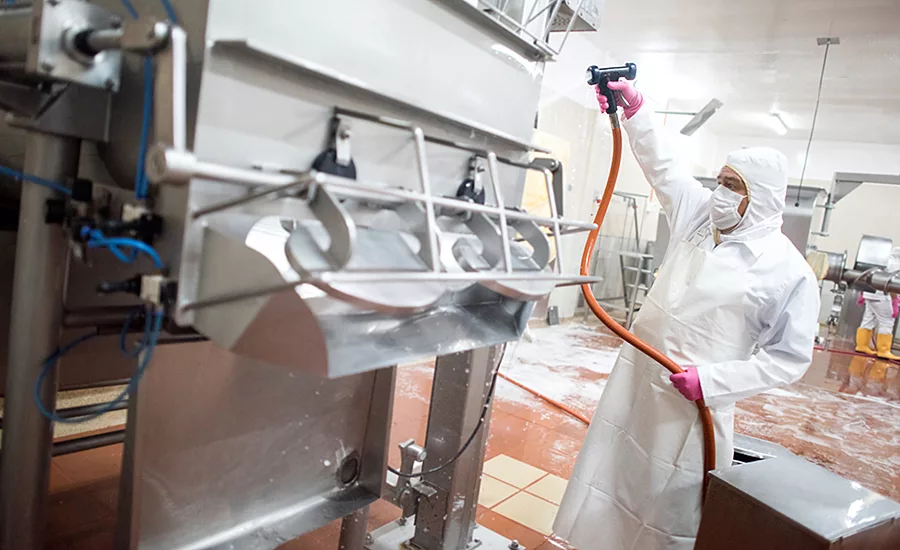
Sanitizing meat and poultry plants must be done, but it can be perilous.
An ever-present prospect of workers improperly using or mixing chemicals may have severe consequences. Ramifications range from burns and blisters to the skin, eyes, ears, nose, mouth, throat and lungs to dizziness, headaches, blurred vision, breathing difficulties, nausea, vomiting, pulmonary and/or pharyngeal edema, chronic bronchitis, emphysema and contact dermatitis, analysts say.
“Chemicals always pose a risk to employees (who) don’t handle them correctly,” says Jen Allen, vice president of operations and engineering for Allen Safety, an Orlando, Fla.-based global safety and process improvement company. “This is particularly true when plant workers change the applications and use of the chemical from what the chemical vendor designed it for.”
The impact that sanitizing chemicals will have on workers depends on the strength and mixture of the formulation as well the personal protective equipment (PPE) they are wearing Allen says, noting that maladies may occur gradually and evolve into chronic conditions from repeated exposure without the proper PPE. That can include worsening asthma, allergies, coughing and choking, cancers and reproduction or developmental problems in female workers, she says.
Symptoms also will vary in accordance with employee exposure time to a chemical; frequency of exposure incidents; the ventilation and air changeovers in rooms where workers prepare chemicals; and the type of application, such as liquid, foam or spray.
While following basic safety procedures can prevent most occurrences, getting employees to always act correctly remains a challenge, analysts say.
A host of potential problems
Workers often ignore recommendations in suppliers’ safety data sheets (SDS), which can cover movement, storage, mixing and titrating of chemicals, Allen says.
Among possible mishaps are applying chemicals at a stronger strength than the manufacturer recommends and atomizing a chemical that product developers only intended for use as a liquid, she says.
Common sanitizing chemicals include sodium hypochlorite, acetic and peracetic acids, sulfuric acid, hydrochloric acid, hydrogen peroxide, chlorine dioxide, sodium hydroxide, iodophors and quaternary ammonia.
The performance of sanitizers, meanwhile, will vary in accordance with the specific microbials in a plant, says Norman Marriott, emeritus professor in the College of Agriculture and Life Sciences at Virginia Polytechnic Institute and State University (Virginia Tech) in Blacksburg.
“Chlorine compounds are effective and the least expensive, although they are more irritating and corrosive than iodine and quaternary ammonium compounds,” he says. “Bromine compounds are more beneficial for wastewater treatment than for sanitizing surfaces, while quaternary ammonium compounds are more restrictive in their activities but effective against mold growth and Listeria monocytogenes.”
He adds that iodine compounds can effectively destruct viruses, acid-based quaternary ammonium sanitizers and chlorine dioxide sanitizers are effective in the control of Listeria monocytogenes and plants can incorporate glutaraldehyde and fatty imidazoline compounds as a sanitizer for conveyor lubricants in meat operations.
Adherence to guidelines is essential
Following the safety data sheets is the “first line of defense” for safeguarding sanitizing crews that are using such chemicals, along with adhering to the PPE requirements for handling and applying the sanitizers, Allen says.
“The forms of the necessary PPE may change in accordance with the chemical, its strength and the way workers are applying the sanitizer,” she says. “Without following the SDS, the facility may be using the chemical in a way that requires additional PPE that operators may not be providing to their employees. That can lead to chronic repeat exposure situations.”
The appropriate personal protective equipment for sanitizing meat and poultry plants typically includes a chemical-resistant rain suit, chemical-resistant gloves and over-sleeves, chemical-resistant boots and other slip-resistant footwear, goggles and a hard hat, Allen says.
“This ensures that that the employee’s head is protected when working around equipment and that their skin and eyes are protected from chemical burns,” she says. “Yet, workers may require additional PPE such as respirators or face shields in accordance with the chemical they are applying and the application method.”
Plant operators should commission an industrial hygiene survey to identify respiratory hazards so they can leverage the necessary equipment and prevent excessive exposure, Allen says, adding that the state of a facility’s ventilation system can determine the impact that vapors from mixing, titrating, storage and application will have on workers.
In addition, processors should devise safety procedures for chemical receiving and handling, while routinely training employees on sanitizing methods and frequently evaluating their facilities to confirm that there are effective defenses in place, she says.
It also is important for operators to consistently rotate the various sanitizers to prevent bacterial resistance to specific mixtures, says Michael Govro, technical scheme manager of supply chain food safety operations at NSF International, an Ann Arbor, Mich.-based certification organization that does supply chain assurance and second- and third-party auditing for food manufacturing and processing companies.
Cutting corners comes with a price
It can be troublesome, however, to properly instruct workers on the most effective, efficient and safest ways to sanitize meat and poultry plants because of the dearth of sanitation experts in many facilities, Marriott says.
“The availability of processing employees with the knowledge and experience to conduct training is low because the workers also frequently must attend to their other responsibilities,” he says. In response, operators should consider outsourcing the functions to suppliers and consultants, or in-house technical services or quality assurance personnel, Marriott says.
Yet, even workers that have the competence to safely sanitize plants risk becoming too complacent in their activities and not always having safety on their minds, particularly if they have gone long periods without mishaps, Allen says.
“Employees slowly stop perceiving that their actions are risky and become numb to the process,” she says. “Injuries follow this combination.”
The increasingly shorter periods that many plant operators schedule for sanitizing also creates a riskier environment, Allen says
“Plants are starting production earlier and processing is going longer, slicing the time that management is allocating for cleaning,” she says. “It causes stress in the workers and translates to cutting corners in their safety actions.”
To help reduce such safety threats, processing plant managers and supervisors must identify and address the root causes of problems, including worker laxity and skimping on procedures, which often involves time, equipment or staffing issues, Allen says.
Considerations can include better and more frequent training and having management review case studies that spotlight the most effective protective measures and instruct why such procedures are important, she says.
In addition, supervisors should regularly observe workers on production floors to ensure they follow proper sanitizing practices, which includes using their PPE correctly, Allen says. “That can be tremendously helpful in achieving and maintaining a zero-injury culture,” she says.
Indeed, rewarding workers for using the proper personal protective equipment and following safe sanitizing guidelines can be a strong motivator for sustaining such activity, Govro says. Possible rewards may include naming an employee of the month, providing a coveted parking space, distributing gift cards or receiving extra paid time off, he says. NP
Looking for a reprint of this article?
From high-res PDFs to custom plaques, order your copy today!