2021 Poultry Report: poultry prospers during the pandemic
Ground turkey and chicken dark meat do particularly well as consumers turn to dining at home.
Chicken and turkey sales, like every meat category, posted impressive numbers for the 12 months ending Nov. 1, 2020, reports IRI, in Chicago. Chicken grew 12.7 percent in dollar sales to approximately $13.2 billion with volume sales up 8.3 percent. Turkey dollar sales also rose 12.5 percent to approximately $2.7 billion with volume sales up 5.3 percent.
In general, the poultry and meat category was one of the retail stars in terms of sales growth year over year. It also enjoyed consistently high numbers month over month and even week over week, says Chris DuBois, IRI’s senior vice president. Chicken and turkey were a large part of those gains, specifically with the ground format. During panic buying in the spring of 2020, dollar sales for meat and poultry were up 20 to 30 percent with volume in the mid-teens, DuBois says.
These numbers are not surprising, as people changed to working and dining at home.
“The biggest story of the year was the shift from foodservice to retail sales,” DuBois says. “Meat was one of the biggest beneficiaries, and chicken and turkey held strong throughout that.”
Not only would retail experience gains from the shift out of foodservice, but when shoppers were buying at the store, their baskets were higher, even though the absolute trips were down, DuBois says. In turn, consumers picked specific stores at which to shop and bought more product when there. Additionally, during the pandemic, meat and poultry e-commerce sales, whether delivery or store pick-up, have skyrocketed and grown much faster than total e-commerce sales.
“That to me is a big, big behavior change,” DuBois says. “Typically, we saw e-commerce sales up week over week well over 100 percent compared on 2019. E-commerce has come in a big way to the meat department.”
Category Growth Drivers
During the pandemic, meat and poultry from the grind has done extremely well, with poultry experiencing double-digit sales performance. Ground chicken is up 22 percent in dollar sales and 18.7 percent in volume sales. Ground turkey, which comprises about 56 percent of turkey sales, is up 15.3 percent in dollar sales and 12 percent in volume, IRI reports.
“Ground turkey is growing faster than the category overall, and it’s a big chunk,” DuBois highlights. “That’s been an exciting part.”
Ground poultry continues to be popular because it fits into many different recipes, and consumers can use it in a wide variety of ways, DuBois adds.
As far as particular cuts, chicken dark meat, especially boneless thighs, has performed particularly well. While the United States has historically consumed more white-meat boneless breasts than other nations globally, international trends around dark meat are moving into the U.S. poultry market.
“Frankly, boneless thighs have been just an amazing product, and you can see the adoption throughout a lot of different households,” DuBois says. “So, it’s almost a change now from white meat to dark meat, and that’s been one of the biggest changes in the case. Not all manufacturers have that kind of capability to produce those kinds of cuts at scale, so this is a big deal for the retailers who can get it at the right price and quantity.”
While chicken wings have traditionally performed well and have experienced double-digit growth during the pandemic, turkey wings also are growing in popularity and are up more than 20 percent in dollar sales. Turkey wing dollar and volume sales also grew faster than the total turkey category, IRI reports. Additionally, turkey legs were up 16 percent in dollar sales and about 9 percent in volume.
“It’s a big enough category to matter, and it became something of a novelty that turned into a really nice product line for a lot of retailers that offered those different cuts,” DuBois says.
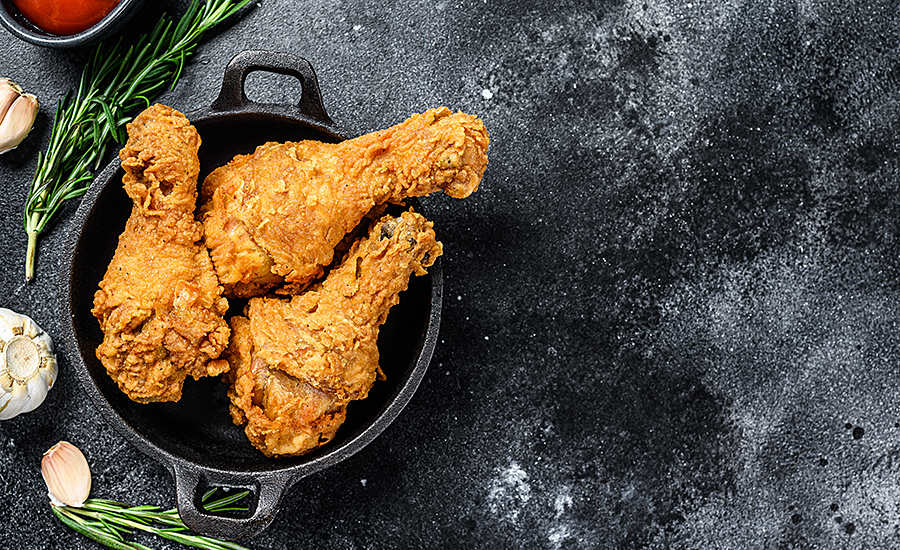
Turkey Thrives
The pandemic has had a tremendous impact on turkey sales, says Joel Brandenberger, president of the National Turkey Federation (NTF), in Washington, D.C. Between April and September 2020, shoppers bought turkey nearly four times more often than during the same period in 2019. This amounted to an extra 250,000 pounds of turkey sold, he says.
“Obviously, that’s a positive and there is a hope in the industry, with people cooking at home more and trying new things and having more meals to figure out during the week, they found their way to some turkey products, and they’ll keep coming back,” Brandenberger says.
| Product | Dollar Sales | Dollar Sales Year Ago | Dollar Sales % Change VS YA | Volume Sales | Volume Sales Year Ago | Volume Sales & Sales VS YA |
| CHICKEN | $13,194,397,016 | $11,708,055,053 | 12.7% | 5,445,626,880 | 5,030,130,516 | 8.3% |
| AO CHICKEN | $2,657,505 | $2,442,798 | 8.8% | 652,064 | 618,088 | 5.5% |
| CHICKEN BACKS & NECKS | $2,964,225 | $3,635,855 | -18.5% | 2,948,353 | 3,851,039 | -23.4% |
| CHICKEN BREAST | $7,831,627,030 | $7,023,221,730 | 11.5% | 2,441,266,749 | 2,291,550,783 | 6.5% |
| CHICKEN COMBO PACKS | $41,795,724 | $69,428,485 | -39.8% | 26,195,518 | 42,346,277 | -38.1% |
| CHICKEN GIBLETS | $54,515,092 | $62,902,626 | -13.3% | 33,958,514 | 41,051,547 | -17.3% |
| CHICKEN ING. CUTS | $189,556,306 | $172,558,943 | 9.9% | 51,561,144 | 48,932,898 | 5.4% |
| CHICKEN LEGS | $1,097,992,794 | $977,321,484 | 12.3% | 988,265,080 | 896,578,252 | 10.2% |
| CHICKEN OFFAL | $13,079,772 | $13,703,841 | -4.6% | 6,933,986 | 7,308,533 | -5.1% |
| CHICKEN THIGHS | $1,772,765,499 | $1,526,071,953 | 16.2% | 850,488,506 | 761,288,222 | 11.7% |
| CHICKEN WHOLE BIRD | $776,471,550 | $687,813,862 | 12.9% | 575,826,041 | 531,680,932 | 8.3% |
While turkey sales at retail were outstanding, these gains did not offset the losses turkey experienced at foodservice and was a challenge for the turkey industry, Brandenberger adds.
Directly related to the pandemic, the turkey industry experienced production cutbacks at the farm and throughout processing. The industry’s top concern was instituting new protections to keep workers safe, Brandenberger says. For 2020, when final numbers are tallied, the turkey industry’s expectation is that production numbers would be down anywhere from 3 to 5 percent.
Despite disruptions on both sides of the supply and demand equation caused by the pandemic, turkey pricing trended up in 2020 with the expectation that trend will continue into this year as well, Brandenberger adds.
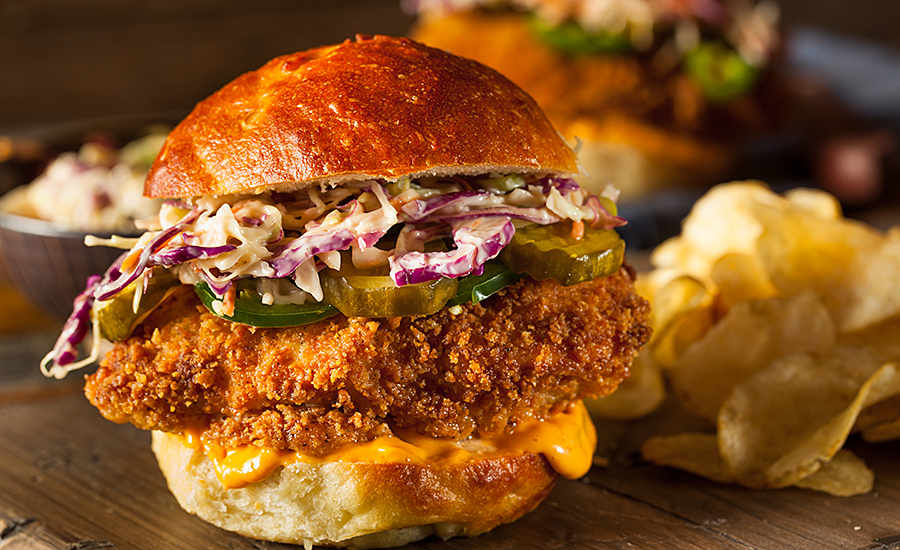
Chicken Flourishes
Late last year, the National Chicken Council (NCC), in Washington, D.C., released a survey that found that half of Americans, who eat chicken say they have eaten it more than any other protein during COVID-19. Nearly half (48 percent) of survey respondents also say they increased the amount of chicken they prepared at home during the pandemic, while 39 percent said they increased the ways they prepare chicken.
Approximately half (52 percent) of Americans prefer grilled chicken while the other would opt for fried (48 percent), the survey found. Americans also slightly prefer boneless wings (53 percent) over traditional bone-in wings. Plus, two in five Americans say the breast is their favorite cut of chicken, but wings (20 percent), thighs (17 percent) and drumsticks (14 percent) are also popular. Three-quarters (74 percent) of chicken eaters also would prefer to eat real chicken over plant-based alternatives, the survey found.
“This research shows how the hard work of the entire chicken industry during this challenging time has supported many Americans who are looking for an easy-to-prepare, affordable and healthy meal,” says Tom Super, the NCC’s senior vice president of communications.
In response to the pandemic, chicken companies added additional protective measures to help keep employees safe and healthy in addition to following all of the CDC and local health department guidelines. In the marketplace, COVID-19 has resulted in unprecedented challenges and changes to both chicken supply and demand. Although the U.S. chicken industry has addressed the disruptions to operations, the burden being carried is nonetheless unprecedented, Super says. Volatility, especially in the foodservice and export markets, is continuing to increase uncertainty in decision-making about future production and product plans, he says.
As far as production, the U.S. Department of Agriculture (USDA) predicted a chicken production increase for 2020 to be somewhat less than 2 percent and less than 1.5 percent for 2021. At the same time, USDA analysts argue that lower feed costs during 2020-21 will motivate an increase in chicken production.
“Traditionally, this correlation between feed costs and pounds produced has been a relatively good argument,” Super says. Given the experience of the ongoing pandemic, caution is much more likely as 2021 begins to signal its opportunities and challenges, he adds.
If USDA’s outlook proves correct regarding production and exports, average per capita chicken consumption in 2020 will be more than 98 pounds and almost 99 pounds in 2021, a new record, Super adds.

Poultry Innovation
With all the uncertainty of the pandemic, COVID-19 is likely to solidify many better-for-you trends in poultry, says Kaitlin Kamp, consumer insights analyst in food and drink at Mintel International, in Chicago.
“Pre-pandemic, brands and consumers were shifting priorities to clean-label and humanely raised poultry products,” she says. “Due to the health nature of the pandemic, consumers are placing even more emphasis on eating healthy.”
| Product | Dollar Sales | Dollar Sales % Change VS YA | Volume Sales | Volume Sales % Chage VS YA |
| TURKEY | $2,664,571,957 | 12.5% | 1,243,085,942 | 5.3% |
| AO TURKEY | $180 | -55.0% | 8 | -55.0% |
| GROUND TURKEY | $1,494,789,882 | 15.3% | 409,841,011 | 12.0% |
| TAILS | $16,035,197 | 21.4% | 6,957,358 | 23.4% |
| TURKEY BACKS & NECKS | $37,375,936 | 18.2% | 15,441,614 | 13.6% |
| TURKEY BREAST | $341,626,444 | 11.8% | 125,315,436 | 6.1% |
| TURKEY COMBO PACKS | $3,065 | -78.0% | 1,626 | -46.9% |
| TURKEY GIBLETS | $1,502,691 | 25.5% | 967,435 | 32.7% |
| TURKEY INGREDIENT CUTS | $8,042,415 | 33.8% | 3,010,802 | 17.4% |
| TURKEY LEGS | $63,307,689 | 16.4% | 23,754,963 | 9.3% |
| TURKEY OFFAL | $1,813 | 2.5% | 1,594 | -10.3% |
| TURKEY THIGHS | $15,261,704 | 14.9% | 5,555,986 | 14.1% |
| TURKEY WHOLE BIRD | $594,415,642 | 4.4% | 616,192,605 | 0.0% |
| TURKEY WINGS | $92,209,299 | 20.3% | 36,045,505 | 17.6% |
For example, according to Mintel’s Global COVID-19 tracker data as of Sept. 17-25, 42 percent of consumers place a higher priority on eating healthy since the outbreak.
“This has amplified consumers’ need for healthy protein options like poultry, but also cleaner versions of products focused on wellness,” Kamp says. “However, these same attitudes will also likely benefit plant-based proteins, which poultry brands will want to remain mindful of. Products like Perdue Chicken Plus, which include a blend of animal and plant-based protein, are positioned to perform well.”
According to Mintel’s Global New Products Database, GMO-free grew on poultry products by 30.4 percent, all-natural grew 3.5 percent and no additives or preservatives grew 3.2 percent from 2018 to 2019.
“This aligns with our consumer research, which shows that consumers are most influenced by better-for-you claims that speak to animal welfare and a lack of processing, like all-natural and no additives or preservatives, over low/no claims like low-fat and low-sodium,” Kamp says.
Hand-in-hand with health, increased transparency is trending in poultry. For example, companies such as Farmer Focus and Shady Brook Farms allow consumers to type in their product ID online to trace their product back to its origin and meet their farmer.
“The press around meat processing plants during COVID-19 made consumers consider where their poultry comes from more than before, pointing to opportunities for brands to provide further transparency into products and processes,” Kamp says. “Twenty-six percent of protein consumers agree that the COVID-19 pandemic made them think about where their meat comes from more.”
This is part of a larger trend within the category of establishing stronger connections between products and their farms. “This farm focus is being communicated with clean-label products,
farm-fresh messaging and transparency into farming practices,” Kamp says.
Organic and no antibiotics ever have been big growth drivers, and organic chicken comprises about 5 percent of the category, IRI’s DuBois adds. In fact, organic in the past five years has grown much faster than the category as a whole.
“In the last six months, it’s grown a little slower than total chicken only because the growth across every meat protein has been so fast and so big that organic and no antibiotics ever haven’t really kept pace,” DuBois explains. “Looking into 2021 and 2022, organic will come back to the front in terms of sales change.”
As far as the range of claims made for poultry products, Innova Market Insights, in Arnhem, The Netherlands, reports 99 percent of all new poultry products were positioned as convenient and 72 percent of new products made a passive health claim. Additionally, 56 percent of new poultry products made an ethical claim.
For example, Innova found companies increasingly are incorporating convenient packaging, such as resealable packaging for multiportion frozen chicken products packaged in bags. Poultry also is often highlighted as being a good source of protein, and companies are clearly highlighting on front of pack the protein content per serving.
Poultry companies also are more often highlighting ethical claims relating to animal welfare and farming practices on packaging. Still, Innova found that one of the most common ethical claims is relating to the use of growth hormones and antibiotics, a trend seen across all meats in North America. In 2019, 47 percent of new poultry products, excluding deli meats, stated they were antibiotic and/or hormone free.

Poultry Consumption Trends in Restaurants
The COVID-19 pandemic has transformed consumer behavior as routines have shifted, and this contributed to shifts in poultry consumption in restaurants. While many restaurant brands have seen declines in sales, a few brands specializing in chicken are performing relatively well, says Anne Mills, senior manager of consumer insights at Chicago-based Technomic, A Winsight Co. Wingstop is one such chain, having recorded a 32 percent increase in same-store sales in the second-quarter.
In general, chicken wings are doing well as they are an off-premise friendly food, Mills explains. Chicken sandwiches also continue to be a favorite. Recently, more brands have introduced new or updated chicken sandwiches, including Farmer Boy’s, Zaxby’s, Church’s Chicken and Fuku.
Flavor innovation with chicken and turkey also continues with restaurants, with spicy flavors particularly popular. For example, Wings Over launched Fire Buffalo Sauce with Ghost Pepper, Buffalo Wild Wings recently introduced four new sauces for its signature chicken wings (Orange Chicken, Lemon Pepper, Carolina Reaper and Pizza) and Oggi’s recently added an Adobo Chicken Pizza.
“Adobo chicken is growing on restaurant menus, and it’s not limited just to chicken,” Mills says.
Restaurants also are experimenting with new poultry cuts. For example, Wingstop is currently testing bone-in chicken thighs, due in part to volatile chicken prices.
New restaurant concepts and models also are being tested around poultry. For instance, Buffalo Wild Wings opened a location called Buffalo Wild Wings Go that focuses more on takeout and delivery.
Additionally, chicken is playing a role in the growth of virtual restaurants. “Many virtual restaurants — those that only have an online presence and deliver food — focus on chicken such as chicken wings or fried chicken,” Mills says. “For example, Chili’s introduced a virtual concept called It’s Just Wings.’”
This year, consumer behavior will remain fluid as the pandemic continues to affect consumer routines, potentially influencing poultry trends. Mills anticipates the shift toward off-premise, which accelerated in 2020, will continue into 2021.
Looking into 2021
To keep the industry growing, turkey manufacturers will need to continue to make turkey more accessible to consumers during a midweek basis. Making it easier to cook, clean up and prepare will be key, DuBois says.
“The big key to unlocking it is just trying to find a way to make some of these smaller cuts or smaller breasts or legs much more accessible to consumers,” DuBois says. “I would call it increasing the confidence of the at-home chef is the key.”
Brandenberger agrees people need to see more innovative ways to cook with turkey, and development of new products will be important.
The NTF also grew its barbecue outreach program for turkey, which has flourished during the pandemic with grill and smoker sales soaring.
“We think that even more people are going to be looking for tips and recipes for cooking outside and getting out there and trying out those new grills,” says Beth Breeding NTF’s vice president of communications and marketing.
With chicken, retailers will continue to push dark-meat sales. “What we are seeing right now is dark meat is really that engine of growth in the chicken case, and I expect retailers to continue to shift more and more space to that,” DuBois says. “I expect a lot more innovative cuts like the boneless thighs to become just part of what a manufacturer offers.”
Going forward, snacking also will be an important area for growth. For example, meat snacks like jerky grew an additional 10 percent in sales in 2020, and poultry brands have an opportunity to increase consumption frequency and increase daily usage by riding the snacking wave, Mintel’s Kamp says. Bite-size products accompanied with a dipping sauce also are growing, with brands such as Foster Farms and FarmRich creating snackable chicken products, Kamp says.
Manufacturers also will continue to offer more turkey and chicken products into different dayparts, such as breakfast, along with improving products already in the category, DuBois adds. NP
Looking for a reprint of this article?
From high-res PDFs to custom plaques, order your copy today!