Provisioner logo
Provisioner logo
search
cart
facebook twitter linkedin youtube
  • Sign In
  • Create Account
  • Sign Out
  • My Account
Provisioner logo
Provisioner logo
  • NEWS
    • Industry News
    • Supplier News
    • Case Studies
    • Recalls
    • Regulations
    • New Consumer Products
  • EXCLUSIVES
    • Newsletters
    • Source Book
    • Sponsored Insights
    • Events
    • Webinars
    • Classifieds
    • White Papers
    • Provisioner Store
    • Market Research
  • MEAT PROCESSING
    • SUSTAINABILITY
    • Processing
    • Packaging
    • Ingredients
    • Formulation
    • Food Safety
    • Special Reports
    • Commentary
  • PROFILES
    • Processor Profiles
    • Processor of the Year
    • Top 100 Processors
  • MEDIA
    • Videos
    • Podcasts
  • DIRECTORY
  • MIHOF
  • INDEPENDENT PROCESSOR
  • EMAG
    • eMagazine
    • ARCHIVE ISSUES
    • Contact
    • Advertise
  • JOIN!
Meat and Poultry Industry NewsMeat and Poultry ProcessingPork

Commentary: AMSA

Predicting pork quality from temperature and pH data

Understanding and controlling pH and temperature decline early in processing offers a new way to enhance meat quality and consistency across the supply chain.
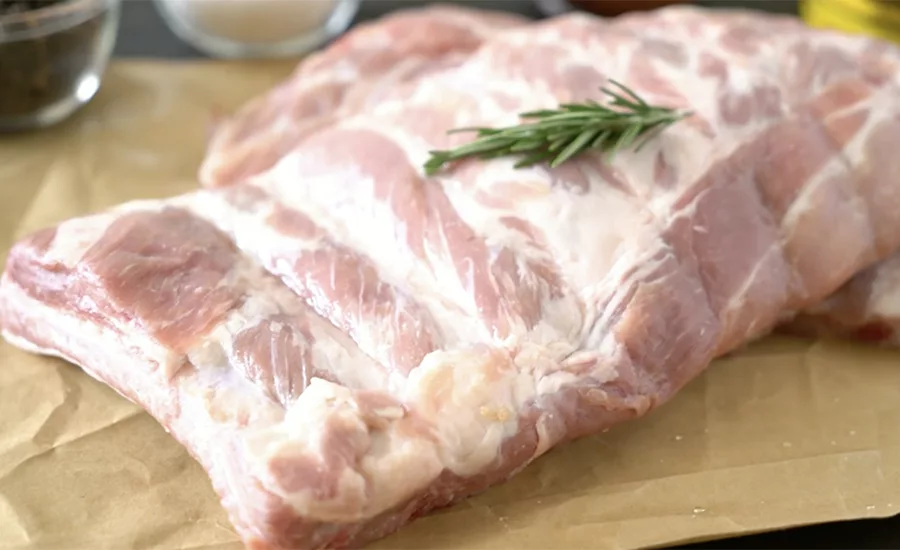
raw pork
December 30, 2025

In the pork industry, product consistency is one of the most important measures of success. Variability in color, drip loss, and firmness can influence consumer perception, shelf life, and export value. To better understand these drivers, PIC investigated whether meat quality could be predicted early in the chilling process — before fabrication even begins.

The research evaluated carcasses from multiple U.S. processing facilities using different chilling systems, continuously recording loin muscle temperature and pH over a 20-hour period. The goal was to build predictive models that connect early postmortem changes to measurable quality outcomes. The results provide valuable insight for processors seeking to improve uniformity and reduce losses caused by inconsistent quality.

Drivers of pork quality

Pigs are highly sensitive to stress during transport and handling before harvest. Factors such as loading conditions, lairage time, and handling methods can accelerate muscle metabolism and trigger a rapid decline in pH after slaughter. When this drop in pH occurs while the carcass temperature is still high, muscle proteins begin to break down, resulting in pale, soft, and exudative (PSE) pork.

Controlling temperature decline is one of the most effective ways to manage this risk. A faster chilling rate slows postmortem glycolysis, reducing the rate of pH decline and helping maintain color and water-holding capacity.

In commercial environments, these parameters are difficult to measure continuously. Most studies have relied on limited data collected at set intervals. PIC scientists used specialized equipment to capture pH and temperature readings every minute throughout the chilling process, creating a detailed picture of how carcasses respond to different cooling systems. This continuous data allowed for stronger modeling and a clearer understanding of the biological changes that influence final product quality.

Study design

The research evaluated 210 carcasses across four commercial facilities. Two plants used blast chilling, one used soft-blast chilling, and one used conventional chilling. Temperature and pH were measured continuously in the loin muscle for 20 hours postmortem, starting 40 minutes after slaughter. Loin quality was assessed 24 hours postmortem based on color, pH, firmness, marbling, and drip loss. Data were analyzed to identify time points and patterns that best predicted final product quality.

Key findings

Carcasses that consistently cooled faster produced higher-quality loins. Facilities using blast chilling showed a reduced rate and extent of pH decline (P < .05), resulting in darker color (P < .05) and less drip loss (P < .05). Conventional chilling, which allowed a slower temperature decline, was associated with faster pH decline and more drip loss.

The most accurate predictive model used pH values taken at 75, 300, and 360 minutes postmortem along with temperature data at 345 and 1,200 minutes. This model predicted 20-hour bone-in pH with a correlation coefficient of r = 0.94, demonstrating that early postmortem data can accurately forecast final product quality.

Moderate correlations were also found for predicting color and drip loss, showing that both traits are influenced by how quickly the carcass cools within the first several hours postmortem.

Applying the findings in the plant

These results provide practical insights for commercial processors who want to fine-tune chilling systems and reduce variation in product quality. By identifying specific time points in the temperature and pH decline curves, plants can target process adjustments where they have the most impact, optimizing air flow, carcass spacing and chilling duration to consistently achieve desired quality outcomes.

The research also highlights the potential for more data-driven process control. As sensor technology and automation continue to advance, early postmortem measurements could eventually be used for real-time carcass classification. This would enable processors to make immediate adjustments that protect meat quality and improve overall efficiency.

Integrating genetics and processing

This research builds on PIC’s broader focus on genetic improvement and carcass value realization. While genetics define the biological potential for meat quality, postharvest management determines how much of that potential is achieved.

Environmental factors such as chilling rate and handling practices often have a stronger influence on final meat quality than genetics alone. By measuring how temperature and pH interact during the chilling process, the study connects PIC’s genetic advancements to practical applications that help processors consistently deliver high-quality pork.

Industry Impact

While these models will require validation within individual plants, they represent a practical step toward predictive quality management. Each abattoir operates under unique conditions — such as chilling system design, carcass size and airflow — that influence cooling and pH patterns. Developing facility-specific models could further improve accuracy and allow processors to fine-tune their systems for optimal performance.

Understanding and controlling pH and temperature decline early in processing offers a new way to enhance meat quality and consistency across the supply chain. For processors and consumers alike, this approach helps ensure that every cut meets the standard of quality expected from modern pork production.

By Brandon Fields, McKenna Kent, Xuenan Chen, Bruno Valente, Neal Matthews, L. Clay Eastwood, Andrzej Sosnicki

KEYWORDS: American Meat Science Association (AMSA) meat science quality assurance

Share This Story

Looking for a reprint of this article?
From high-res PDFs to custom plaques, order your copy today!


Recommended Content

JOIN TODAY
to unlock your recommendations.

Already have an account? Sign In

  • Double Charburger

    Premiumization drives burger category

    Shoppers seek out premium meat offerings to fulfill...
    Beef
    By: Sammy Bredar
  • JJS Adult Pekin duck

    Poultry Report 2025: Convenience propels poultry at retail

    Despite continued economic pressures, the poultry...
    Meat and Poultry Industry News
    By: Sammy Bredar
You must login or register in order to post a comment.

Report Abusive Comment

Manage My Account
  • eMagazine Subscriptions
  • Manage My Preferences
  • Newsletters
  • Online Registration
  • Subscription Customer Service
  • Connect with The National Provisioner

More Videos

Sponsored Content

Sponsored Content is a special paid section where industry companies provide high quality, objective, non-commercial content around topics of interest to the The National Provisioner audience. All Sponsored Content is supplied by the advertising company and any opinions expressed in this article are those of the author and not necessarily reflect the views of The National Provisioner or its parent company, BNP Media. Interested in participating in our Sponsored Content section? Contact your local rep!

close
  • A smiling man carrying a grocery basket is reaching down to pick up a package of meat in a grocery store.
    Sponsored byPIC

    The Green Light: New Data Shows 12-to-1 Support for Pork from PRRS-Resistant Pigs

  • Close up of a grocery cart full of groceries, a cropped image of a couple pushing the cart and a blurred background of the vegetable aisle.
    Sponsored byPIC

    New Market Research Finds Consumers in Eight Key Pork Markets Are Likely to Purchase Pork from Gene-Edited Pigs

  • Close up of a young pig with a blurred background.
    Sponsored byPIC

    New Research Forecasts Significant Economic and Market Impacts with PRRS-Resistant Pig Adoption

Popular Stories

JBS USA logo

JBS USA closing pair of processing facilities

Various new Primal snack sticks on a table amongst pencils, apples, a pair of glasses, lunch bags and a water bottle.

Protein demand drives snacking occasions

Several cuts of beef, pork and chicken on a wooden board, cast iron pan and salt.

Validated thermal lethality data and a new tool for ensuring safety of RTE meats

2026 Top 100 Meat & Poultry Processors Report

Events

January 1, 2030

Webinar Sponsorship Information

For webinar sponsorship information, visit www.bnpevents.com/webinars or email webinars@bnpmedia.com.

View All Submit An Event

Products

Food Crime: An Introduction to Deviance in the Food Industry

Food Crime: An Introduction to Deviance in the Food Industry

See More Products
From Fresh to Frozen in 3 Minutes Flat: Unlocking the Secrets to Temperature Control Webinar Sponsored by Air Products

Related Articles

  • Close-up of a pink pig's head in a pen, looking left, with a bright light in the background.

    Dietary fat sources and levels of vitamin E isoforms impact carcass traits and fresh pork quality of heavy slaughter weight pigs

    See More
  • Fresh Fish! New product quickly verifies seafood quality from catch to consumption

    See More
  • Chef Jay McCarthy and USMEF’s Jonathan Neo

    Culinary event in Indonesia showcases US pork quality

    See More

Related Products

See More Products
  • meat quality.jpg

    Meat Quality: Genetic and Environmental Factors

  • Handbook of Meat, Poultry and Seafood Quality, second edition

  • seafood.jpg

    Seafood Safety and Quality

See More Products

Related Directories

  • National Pork Board

    The U.S. pork industry has had a 100 percent legislative checkoff program since 1986. Congress created the Pork Checkoff as part of The Pork Promotion, Research and Consumer Information Act of 1985. Pork producers had requested the legislation so they could take advantage of having all producers and importers participate in a checkoff program designed to strengthen the position of pork in the marketplace.
×

Stay ahead of the curve. Unlock a dose of cutting-edge insights.

Receive our premium content directly to your inbox.

SIGN-UP TODAY
  • RESOURCES
    • Advertise
    • Contact Us
    • Directories
    • Store
    • Want More
  • SIGN UP TODAY
    • Create Account
    • eMagazine
    • Newsletter
    • Customer Service
    • Manage Preferences
  • SERVICES
    • Marketing Services
    • Reprints
    • Market Research
    • List Rental
    • Survey/Respondent Access
  • STAY CONNECTED
    • LinkedIn
    • Facebook
    • YouTube
    • X (Twitter)
  • PRIVACY
    • PRIVACY POLICY
    • TERMS & CONDITIONS
    • DO NOT SELL MY PERSONAL INFORMATION
    • PRIVACY REQUEST
    • ACCESSIBILITY

Copyright ©2026. All Rights Reserved BNP Media, Inc. and BNP Media II, LLC.

Design, CMS, Hosting & Web Development :: ePublishing