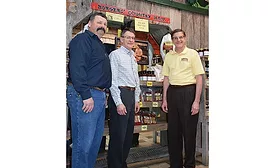
Burgers’ Smokehouse has undergone many expansions, additions and upgrades, but the important aspects of its business haven’t changed. The company still uses its traditional curing methods; it’s just applying its traditions to a wider range of products, and at a larger scale than ever before.
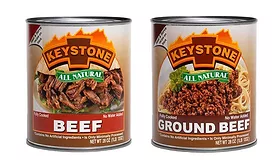
Canned meats have, right or wrong, developed a reputation as a substandard product, made with the cheapest cuts and leftover trimmings, packed with preservatives. That is of course a false assumption, and one Keystone Meats works to change consumer perception about.
On Jan. 30, 2017, President Donald Trump issued an executive order (EO) intended to reduce regulatory burdens on businesses. The EO directs federal agencies to repeal at least two regulations for every new regulation.
The popularity of barbecue across the country has allowed a surge in products catered toward new, experimental and often regional-based flavor profiles.
Americans just don’t get tired of burgers. The all-American sandwich is featured on most menus and is branching into meaty, upscale, indulgent versions as beef prices continue to decline.
The food industry spends billions of dollars to address the issues raised by the estimated number of illnesses and deaths attributed to a pathogen or allergen. The predictions and statistics these agencies provide and use are truly critical.
After a blitz of capital investments leading into its 30th anniversary in 2016, Case Farms now turns its efforts toward fully maximizing its potential.
For 31 years, Thomas Shelton has watched Case Farms grow from two employees (counting himself) and zero plants to approximately 3,200 employees, four processing plants, one further-processing plant, three feed mills and four hatcheries in Ohio and North Carolina today.
In February 2017, editor-in-chief Andy Hanacek visited with Thomas Shelton, chairman and founder of Case Farms, for an exclusive interview at his home. What follows is a portion of their discussion on the company’s past, present and future:
Traditional fMRI has not been widely used to investigate neural stimulation of consuming solid foods, because of potential safety hazards and poor imaging quality. Novel scanning methods could alleviate this.
With its "One Smithfield" initiative well under way, Smithfield Foods has rallied around building a company-wide culture of innovation to drive its future as a more versatile, CPG-focused, global business.
In February 2015, the Smithfield Foods announced the "One Smithfield" initiative, phasing out the IOC model in favor of a structure organized more closely around customer needs than brands.
 RSS
RSS