New appreciation for Old World specialties
Americans are showing increased demand for high-quality charcuterie.
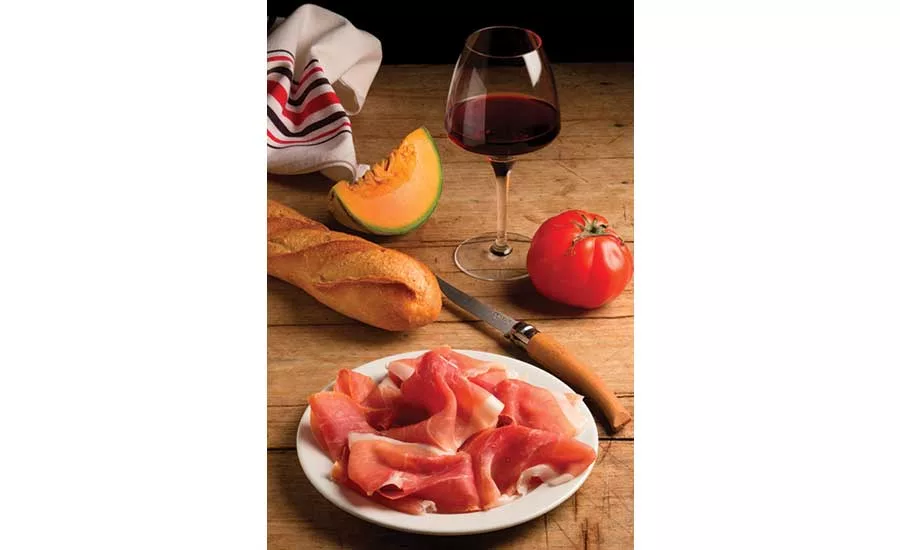
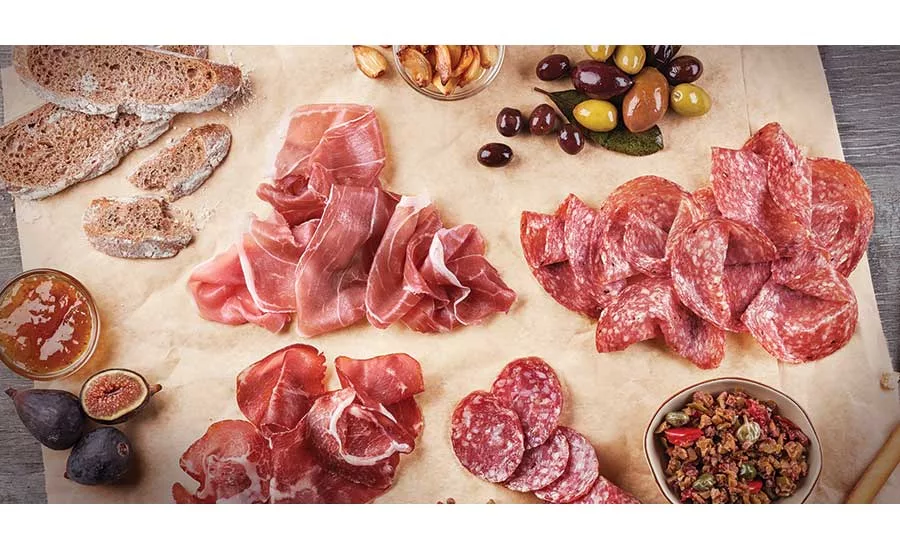
The craft beer movement has led to a lasting change in grocery stores. Shelves and coolers that were dominated by the country’s largest brand names are now stocked with upstart brewers, creative flavors and local and regional favorites. That change has been reflected elsewhere in the grocery store, including the meat department. Stores that used to carry little more than ham, turkey breast and roast beef now include deli specialties like coppa, prosciutto and ‘nduja – European delicacies that have found new popularity in the U.S.
“We can look not that far back, up to five years ago, where some of the product you see today on shelves was limited to the Italian market in the United States,” says Simone Bocchini, president of Fratelli Beretta. Beretta is the longest family-owned charcuterie company in Italy and produces everything from salami and mortadella to prosciutto and coppa, and more. The company’s history dates back to 1812 in Italy, and most of its 21 facilities worldwide are located there, but it’s a relative newcomer to the United States. It purchased a New Jersey facility in 1997 and now owns two U.S. plants – one in Fresno, Calif. and a new, state-of-the-art plant in Mount Olive, N.J.
Bocchini, the seventh generation of the family to run the business, says that the growth in cooking magazines and cooking shows have helped products like bresaola or soppressata to become more and more popular.
“Consumers have been approaching these items more in the last five years, and now they’re becoming almost an everyday item, like bologna 20 years ago,” he says. “The change in the market was [we were] limited to mamma and pappa stores that were selling Italian dry cured products, up to today, where we have modern distribution selling some high-end, dry-cured Italian products.”
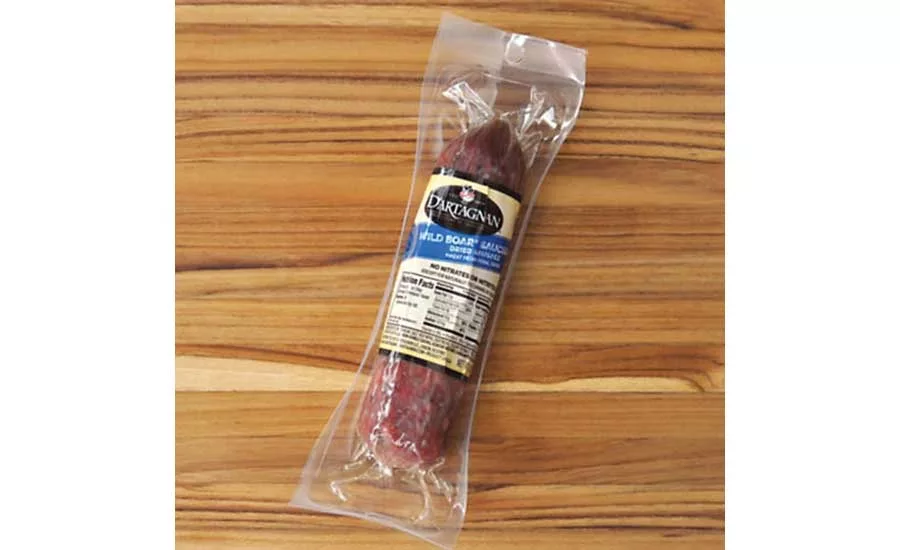
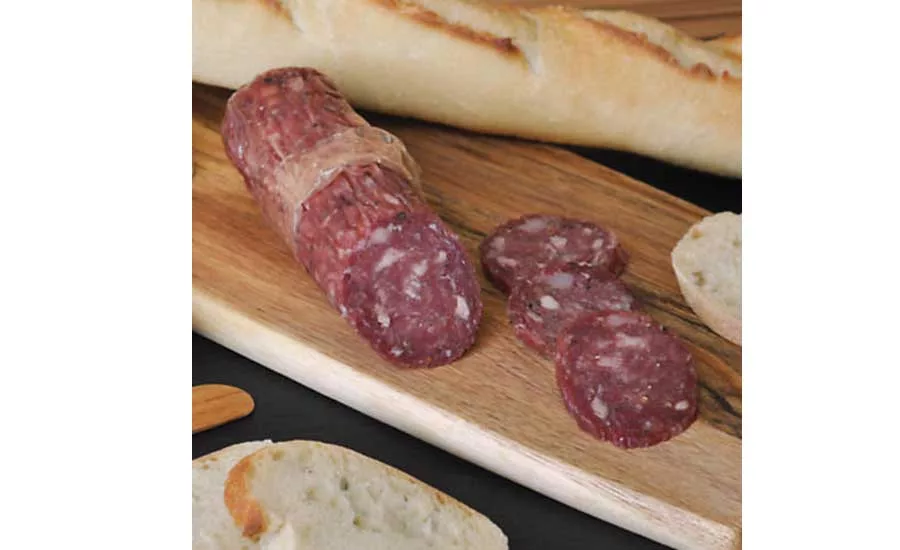
The expanded interest in new foods has developed at roughly the same time as an increased awareness in how animals are raised and what is in the food products that result from processing. D’Artagnan, a gourmet food purveyor in Union, N.J., released earlier this year two new flavors of saucisson sec – Wild Boar Saucisson and Duck Saucisson. Saucisson is French in origin and is a thick sausage that D’Artagnan also offers in a pork variety. They are made without the use of additives, and the animals were raised without antibiotics or hormones.
D’Artagnan CEO Ariane Daguin says that the response to the new products has been great, both for their attributes and for their taste.
“For consumers looking to expand their palates beyond the traditional pork saucisson sec, the duck variety offers a unique, very fragrant charcuterie with aromatic spices enveloping the distinct ducky characteristics. Humanely trapped and offering a true taste of the wild, the wild boar variety is tamed by a long marinade in tannic red wine,” she says.
D’Artagnan also sells specialty sausages like chorizo and Andouille, as well as pâté and terrines. Daguin says that there is a demand for “artisanal” charcuterie – products produced to exacting specifications without compromising quality.
“D’Artagnan sources all its products from small farmers that believe in raising animals the right way for the best-tasting, finest meats and delicacies,” she says.
The saucisson sec line is produced in traditional methods, which is done by hand, in small batches, and with long, slow curing in controlled temperatures and humidity. Daguin acknowledges advancements in technology help on the packaging side, but she says it does not help in the production of charcuterie.
While there is almost an insistence that charcuterie products be made with traditional, Old-World techniques, companies must also be cognizant of other consumer desires. For instance, the making of these products often involves salt, and lots of it. How does that need for salt as a curing agent co-exist with consumer desires for low-sodium products?
Fratelli Beretta believes it has found a satisfactory middle ground with its Mount Olive line of low- sodium salami, soppressata, prosciutto and other meats. Bocchini says that the brand has 45 percent less salt than its regular salami and contains no added nitrites or nitrates.
“We were able to source a particular salt that comes from a certain area in the Pacific that is naturally reduced in sodium. We have less sodium by nature without compromising the saltiness on the salami,” he says.
Given the slow nature of the product, the hardest part was making a change in the formulation and then waiting out the curing process.
“Keep in mind, making salami is not like boiling water,” he says. “Whatever you stuff today into a casing, you need at least 35 to 45 days before you see the salami at the end. Every variation on the recipe could not be tested today or tomorrow; if we made a change, we had to wait a month and a half to see if the change makes a success.”
Bocchini says that the company’s Mount Olive facility, built in 2015, gives it the best of both worlds. It uses modern technology wherever possible with compromising the quality of the finished product. It takes about a year to make a prosciutto, he explains; to take short cuts in order to speed up the process is to end up with an inferior product.
“The methods that we make the product, the timing, the temperatura, is basically the same for 2,000 years,” he says. “The way we hang the salami, the way we move the salami from one room to the other, the way we control the temperature in those rooms, has the latest technology available.”
A salami that Beretta makes can weigh 10 pounds, he explains. Ten of those salami get hung on a stick, and it would take two workers to lift and hang the 130-pound load. The plant instead uses robotics to hang the stick, reducing the physical labor aspect of the process without interfering with the traditional methods.
The American market has so successfully adopted these Old World favorites into its diet that producers from Europe have taken notice. The Bayonne Ham Council debuted its renowned ham this June at the Fancy Food Show in New York City. It is the first time that Bayonne Ham producers have come together for a large-scale trade-focused marketing program.
“Bayonne Ham can only be made in the Southwest of France; it is the only cured ham from France,” the Council said in an e-mail response. “It is a unique ham cured with salt made at a saline spring, in Salies-de-Béarn. It is the only place where the salt can be produced. It is much less salty than other hams, [and] it is more tender than Prosciutto and Serrano, making it easier to cook.”
Every Bayonne Ham producer is located in the Southwest of France. Being under the Protected Geographical Indication status, no ham can be labelled “Bayonne” if it is produced elsewhere. Each Bayonne Ham is branded with the Lauburu cross, which indicates that it has passed each stage of the selection process.
There are approximately 100 Bayonne Ham brands; four are presently available in the United States. The Council says it has the objective of dedicating one quarter of its overall international exports to the U.S. by the year 2020.
Looking for a reprint of this article?
From high-res PDFs to custom plaques, order your copy today!