Provisioner logo
Provisioner logo
search
cart
facebook twitter linkedin youtube
  • Sign In
  • Create Account
  • Sign Out
  • My Account
Provisioner logo
Provisioner logo
  • NEWS
    • Industry News
    • Supplier News
    • Case Studies
    • Recalls
    • Regulations
    • New Consumer Products
  • EXCLUSIVES
    • Newsletters
    • Source Book
    • Sponsored Insights
    • Events
    • Webinars
    • Classifieds
    • White Papers
    • Provisioner Store
    • Market Research
  • MEAT PROCESSING
    • SUSTAINABILITY
    • Processing
    • Packaging
    • Ingredients
    • Formulation
    • Food Safety
    • Special Reports
    • Commentary
  • PROFILES
    • Processor Profiles
    • Processor of the Year
    • Top 100 Processors
  • MEDIA
    • Videos
    • Podcasts
  • DIRECTORY
  • MIHOF
  • INDEPENDENT PROCESSOR
  • EMAG
    • eMagazine
    • ARCHIVE ISSUES
    • Contact
    • Advertise
  • JOIN!
Lamb/VealSpecial Reports

State of the Industry 2018

State of the Veal Industry 2018

Entering virgin territory
By Donna Moenning
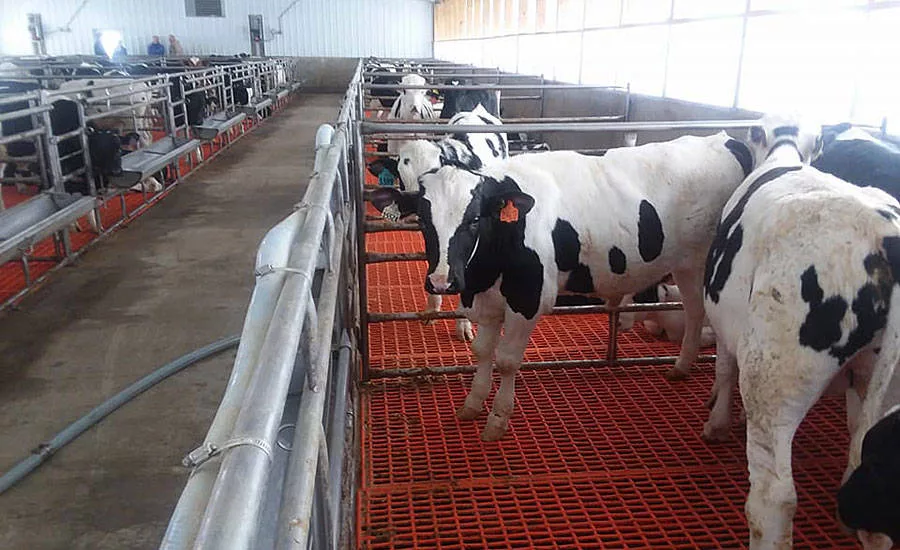
Veal Calves in Group Housing
The veal industry is still celebrating its total move to group housing, achieved in 2017.
October 22, 2018

It’s a simple request: “Rediscover veal” — and it’s what the president of the American Veal Association (AVA) asks of consumers. Dale Bakke is confident people interested in issues such as sustainability, affordability and animal welfare will find veal to be a great option in the meat case.

“We’re still celebrating our industry’s total move to group housing — a goal achieved in 2017,” says Bakke. “Given this and other changes AVA members have made in recent years, we’re asking people to reconsider American milk-fed veal.”

State of the Industry 2018

 
Overview
Beef
Beef (CAB Outlook)
Pork
Chicken
Turkey
Veal
Lamb
Seafood
Animal Welfare
Workforce
Food Safety
Packaging

Bakke says the move to group housing has changed the way people view veal. One example is a Brooklyn, N.Y., woman who recently contacted AVA through its website to say her family had lifted a self-imposed 20-year ban on veal consumption after learning of the industry’s move to group housing, which she considers a more humane way to raise veal calves. The woman said she and her mother are working to restore a 200-year-old family cookbook that features several veal dishes. The New York consumer praised the AVA for their leadership and expressed her appreciation for the resources on the AVA’s website, www.AmericanVeal.com. 

“And, that’s just one example,” Bakke says. “We’ve had a number of people say the new housing has given them renewed interest in eating veal again. Some farmers were reluctant to make the change initially when we made the announcement more than a decade ago. But I can honestly say everybody in milk-fed veal production is confident about raising our animals in group pens. Innovation, transparency and engaging new ideas to produce a high-quality meat from humanely treated animals is what drives us today.”  


Sustainable farming 

Sustainably produced food is an important issue for a growing segment of American society and Bakke says veal farmers have a good story to tell. The veal industry takes advantage of underutilized resources while helping support their dairy farming counterparts during this extended period of depressed milk prices.  

“About one-third of the whey solids that are produced in the cheese manufacturing process go unused,” Bakke says. “Whey solids are the primary ingredient in the diets of milk-fed veal calves. Every tanker truck filled with raw milk coming from a dairy farm contains enough whey solids to feed and nourish about three milk-fed veal calves.”  

Veal farmers also provide a market for the dairy industry’s Holstein bull calves. There are about 9.3 million dairy cows in the U.S. and each gives birth to a calf each year to produce milk. About half are male calves and 500,000 of them are raised for veal.  

“The milk-fed veal industry adds value to these bull calves by raising them to a market weight of 475 to 500 pounds or more,” Bakke says. “These calves today probably don’t fit the image many people have about veal … they aren’t small. They look like short-framed steers when they go to market. Feeding Holstein bull calves whey solids that might otherwise go to waste is a sustainable way to produce food.”  


Seeking trade reciprocity 

America’s milk-fed veal farmers continue to call for a level playing field when it comes to trade with the European Union (EU). The AVA believes strongly that veal produced under current EU guidelines should not be allowed in the United States.  

“EU countries can produce veal and ship it into the U.S. using animal health products the U.S. Food and Drug Administration (FDA) has determined are unsafe for human consumption. American farmers would be subject to criminal prosecution if they used some of these products to raise calves.” 

The current trade climate isn’t reciprocal, Bakke says.  

“The EU can export freely into the U.S. but there are volumes of restrictions for us to ship veal to the EU. It’s impractical or effectively impossible for us to ship veal over there,” he says. 

The AVA would like to see the U.S. Department of Agriculture (USDA) require that any veal imported into the U.S. be produced in segregated, audited systems that meet the same FDA standards required of U.S. veal. AVA also calls for better-defined classes of veal to make sure consumers are truly getting what they are paying for when purchasing veal.  

“EU countries are allowed to create their own definition of veal,” Bakke says. “I don’t believe American consumers are getting what they expect when they purchase veal from Europe. Most American veal is going to be 22 to 24 weeks of age on a diet primarily of milk solids and a limited amount of solid feeds. The extreme example would be veal coming from the Netherlands where it can be raised for up to 52 weeks on a diet that’s mostly solid feed … not milk. There’s a significant difference in tenderness and taste.”  

The National Provisioner 2018 State of the Industry Report Survey

Ongoing research of American consumers by the Center for Food Integrity, a not-for-profit organization dedicated to increasing consumer trust in today’s food system, indicates a majority of people trust food produced in the U.S. more than food produced outside of the U.S. 

“That doesn’t surprise me,” Bakke says. “Consumers are becoming more aware that U.S.-produced food must meet more stringent safety regulations. I believe people are willing to search for and demand U.S.-produced food. We encourage consumers to ask for and purchase American veal, rather than imported veal.”  


A healthy bargain 

Veal prices have remained flat for three straight years, which is something price-conscious consumers can take advantage of, Bakke says.  

“Veal continues to be an affordable meat for consumers,” Bakke says. “There are cuts that fit into everyone’s budget. It’s healthy and a great source of protein, B vitamins and minerals, something a majority of people say they’d like more of in their diets.”   

“We’re asking everyone to rediscoverer American milk-fed veal. If they give it a try, I’m confident they’ll be glad they did.”  NP

KEYWORDS: state of the industry state of veal

Share This Story

Looking for a reprint of this article?
From high-res PDFs to custom plaques, order your copy today!

Donna Moenning is executive director of the American Veal Association. For more information about milk-fed veal visit AmericanVeal.com. Ideas and recipes for preparing veal are available at VealMadeEasy.com.

Recommended Content

JOIN TODAY
to unlock your recommendations.

Already have an account? Sign In

  • Double Charburger

    Premiumization drives burger category

    Shoppers seek out premium meat offerings to fulfill...
    Beef
    By: Sammy Bredar
  • JJS Adult Pekin duck

    Poultry Report 2025: Convenience propels poultry at retail

    Despite continued economic pressures, the poultry...
    Turkey
    By: Sammy Bredar
You must login or register in order to post a comment.

Report Abusive Comment

Manage My Account
  • eMagazine Subscriptions
  • Manage My Preferences
  • Newsletters
  • Online Registration
  • Subscription Customer Service
  • Connect with The National Provisioner

More Videos

Sponsored Content

Sponsored Content is a special paid section where industry companies provide high quality, objective, non-commercial content around topics of interest to the The National Provisioner audience. All Sponsored Content is supplied by the advertising company and any opinions expressed in this article are those of the author and not necessarily reflect the views of The National Provisioner or its parent company, BNP Media. Interested in participating in our Sponsored Content section? Contact your local rep!

close
  • A smiling man carrying a grocery basket is reaching down to pick up a package of meat in a grocery store.
    Sponsored byPIC

    The Green Light: New Data Shows 12-to-1 Support for Pork from PRRS-Resistant Pigs

  • Close up of a grocery cart full of groceries, a cropped image of a couple pushing the cart and a blurred background of the vegetable aisle.
    Sponsored byPIC

    New Market Research Finds Consumers in Eight Key Pork Markets Are Likely to Purchase Pork from Gene-Edited Pigs

  • Close up of a young pig with a blurred background.
    Sponsored byPIC

    New Research Forecasts Significant Economic and Market Impacts with PRRS-Resistant Pig Adoption

Popular Stories

Spam Dog

Hormel rolls out Spam hot dog for foodservice applications

Various new Primal snack sticks on a table amongst pencils, apples, a pair of glasses, lunch bags and a water bottle.

Protein demand drives snacking occasions

Several cuts of beef, pork and chicken on a wooden board, cast iron pan and salt.

Validated thermal lethality data and a new tool for ensuring safety of RTE meats

2026 Top 100 Meat & Poultry Processors Report

Events

June 11, 2026

From Fresh to Frozen in 3 Minutes Flat: Unlocking the Secrets to Temperature Control

Join Tony Vacaro, Foods Industry Manager, and Emile Klein, Foods Market Strategy Manager at Air Products and Chemicals, Inc. , as they tackle key questions surrounding heat removal in food processing. 

January 1, 2030

Webinar Sponsorship Information

For webinar sponsorship information, visit www.bnpevents.com/webinars or email webinars@bnpmedia.com.

View All Submit An Event

Products

Food Crime: An Introduction to Deviance in the Food Industry

Food Crime: An Introduction to Deviance in the Food Industry

See More Products
From Fresh to Frozen in 3 Minutes Flat: Unlocking the Secrets to Temperature Control Webinar Sponsored by Air Products

Related Articles

  • Several People Pulling a Rope

    State of the Veal Industry 2019

    See More
  • veal on noodles with a pasta sauce

    The state of the veal industry 2020: looking for a rebound

    See More
  • A young brown calf at an agricultural farm

    State of the Industry: Veal consumption decrease underscores growth opportunities

    See More

Related Products

See More Products
  • The 10 Principles of Food Industry Sustainability

See More Products
×

Stay ahead of the curve. Unlock a dose of cutting-edge insights.

Receive our premium content directly to your inbox.

SIGN-UP TODAY
  • RESOURCES
    • Advertise
    • Contact Us
    • Directories
    • Store
    • Want More
  • SIGN UP TODAY
    • Create Account
    • eMagazine
    • Newsletter
    • Customer Service
    • Manage Preferences
  • SERVICES
    • Marketing Services
    • Reprints
    • Market Research
    • List Rental
    • Survey/Respondent Access
  • STAY CONNECTED
    • LinkedIn
    • Facebook
    • YouTube
    • X (Twitter)
  • PRIVACY
    • PRIVACY POLICY
    • TERMS & CONDITIONS
    • DO NOT SELL MY PERSONAL INFORMATION
    • PRIVACY REQUEST
    • ACCESSIBILITY

Copyright ©2026. All Rights Reserved BNP Media, Inc. and BNP Media II, LLC.

Design, CMS, Hosting & Web Development :: ePublishing