Food Safety
How to keep traceability on track
Technology developers and program operators must make a compelling case for traceability if systems are to become omnipresent.
Widespread traceability in the meat and poultry sector appears to be a concept whose time has come.
With more shoppers seeking transparency from food merchandisers, it is increasingly important for processors and retailers to provide data on the origins of proteins.
Yet, technology and cost issues remain a stumbling block to system rollouts.
“Consumers expect that people selling meat know where it comes from,” says Rob Chester, managing director of the United Kingdom food business for NSF International, an Ann Arbor, Mich.-based food safety auditing firm and standards developer. “This means that retailers and processors are transparent and have traceability tools that enable them to get to the root of problems and challenges quickly and to solve them.”
While traceability implementation is progressing at different rates around the world, he says that, overall, systems are evolving too slowly and that newer technologies will “help speed things up.”
Chester says most parties use paper-based manual processes, which are “slow and cumbersome.” Advanced technologies such as blockchain, which keeps a digital record of transactions across many computers and helps prevent records from being altered retroactively, will enable parties to quickly and easily share the same pieces of information with multiple stakeholders without being hamstrung by different operating standards, he says.
“It gets away from having to do one task for one retailer and another task for another retailer, which is time consuming,” Chester says. “Technologies can help slicken the process and get things moving faster.”
Extensive traceability is slow to take hold because “many operators often don’t know there is a problem until they have a problem,” he says. The countries and areas that are developing processes quicker are those that have had food-safety incidents and other issues that would benefit from traceability, Chester says.
Cost is a Major Concern
“Traceability is really about transparency and helping consumers understand more about how and where their food is sourced,” says Andy Brudtkuhl, director of emerging technology for the Des Moines-based National Pork Board (NPB). “Today’s consumer is many generations removed from the farm so they have a limited understanding of how food is raised and gets to their plate. Providing shoppers and operators with a degree of transparency from farm to plant is a concrete way to earn their trust and help them make informed purchasing decisions.”
He says that while traceability “has been around for years for food-safety and quality purposes, we haven’t kept up with what the consumer is looking for now, which is really the next level. It’s an issue that the pork industry continues to spend a lot of time and money trying to figure out.”
Having the necessary capital to support traceability technologies is one of the biggest challenges facing meat and poultry operators, Chester says, adding that it is more effective for companies to invest “little and often” in systems over time and slowly progress to higher operating levels instead of moving to upgrade an entire supply chain simultaneously.
Issues parties face in leveraging newer technologies for traceability include developing a favorable business case and dealing with the potentially greater liability risk if a disease or food safety event is traced back to the source, says Brian Adam, a professor in the Department of Agricultural Economics at Oklahoma State University, in Stillwater.
“Those who bear most of the cost of the system get the least benefit,” he says. “A huge number of processors won’t adopt traceability until they are able to address all the issues.”
Analysts estimate that traceability across the U.S. beef industry for source and age verification could cost about $386 million, with expenses varying by sector, firm type and size of operations. Adam says his research is mainly consistent with other studies that reveal it could cost $2.64 to $4.65 a head for cow-calf operations already tagging cattle and $5.56 to $6.12 a head for operations not currently tagging; stock costs ranging from 15 cents to 82 cents a head; feedlot expenses of 13 cents to 55 cents a head; and packing plant costs of 19 cents a head.
Also slowing the move to traceability through the entire supply chain is the difficulty in tracking a meat product back to an individual animal, Brudtkuhl says, particularly as carcasses turn into primals, primals turn into cuts and trim, and trim is further processed.
In addition, he says technologies “have historically been prohibitively expensive,” and, aside from food-safety and food-waste concerns, “there is not a big enough market to create a large enough return on investment on the systems and technology it takes to implement a complete traceability system from farm to fork.”
While it is not excessively difficult to track animals from the farm to plant and shipping dock to the point of sale, it is arduous to successfully trace proteins within a processing facility, Brudtkuhl says.
“As operators break the carcass down into primals, then into cuts, different pieces of meat are going down different processing lines,” he says.
“Segregating those cuts is possible, but it’s costly. While some consumers are willing to pay a premium to have that higher level of traceability, it’s not widely demanded.”
Systems Can Satisfy the Shopper
Nevertheless, having an effective traceability system is crucial as “you never want to be a retailer or processor that has to admit that they don’t know where the meat and poultry is coming from,” Chester says. “It is something that shoppers anticipate.”
Traceability also enables merchandisers to differentiate their products from competitors by providing background information on the origins of proteins and demonstrating that the animals were raised correctly, he says.
“There is a scale from those who just want to show marketing information to operators that give a story on how a steak ended up in the package, which farmer raised the cattle, which feed the animal was fed and the fields they were located in,” Chester says.
In a NPB survey of 10,000 consumers, 35 percent of respondents indicated they are attentive to whether the foods they buy are locally sourced.
“While consumers want easy meal solutions that taste good, they also want to feel good about the food that they are eating,” Brudtkuhl says. “Whether in home or away from home, traceability helps to bridge that gap for consumers from farm to fork.”
Chester adds, “It is a trend in today’s world to tell a story and give the consumer more reassurance. Shoppers want more and more transparency faster and faster. And the more that a product costs, the more important it is to provide transparency and traceability. It is something that all income groups care about it.”
That is particularly true of younger shoppers, who increasingly expect to be able to garner food-safety information quickly via their smartphones, Chester says, noting retailers can appeal to such consumers by, for instance, including Quick Response (QR) codes on packages, which shoppers can easily scan to access data.
“Retailers will particularly benefit by having the QR codes on their private-label products and they need to work with each of their suppliers so consumers can access all the necessary data,” he says. “Investments must occur at both the processor and retailer levels and retailers must ensure that the labeling information on products is always correct.”
Big Dividends Are a Key Driver
Adam says obstacles to implementation are “not huge,” and that “once a significant number of parties adopt traceability systems, it will lead to much greater adoption.”
Oklahoma State University research suggests the payback from just one strong value-added benefit could cover the cost of parties implementing a traceability scheme. That benefit, for instance, may consist of processors giving incentives to producers that have animals with more tender meat.
Traceability will enable the processors to know which animals have been specifically bred for tender meat and which producers undertook the costs to provide the genetics, Adam says. Processors then could compensate producers with an agreed upon premium for such genetics.
“All the relevant information about the animal being slaughtered, including its genetics, would be conveyed from the cow-calf producer to the processor, without the necessity of passing that information to the stocker or feedlot,” he says. “Without traceability, the data from the cow-calf producer verifying the genetics would have to pass along the entire supply chain so that the processor would know who to compensate. The value of increased tenderness would not be rewarded in the marketplace without a traceability system.”
While the greater premium for identifying breeds that have a high probability of improving tenderness with genetic selections would be sufficient to pay for the cost of traceability, Adam says other value-added information would offset costs. Examples include disease mitigation, food-safety benefits and even consumers becoming more confident in buying meat or paying a premium because it is traceable.
Having a trusted company or organization back a specific technology, meanwhile, could “go a long way toward convincing producers to leverage systems,” he says, noting that currently there are several competing technologies and approaches that are not “talking with one another” on such issues as common standards.
New Traceability Initiatives Are Underway
Companies already digitizing information, meanwhile, will be ready to adopt traceability when an appropriate system appears, Adam says. He adds that traceability technology developed at Oklahoma State University enables cow and calf producers that use a herd-management application to upload data into the system with a touch of a button.
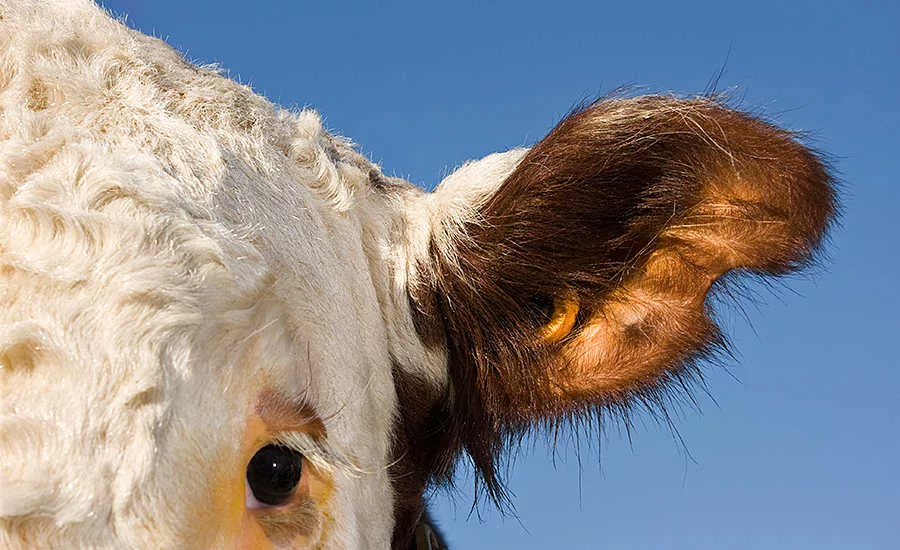
Another newer traceability initiative from NSF International, NSF Verify, includes such elements as radio frequency identification (RFID) ear tags, DNA samples kept in a database, locations fixed by global positioning systems (GPS) and a mobile app farmers can access to update information on livestock in real time. The last feature is intended to save time and paperwork and automatically capture compliance information, the firm reports.
Activity records also are digitally captured through birth (when animals are given a unique identifier), raising, transport, holding at market, slaughter, dressing, processing, transport, meat storage and placement on retail shelves, NSF International reports. The system eventually will capture such additional data as welfare inspections, medical treatments and feed conversion rates.
Consumer expectation of transparency throughout the supply chain is going to increase, meanwhile, resulting in a greater need for traceability, which could even eventually include sharing audit and test results of facilities and more information on packages, Chester says.
“The genie is out of the bottle and technology will play a greater and greater part in future activities,” he says. NP
Looking for a reprint of this article?
From high-res PDFs to custom plaques, order your copy today!