Provisioner logo
Provisioner logo
search
cart
facebook twitter linkedin youtube
  • Sign In
  • Create Account
  • Sign Out
  • My Account
Provisioner logo
Provisioner logo
  • NEWS
    • Industry News
    • Supplier News
    • Case Studies
    • Recalls
    • Regulations
    • New Consumer Products
  • EXCLUSIVES
    • Newsletters
    • Source Book
    • Sponsored Insights
    • Events
    • Webinars
    • Classifieds
    • White Papers
    • Provisioner Store
    • Market Research
  • MEAT PROCESSING
    • SUSTAINABILITY
    • Processing
    • Packaging
    • Ingredients
    • Formulation
    • Food Safety
    • Special Reports
    • Commentary
  • PROFILES
    • Processor Profiles
    • Processor of the Year
    • Top 100 Processors
  • MEDIA
    • Videos
    • Podcasts
  • DIRECTORY
  • MIHOF
  • INDEPENDENT PROCESSOR
  • EMAG
    • eMagazine
    • ARCHIVE ISSUES
    • Contact
    • Advertise
  • JOIN!
Meat and Poultry Industry NewsMeat and Poultry ProcessingFood SafetyRegulations

The EATS Act is introduced in Congress

The Ending Agricultural Trade Suppression Act would prohibits state and local governments from imposing conditions on the preharvest raising of animals in another state.
By Shawn K. Stevens
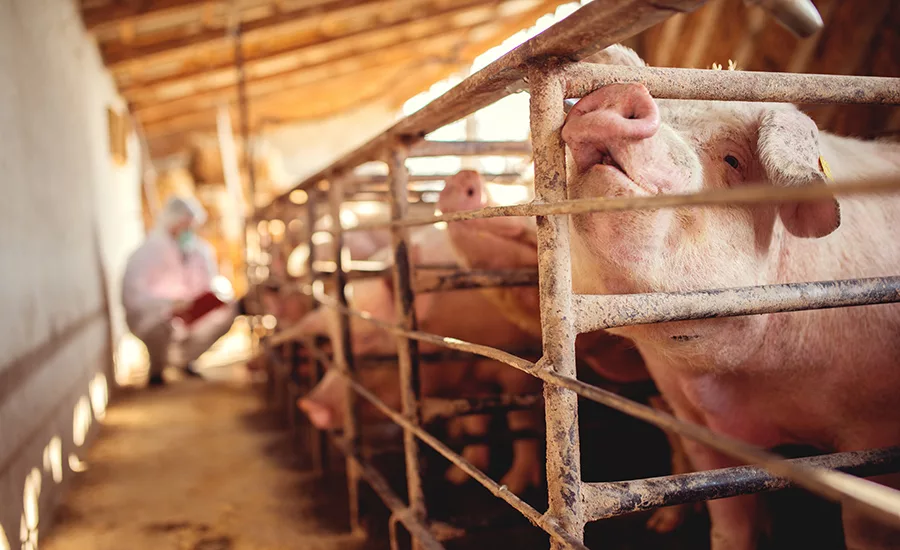
Veterinarian examining pigs at pig farm.
Getty Images/iStockphoto

Opening image credit: GettyImages / dusanpetkovic / iStock / Getty Images Plus

November 19, 2023

Following the Supreme Court upholding California’s Proposition 12, which sought to limit how livestock intended for food to be sold in California could be raised, Congress introduced new legislation to limit the ability of states to regulate food products nationwide. 

California’s Proposition 12, along with other state initiatives, set minimum requirements for the raising of animals used for meat sold in California, regardless of the state in which the animal was raised. The constitutionality of Proposition 12 was challenged on the basis that California should not be allowed to govern conduct occurring in other states and, after review, the Supreme Court upheld the Proposition 12 as constitutional. The Supreme Court stated, in the decision, that “Companies that choose to sell products in various states must normally comply with the laws of those various states.”

Now, in a broad effort to limit a state’s ability to regulate foods in interstate commerce, the Ending Agricultural Trade Suppression Act (EATS Act) has been introduced in both chambers of Congress. The Act prohibits states and local governments from imposing any conditions on the preharvest raising of animals in another state. Though the sponsors of the Act stated the Act is in response to California’s Proposition 12, the Act ultimately goes further to impact any state laws attempting to govern agricultural products produced in another state.

Violations of the Act would allow any person, including producers and consumers, to bring a legal action to invalidate any offending state or local laws and regulation, and to seek damages for any economic loss resulting from the offending laws or regulations.

The Act has been referred to Committees in both the House and Senate for review, and, if passed, would be included in the next Farm Bill.

Proponents of the law indicate the Act would prevent overregulation by states, protect producers from overreaching regulations, and prevent states from interfering with the production of agricultural products in other states. On the other hand, opponents suggest that the EATS Act would roll back a substantial number of state regulations which are targeted to an individual state’s needs, including the preventing invasive pests and ensuring consumer safety. An assessment of the EATS Act suggests more than 1,000 potentially affected state laws could be overturned by the Act if passed.

Similar Congressional acts had previously been considered for the 2014 and 2018 Farm Bills, but ultimately were not included in those Farm Bills.  Here, over 170 Representatives and 30 Senators have already expressed their opposition to the EATS Act. Thus, ultimate passage remains uncertain.

Because the current Farm Bill expired on September 30, 2023, Congress must work quickly to finalize and pass the new 2023 Farm Bill to prevent disruption to critical programs. As the proposed legislation continues to be refined, we will be watching with bated breath.

Indeed, if the EATS Act is not passed, California’s Proposition 12 could impose substantial burdens on the meat industry.  In addition, it might even open the door to invite other states to pass similar rules, attempting to impose even more restrictions on the raising of livestock in other states.

KEYWORDS: food safety regulations USDA

Share This Story

Looking for a reprint of this article?
From high-res PDFs to custom plaques, order your copy today!

Shawn stevens 200x200

Shawn Stevens is the founding member of Food Industry Counsel LLC, a law firm formed in 2014 to represent the food industry exclusively in regulatory and other matters involving food safety and quality. Contact Stevens at (920) 698-2561 or stevens@foodindustrycounsel.com, or visit his Web site, www.foodindustrycounsel.com.

Recommended Content

JOIN TODAY
to unlock your recommendations.

Already have an account? Sign In

  • Double Charburger

    Premiumization drives burger category

    Shoppers seek out premium meat offerings to fulfill...
    Beef
    By: Sammy Bredar
  • JJS Adult Pekin duck

    Poultry Report 2025: Convenience propels poultry at retail

    Despite continued economic pressures, the poultry...
    Meat and Poultry Industry News
    By: Sammy Bredar
You must login or register in order to post a comment.

Report Abusive Comment

Manage My Account
  • eMagazine Subscriptions
  • Manage My Preferences
  • Newsletters
  • Online Registration
  • Subscription Customer Service
  • Connect with The National Provisioner

More Videos

Sponsored Content

Sponsored Content is a special paid section where industry companies provide high quality, objective, non-commercial content around topics of interest to the The National Provisioner audience. All Sponsored Content is supplied by the advertising company and any opinions expressed in this article are those of the author and not necessarily reflect the views of The National Provisioner or its parent company, BNP Media. Interested in participating in our Sponsored Content section? Contact your local rep!

close
  • A smiling man carrying a grocery basket is reaching down to pick up a package of meat in a grocery store.
    Sponsored byPIC

    The Green Light: New Data Shows 12-to-1 Support for Pork from PRRS-Resistant Pigs

  • Close up of a grocery cart full of groceries, a cropped image of a couple pushing the cart and a blurred background of the vegetable aisle.
    Sponsored byPIC

    New Market Research Finds Consumers in Eight Key Pork Markets Are Likely to Purchase Pork from Gene-Edited Pigs

  • Close up of a young pig with a blurred background.
    Sponsored byPIC

    New Research Forecasts Significant Economic and Market Impacts with PRRS-Resistant Pig Adoption

Popular Stories

Spam Dog

Hormel rolls out Spam hot dog for foodservice applications

Various new Primal snack sticks on a table amongst pencils, apples, a pair of glasses, lunch bags and a water bottle.

Protein demand drives snacking occasions

Several cuts of beef, pork and chicken on a wooden board, cast iron pan and salt.

Validated thermal lethality data and a new tool for ensuring safety of RTE meats

2026 Top 100 Meat & Poultry Processors Report

Events

June 11, 2026

From Fresh to Frozen in 3 Minutes Flat: Unlocking the Secrets to Temperature Control

Join Tony Vacaro, Foods Industry Manager, and Emile Klein, Foods Market Strategy Manager at Air Products and Chemicals, Inc. , as they tackle key questions surrounding heat removal in food processing. 

January 1, 2030

Webinar Sponsorship Information

For webinar sponsorship information, visit www.bnpevents.com/webinars or email webinars@bnpmedia.com.

View All Submit An Event

Products

Food Crime: An Introduction to Deviance in the Food Industry

Food Crime: An Introduction to Deviance in the Food Industry

See More Products
From Fresh to Frozen in 3 Minutes Flat: Unlocking the Secrets to Temperature Control Webinar Sponsored by Air Products

Related Articles

  • 7-15 news: Affordable Fuel for America Act introduced in Congress

    See More
  • Niman Ranch logo

    Niman Ranch criticizes EATS Act inclusion in House Farm Bill framework

    See More
  • United States Cattlemen's Association logo

    Cattle Price Discovery and Transparency Act reintroduced in 118th Congress

    See More

Related Products

See More Products
  • meat inspection.jpg

    Meat Inspection and Control in the Slaughterhouse

See More Products

Related Directories

  • National Pork Board

    The U.S. pork industry has had a 100 percent legislative checkoff program since 1986. Congress created the Pork Checkoff as part of The Pork Promotion, Research and Consumer Information Act of 1985. Pork producers had requested the legislation so they could take advantage of having all producers and importers participate in a checkoff program designed to strengthen the position of pork in the marketplace.
×

Stay ahead of the curve. Unlock a dose of cutting-edge insights.

Receive our premium content directly to your inbox.

SIGN-UP TODAY
  • RESOURCES
    • Advertise
    • Contact Us
    • Directories
    • Store
    • Want More
  • SIGN UP TODAY
    • Create Account
    • eMagazine
    • Newsletter
    • Customer Service
    • Manage Preferences
  • SERVICES
    • Marketing Services
    • Reprints
    • Market Research
    • List Rental
    • Survey/Respondent Access
  • STAY CONNECTED
    • LinkedIn
    • Facebook
    • YouTube
    • X (Twitter)
  • PRIVACY
    • PRIVACY POLICY
    • TERMS & CONDITIONS
    • DO NOT SELL MY PERSONAL INFORMATION
    • PRIVACY REQUEST
    • ACCESSIBILITY

Copyright ©2026. All Rights Reserved BNP Media, Inc. and BNP Media II, LLC.

Design, CMS, Hosting & Web Development :: ePublishing