Hot cattle market poised to turn up the heat
While feedlots have been hampered by limited domestic and imported supply, US packing capacity is increasing and could see further growth as a couple of new plants come online in June 2025.
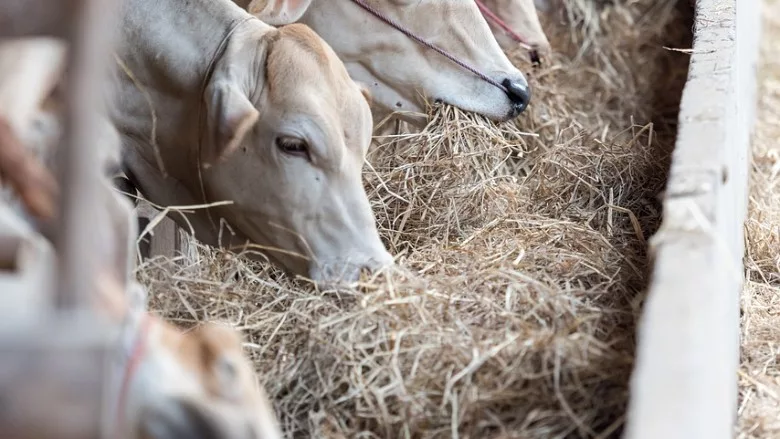
Cattle feeding
Photo courtesy of Sasin Tipchai/Pixabay
Cattle inventory in feedlots with +1,000 head capacity on May 1, 2025, was estimated at 11.4 million head, down about 262,000 head from the previous month and now 178,000 head (–1.5%) lower than the previous year. The decline in inventory is only part of the reason why fed cattle prices are currently at record highs. Rather, current high prices reflect an overall contraction in pipeline supplies, limiting replacement availability and incentivizing feedlots to limit offerings and try to maximize carcass weight gains.
The decline in US domestic pipeline supplies has been further impacted by the disruption in imports from Mexico, traditionally a key source of feeder cattle for feedlots in Texas and Arizona. Cattle trade with Mexico was suspended for all of December 2024 and January 2025. Even as the border reopened in mid-February, imports since then have been only about half of what they were a year ago. Two weeks ago, imports were suspended yet again. The limited capacity of Mexican officials to contain the screwworm infestation may keep the border closed far longer than the trade currently anticipates.
Feedlot inventory in Texas as of May 1 was 180,000 head (–6.5%) lower than a year ago and 200,000 head (–7.2%) lower than two years ago. The decline in Texas feedlot inventories has accounted for much of the year-over-year reduction in overall feedlot supplies. As cow-calf operators start to retain heifers and increase the breeding rate, feedlot supplies in the North are expected to see further declines.
Packers, on the other hand, are constrained by two primary factors:
- they need to run as many cattle through their plants as possible to distribute fixed costs over greater volume, and
- they need to provide their customers with adequate volume to support spring needs.
While feedlots have been hampered by limited supply availability — both domestic and imported — US packing capacity has increased and could see further growth in June as a couple of new plants come online. So far, this dynamic has resulted in an explosive cattle market this spring. Whether that continues will hinge on whether domestic and export demand is strong enough to support current cattle values. Selling beef into Memorial Day is far easier than doing so once temps rise over 90 degrees consumers start to budget for the start of the new school year.
Looking for a reprint of this article?
From high-res PDFs to custom plaques, order your copy today!