Rethinking energy efficiency: How poultry processors can cut operational costs with smarter pump technology
Processors often fail to consider the relative energy inefficiency of air-operated pumps.
Input costs continue to squeeze margins for poultry processors of all sizes, putting new emphasis on strategies for operational efficiency. Yet, while labor costs and processing speeds hold the spotlight, many overlook another drain of energy and cost: the pumps that operate throughout poultry processing facilities.
Operating up to 16 hours a day, pumps connect every step from intake to packaging in poultry processing. They move blood, fat, organs and other byproducts throughout the various production stages of the plant.
However, despite their essential role and near constant energy consumption, processors rarely consider the relative energy inefficiency of traditional air-operated pumps. Historically, existing equipment often performs reliably, leading teams to accept the high cost of compressed air as a normal part of doing business.
But as energy costs continue to rise and sustainability goals become more urgent, electric pumps are rapidly gaining traction in food processing facilities as a forward-thinking solution to rising energy costs and tighter margins. That accelerating adoption is reflected in the significant growth of the electric double diaphragm pump market, which is projected to reach $941.1 million by 2034.
For poultry processors seeking smart strategies to boost operational efficiency, electric pump technology offers a practical pathway — lowering energy consumption and reducing operating expenses while delivering reliable, disruption-free performance.
The energy and cost efficiency of an electric pump
Compressed air is one of the most expensive and inefficient forms of energy in industrial facilities. For poultry processors, that means pumps powered by compressed air silently consume significant dollars each month. Electric pumps bypass this challenge by drawing on electricity — a far more efficient and cost-effective power source.
But the advantages extend beyond energy efficiency: by eliminating the need for compressed air, electric pumps also eliminate the familiar and persistent challenges of air leaks and associated maintenance — adding another layer of both immediate and long-term financial savings.
The difference adds up quickly. By eliminating compressed air, reducing waste and improving overall pump efficiency, plants often see measurable savings from the first utility cycle. In fact, in many cases, the energy savings alone can drive payback periods measured in months rather than years — a rare opportunity when it comes to capital equipment investments.
Automation capabilities address growing workforce challenges
Besides cost savings, electric pumps offer another — and increasingly valuable — benefit: automation. This is significant as the poultry industry continues to wrestle with labor shortages, high turnover and growing safety concerns. While no single technology can fully resolve these challenges, electric pumps introduce a level of automation capabilities that not only enhances productivity but also directly supports worker safety.
Unlike most traditional air-operated pumps that cycle continuously without feedback, electric pumps can integrate directly with programmable logic controller (PLC) systems. This connection allows real-time monitoring, remote operation and automated alerts when performance issues arise. For example, if a downstream clog occurs, an electric pump can stop automatically while holding pressure, alert the operator and prevent unnecessary cycling — reducing equipment wear and avoiding unplanned downtime.
In facilities where lean teams are asked to do more with less, this kind of automation helps keep production moving smoothly, while reducing the burden on maintenance staff.
Proven durability for food processing environments
A longstanding barrier to electric pump adoption in food plants has been durability. Daily sanitation protocols — involving caustic chemicals, hot water and high-pressure spray — have historically led to corrosion and premature failure in many pump technologies not designed to withstand harsh washdown environments.
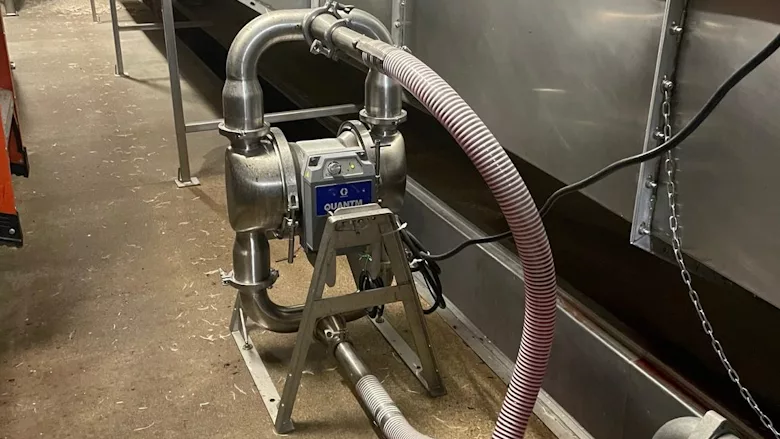
That has changed. The new generation of electric diaphragm pumps are now designed for the rigors of food production. For example, Graco’s QUANTM line of electric pumps feature IP66-rated enclosures that withstand aggressive cleaning procedures while maintaining reliable performance. This evolution means poultry processors no longer have to choose between efficiency and durability — the technology is now purpose-built for the most demanding environments.
Total cost of ownership reveals the ROI of electric pumps
When evaluating equipment investments, upfront price tags often dominate the conversation. But in today’s environment of tight margins, processors increasingly recognize the importance of assessing total cost of ownership (TCO).
Yes, electric pumps can carry higher initial costs compared to traditional air-operated pumps. Yet, when energy savings, reduced maintenance, improved reliability and the productivity gains of automation features are all factored in, the financial equation changes dramatically. Facilities that calculate the true cost of compressed air often discover that the payback horizon for switching to electric pumps is much shorter than expected — making electric pumps one of the more compelling upgrades available to food processors of all kinds today.
Rethinking fixed costs: An electrified strategy for smart cost savings
For decades, compressed air costs were seen as an unavoidable expense for poultry processors and other food processing businesses. But as technology evolves, processors have a unique opportunity to challenge these assumptions and convert those costs into new areas to drive efficiency — and gain an invaluable competitive advantage.
There’s no doubt that pumps may not be the flashiest tech investment. Yet, they are essential plant infrastructure, and their efficiency — or inefficiency — has a cumulative effect that weighs heavily on the bottom line. As input costs rise and sustainability goals tighten, poultry processors that rethink pump technology will find themselves with a powerful new lever to improve profitability, resilience and competitiveness.
Looking for a reprint of this article?
From high-res PDFs to custom plaques, order your copy today!