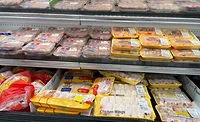
Astra Foods excels under pressure
Nationwide, they have soared in popularity, to the point that any self-respecting sandwich shop or chain has to have its version of a cheesesteak. For companies looking to bring an authentic taste of Philadelphia to their stores across the U.S., it makes perfect sense to get their steaks from a leading Philadelphia supplier, particularly one with a long and successful record and an unparalleled dedication to food safety.
Astra Foods was founded in 1978 by brothers-in-law Demos Vasiliou and Spiros Poulimenos. They had earned engineering degrees in college, but they were unsatisfied with their careers and decided to look for a better opportunity. Vasiliou says that being Greek immigrants living in Philadelphia, the choice was a natural.
“Many Greeks are involved in the restaurant business, so we decided to start a company to supply restaurants,” he explains. “Being from Philadelphia, what better product could there be to market across the country than the cheesesteak? It just comes natural.”
From those modest goals, Astra Foods has become one of the top cheesesteak suppliers in the country, with a long list of foodservice customers. The company has been recognized many times by its suppliers for its commitment to food quality and food safety. The company has its headquarters in Upper Darby, Pa., with an additional facility nearby. It has grown to about 200 employees, but it remains at heart a family business. Many family members work at Astra, including Vasiliou's son John, who serves as director of marketing.
While the Philly cheesesteak has been a regional favorite for decades, the national appeal for the sandwich has grown tremendously within the past 15 years, Demos Vasiliou notes. It has become a staple of many fast-food menus.
“It's become almost the other hamburger in the fast-food industry – the healthier hamburger, because the meats we use are lean,” he says. “Most of the meat we use is 94 or 95 percent lean, and it's a whole-muscle beef.”
Astra produces beef, chicken and pork steaks, both raw and fully cooked. Part of the company's success has been its ability to customize a product to meet its customer's needs. With so many foodservice customers looking for something a little different from the competition, the company is able to create unique formulations that are just right for not only Philly cheesesteaks but other types of entrees as well. Along with the famous Philly sandwich, restaurants have also used Astra's products on pizzas, in salads and on paninis and other types of sandwiches.
The need for HPP
Early on, Astra manufactured just raw, ready-to-cook Philly steaks. However, customers increasingly demanded a pre-cooked product as the need for speed and safety grew. Many foodservice kitchens do not have a grill to prepare the cheesesteaks properly, so having a pre-cooked product became a necessity. Poulimenos adds that the institutional market is growing for the company, as cheesesteaks are a healthy choice for children. However, due to HACCP programs, many schools are doing away with having their own cooks in the kitchen.
As the demand for pre-cooked products has grown, the threat of Listeria monocytogenes and other pathogens has put the focus on food safety more than ever before. Safety has always been of paramount importance at Astra, and the company has sought out the latest technology to produce its products.
“Quality of the product comes first,” says Poulimenos. “We have tested products over and above what was required by the USDA, and we tested every single lot that we were making, holding the products before they were shipped.”
“Because of the scares that you see in the food industry, we try to use anything to avoid any catastrophes for our company and our customers,” Vasiliou adds.
For that reason, Astra Foods became one of the first meat suppliers to the fast food industry to invest in high-pressure processing. HPP, as it's known, subjects the packaged food products to elevated pressures of up to 87,000 pounds per square inch – more than six times the pressure found at the deepest part of the ocean. The process does not affect the quality of the product, but it does kill any pathogens found within the product. Unlike other treatments that only kill the pathogens on the surface of the product, HPP is effective against microbes throughout the product. Furthermore, HPP is used on an already-packaged product, eliminating any further risk of contamination through employee handling.
One of the other benefits, Vasiliou points out, is that the process only uses hydrostatic pressure and not heat or chemicals.
“Heat and chemicals affect the quality of the product,” he says. “High pressure has zero affect on the quality of the product.”
Since 2010, Astra has bought two HPP machines and now runs all its products through them. Poulimenos notes that while the equipment was costly, the owners view it as a binder for being in business.
“There were measures in place before we got the HPP,” he adds. “When we chose to buy this equipment, it was insurance, even though it was an expensive proposition for someone to get into.”
Vasiliou adds that while Astra has never had a food safety problem, the equipment does help both them and their customers sleep better at night.
Vasiliou and Poulimenos were familiar with the technology before they bought the first machine. Installing it required an addition to the company's headquarters, as the HPP equipment is needed at the very end of the manufacturing and packaging processes. With that latest expansion, the company has 100,000 square feet of space at its main location, and 150,000 square feet overall between all its buildings.
Once it was installed, the company's employees spent about four months training on the equipment and running extensive tests to make sure that the results were what they expected.
“After we started using it and realized it was successful, we chose to buy a second machine to cover all our operations,” says Poulimenos. He adds that the machines run about 16 hours a day, seven days a week.
Along with the known benefits of food safety, there have been some unanticipated benefits. Astra uses a shrink-wrap, air-tight package for its products. The packages are submerged in water for the HPP process, so employees unloading them from the equipment can easily detect leakers and have the meat repackaged before accidentally being sent to customers.
Astra's products also enjoy a longer shelf life because of the HPP process. While that may not be an important selling point to the foodservice industry, where products are used relatively quickly, it is an important attribute to the retail industry. The company has been selling more and more to retail customers, and a long shelf life helps to combat shrink at the supermarket.
Vasiliou says that the growth in Astra's retail business has mirrored its growth in foodservice. Initially, the products send to grocery stores were frozen raw products, but pre-cooked items are becoming more popular. He acknowledges the company's good fortune that it serves two industries that have maintained growth in the current economic climate.
Looking for a reprint of this article?
From high-res PDFs to custom plaques, order your copy today!