Provisioner logo
Provisioner logo
search
cart
facebook twitter linkedin youtube
  • Sign In
  • Create Account
  • Sign Out
  • My Account
Provisioner logo
Provisioner logo
  • NEWS
    • Industry News
    • Supplier News
    • Case Studies
    • Recalls
    • Regulations
    • New Consumer Products
  • EXCLUSIVES
    • Newsletters
    • Source Book
    • Sponsored Insights
    • Events
    • Webinars
    • Classifieds
    • White Papers
    • Provisioner Store
    • Market Research
  • MEAT PROCESSING
    • SUSTAINABILITY
    • Processing
    • Packaging
    • Ingredients
    • Formulation
    • Food Safety
    • Special Reports
    • Commentary
  • PROFILES
    • Processor Profiles
    • Processor of the Year
    • Top 100 Processors
  • MEDIA
    • Videos
    • Podcasts
  • DIRECTORY
  • MIHOF
  • INDEPENDENT PROCESSOR
  • EMAG
    • eMagazine
    • ARCHIVE ISSUES
    • Contact
    • Advertise
  • JOIN!
Sustainability

Sustainable protein production: a collaborative effort

By Leigh Ann Johnston
December 19, 2014

I recently had an opportunity to speak at several conferences about the business case for sustainable protein production. While preparing, I gave a lot of thought to how individual companies and industry can collaborate and respond more effectively to stakeholder questions about sustainability. I want to recap the key messages shared during these presentations.

The business case

To understand the focus on and business case for sustainable chicken, beef and pork production and processing, you must first accept that sustainability is not a fad. It’s not a program of the month, sales pitch or marketing ploy. In addition, sustainability is not solely about being green.

Those in protein production serve a global community that’s facing unequaled economic, social and environmental challenges. And while, for the most part, this global community is removed from animal protein production, they do have questions and concerns about how their food is produced. Moreover, consumers are being inundated with messages encouraging them to not eat meat. These concerns and this messaging have brought about increased pressure from stakeholders for industries to look beyond their profits and implement sustainability strategies that demonstrate social and environmental responsibility is integrated into every aspect of their business.

In short, sustainability is an expectation. It’s a business norm. Transparency is what stakeholders are demanding andtransparency builds trust. As individual companies and industry, we certainly have a choice about being transparent; however, when we step out of our comfort zone and talk openly with our stakeholders about some of the tougher topics, we reinforce trust with those outside the walls of our industry.

If an activity is sustainable, it should not only be able to continue forever but also evolve such that our resource efficiency, knowledge and practices continually improve. As a result, the questions become:

1.         How can we demonstrate in a verifiable and recognized manner that we are providing sustainable food products when, for example, sustainable protein production can mean different things to different people?

2.         How do we in protein production implement sustainability initiatives that are unique to our business, drive continual improvement and take credit for the practices we already have in place that promote sustainability?

A united response

Those of us involved in protein production must remain open to and prepared for change. Key elements of a united industry response to sustainability include focusing on what’s relevant, collaboration, and monitoring and measuring our progress. We must embrace opportunities to engage with our stakeholders to develop a more informed understanding of their concerns and desires, and then collaborate as an industry to address and manage specific and strategic sustainability opportunities related to these concerns and desires.  It’s through this collaboration that we will strengthen the trust our customers and consumers have in the food products we provide.

We must remember, however, trust will only be recognized if we’re able to monitor and measure our progress. It’s not enough to say, “Hey, yes, you can trust us and we are a sustainable industry.” Customers and consumers want proof. They want facts and data they can easily understand and that clearly demonstrate continual improvement on the topics of greatest importance to them such as animal well-being, safe food products, nutrition and health, and environmental protection. 

It’s also important to note that monitoring and measuring our progress is critical to fighting the false claims and misleading allegations our industry faces and educating our stakeholders on our business and our environmental and social progress. As I noted earlier, more consumers want to know where their food comes from, how it’s produced and the ingredients it contains. We must communicate with customers, consumers and other consistently and transparently. We want to ensure they feel good about the food products they’re serving their families, and we want them to remind we serve the same products to our own families.

To make great food stakeholders trust and to make a difference they can rally around, we must challenge our assumptions. We must seek to better understand the needs, wants and concerns of our stakeholders. We must partner through organizations such as Global Roundtable for Sustainable Beef to drive meaningful and verifiable continual improvement. 

Finally, we must realize that every member of this industry has an important and sustainable story to tell and we all have an opportunity to serve as a champion for our industry. If we don’t tell our story, I can promise you someone else will step up to the microphone and tell it for us. In this day and age of social media, undercover videos and the like, there’s a better-than-good chance we won’t like the way they tell our story.


Engaging the future of  ag


“Use your voice to tell the story of agriculture, because if you don’t, the story of agriculture is going to get told. But it’s going to get told by people who haven’t experienced it, and who don’t understand it, and who sometimes maybe even have an agenda to cripple it,” he said. “And if they’re the only ones telling the story, then the almost-billion people on our planet today who go to bed hungry every night, could grow to 2 billion or 2 billion-plus by 2050.”n October 2014, Tyson Foods’ president and CEO Donnie Smith encouraged students at the National FFA Organization’s Convention & Expo to use their voices to tell the story of agriculture.


KEYWORDS: sustainability sustainable production

Share This Story

Looking for a reprint of this article?
From high-res PDFs to custom plaques, order your copy today!


Leigh Ann Johnston is part of a three-person team leading Tyson Foods’ sustainability efforts at the corporate level and is currently serving the co-chair of the American Meat Institute’s Sustainability Committee. To learn more about Tyson Foods’ sustainability efforts, review the company’s online sustainability report at http://www.tysonfoods.com/Sustainability/2010/Sustainability-At-Tyson-Foods.aspx.

Recommended Content

JOIN TODAY
to unlock your recommendations.

Already have an account? Sign In

  • Double Charburger

    Premiumization drives burger category

    Shoppers seek out premium meat offerings to fulfill...
    Special Reports
    By: Sammy Bredar
  • JJS Adult Pekin duck

    Poultry Report 2025: Convenience propels poultry at retail

    Despite continued economic pressures, the poultry...
    Turkey
    By: Sammy Bredar
You must login or register in order to post a comment.

Report Abusive Comment

Manage My Account
  • eMagazine Subscriptions
  • Manage My Preferences
  • Newsletters
  • Online Registration
  • Subscription Customer Service
  • Connect with The National Provisioner

More Videos

Sponsored Content

Sponsored Content is a special paid section where industry companies provide high quality, objective, non-commercial content around topics of interest to the The National Provisioner audience. All Sponsored Content is supplied by the advertising company and any opinions expressed in this article are those of the author and not necessarily reflect the views of The National Provisioner or its parent company, BNP Media. Interested in participating in our Sponsored Content section? Contact your local rep!

close
  • A smiling man carrying a grocery basket is reaching down to pick up a package of meat in a grocery store.
    Sponsored byPIC

    The Green Light: New Data Shows 12-to-1 Support for Pork from PRRS-Resistant Pigs

  • Close up of a grocery cart full of groceries, a cropped image of a couple pushing the cart and a blurred background of the vegetable aisle.
    Sponsored byPIC

    New Market Research Finds Consumers in Eight Key Pork Markets Are Likely to Purchase Pork from Gene-Edited Pigs

  • Close up of a young pig with a blurred background.
    Sponsored byPIC

    New Research Forecasts Significant Economic and Market Impacts with PRRS-Resistant Pig Adoption

Popular Stories

Spam Dog

Hormel rolls out Spam hot dog for foodservice applications

Colorado Premium logo

Colorado Premium acquires Old Hickory Smokehouse

Niman Ranch Uncured Grass-Fed Beef Bacon

Niman Ranch introduces beef bacon

2026 Top 100 Meat & Poultry Processors Report

Events

June 11, 2026

From Fresh to Frozen in 3 Minutes Flat: Unlocking the Secrets to Temperature Control

Join Tony Vacaro, Foods Industry Manager, and Emile Klein, Foods Market Strategy Manager at Air Products and Chemicals, Inc. , as they tackle key questions surrounding heat removal in food processing. 

January 1, 2030

Webinar Sponsorship Information

For webinar sponsorship information, visit www.bnpevents.com/webinars or email webinars@bnpmedia.com.

View All Submit An Event

Products

Food Crime: An Introduction to Deviance in the Food Industry

Food Crime: An Introduction to Deviance in the Food Industry

See More Products
From Fresh to Frozen in 3 Minutes Flat: Unlocking the Secrets to Temperature Control Webinar Sponsored by Air Products

Related Articles

  • Dalan Animal Health shrimp batch

    Dalan Animal Health identifies disease management as critical bottleneck in sustainable protein production

    See More
  • 5 Sustainability questions a company should be able to answer

    See More
  • A sustainability checkup

    See More

Related Products

See More Products
  • Organic Meat Production and Processing

  • salmonela.jpg

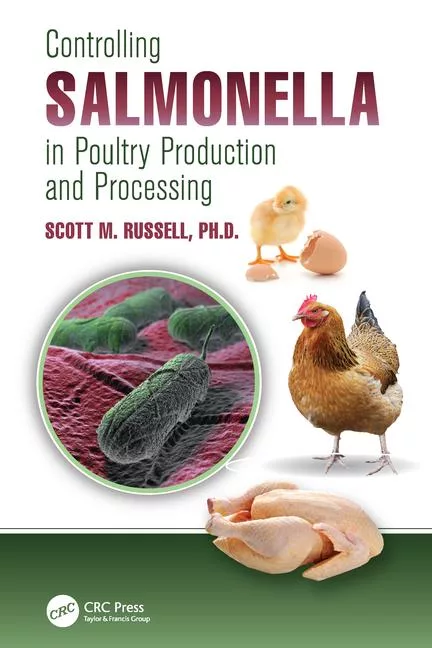
    Controlling Salmonella in Poultry Production and Processing

  • emerging.jpg

    Emerging Technologies in Meat Processing: Production, Processing and Technology

See More Products

Related Directories

  • A&B Ingredients

    With a deep-rooted heritage of research and development, A&B Ingredients is a clean label manufacturer and supplier of unique ingredients that enable food processors to develop new and improved products. A&B Ingredients offers a broad range of natural food ingredients that enable you to create added value food products.
×

Stay ahead of the curve. Unlock a dose of cutting-edge insights.

Receive our premium content directly to your inbox.

SIGN-UP TODAY
  • RESOURCES
    • Advertise
    • Contact Us
    • Directories
    • Store
    • Want More
  • SIGN UP TODAY
    • Create Account
    • eMagazine
    • Newsletter
    • Customer Service
    • Manage Preferences
  • SERVICES
    • Marketing Services
    • Reprints
    • Market Research
    • List Rental
    • Survey/Respondent Access
  • STAY CONNECTED
    • LinkedIn
    • Facebook
    • YouTube
    • X (Twitter)
  • PRIVACY
    • PRIVACY POLICY
    • TERMS & CONDITIONS
    • DO NOT SELL MY PERSONAL INFORMATION
    • PRIVACY REQUEST
    • ACCESSIBILITY

Copyright ©2026. All Rights Reserved BNP Media, Inc. and BNP Media II, LLC.

Design, CMS, Hosting & Web Development :: ePublishing