Processing Tech
Maintaining food safety when freezing, chilling
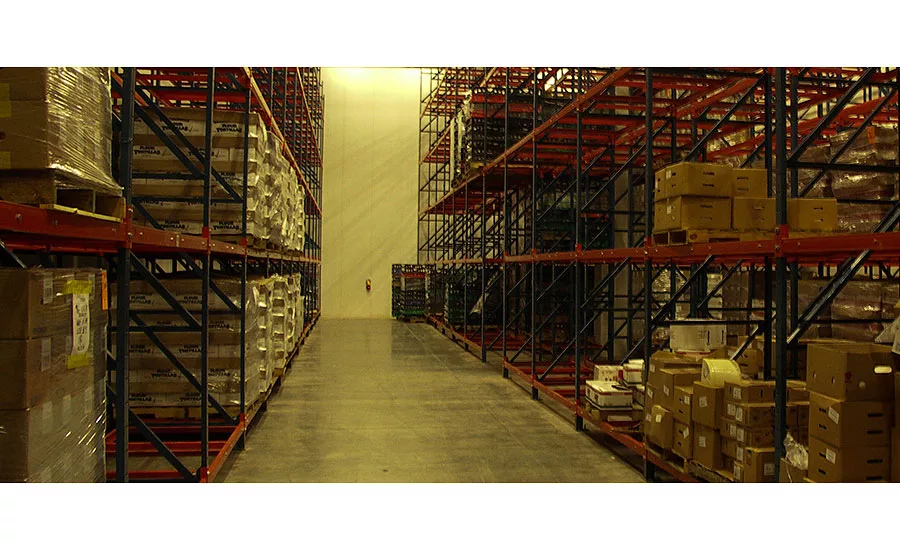
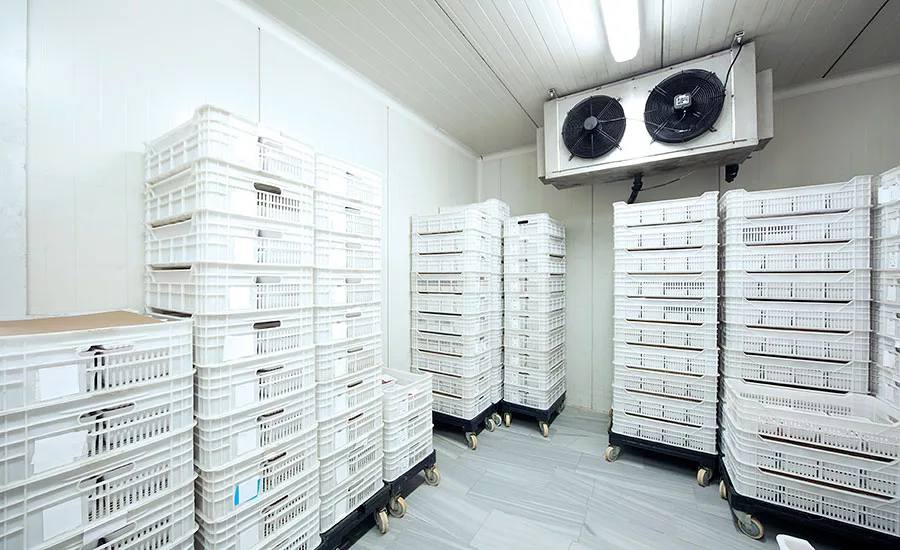
Most meat and poultry products requiring refrigerated or frozen storage conditions are necessary to prolong the shelf life of the item for food safety or quality reasons. While freezing puts bacteria into a dormant mode, refrigeration only slows the growth of bacteria.
“Pathogenic bacteria that can cause illness grows more rapidly in the 40 degrees Fahrenheit to 140 degrees Fahrenheit range,” says Ed Savard, vice president of food safety, compliance and engineering at Golden State Foods (GSF), Irvine, Calif. “Hence most raw proteins require 34 degrees Fahrenheit to 40 degrees Fahrenheit storage temperatures.”
Consistent temperature control is most important maintaining frozen and refrigerated food.
“Most foods are negatively affected by changes in storage temperature,” Savard says. “Moisture migration takes place when foods are subject to temperature swings even when those swings are still within a customer’s required range.”
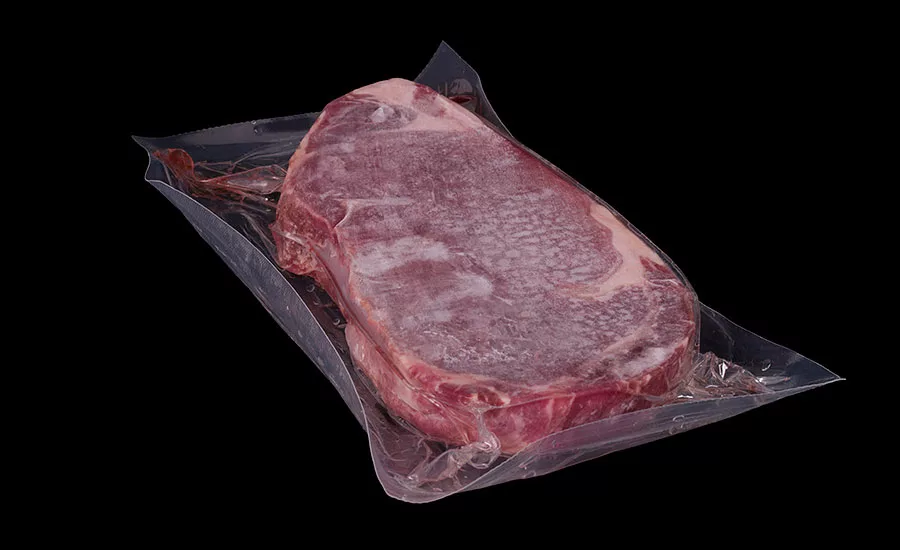
An example is a layer of frost accumulating on the surface of frozen beef patties. Another common result of temperature swings is dehydration, also known as freezer burn. Dehydrated/freezer burned/frost-covered products tend not to cook fully, Savard says.
Continuous temperature monitoring systems are required.
“At a minimum, a system should automatically record temperatures every 5, 10 or 15 minutes plus have the ability to send alerts via text, email or alarm,” Savard says. “Daily, weekly and monthly analysis should include a review of averages, standard deviations and deviations from the specified temperature ranges.”
New highly energy efficient hybrid ammonia CO2 cascade refrigeration systems like those installed recently at GSF Chicago provide safe and consistent temperature controls. In addition, all new GSF trailers have vector trailer refrigeration units installed on them.
“These vector units provide reduced maintenance, better reliability and lower energy usage, when compared to conventional mechanical systems,” Savard says.
Tom Osborne, director of food safety, quality assurance and regulatory affairs for AdvancePierre Foods (APF), Cincinnati, agrees that a processor’s diligence in maintaining adequate temperature of food products throughout the entire production process is essential. The U.S. Department of Agriculture’s Pathogen Modeling Program is another effective tool used to assess the chilling and freezing requirements of different food products, he says. In addition, APF’s freezing systems, both spiral and blast, are enclosed, and the company prohibits entry during normal operations.
In Bolingbrook, Ill.-based Liberty Cold’s environment as a public refrigerated warehouse, ammonia is the biggest safety concern to employees along with the safety of operating its material handling equipment. In addition, the company needs to conduct audits to evaluate its equipment to ensure it is safe to use and all of its employees have proper personal protective equipment to operate in harsh environments, says Tim Cox, vice president of Liberty Cold.
Sanitation considerations
Technology continues to evolve in aiding companies with their sanitation procedures by making equipment easier to disassemble for sanitation.
“Vendors strive to create equipment that minimizes harborage points for bacterial growth,” Liberty Cold’s Cox says. Additionally, the new technologies are more robust in terms of safety features to keep employees as safe as possible while operating the equipment, says Mark Porter, APF’s vice president of protein operations.
The cooler environments of freezing and chilling operations minimize bacteria growth, but maintaining clean and sanitary conditions throughout the facility are required. This includes minimizing frost buildup, cleaning of the refrigeration coils (evaporator coils), elimination of condensation, and an exceptional rodent and insect control program, says Gerald Lessard, vice president and chief operating officer of West Liberty Foods, in West Liberty, Iowa.
“For the most part, dry cleaning is practiced in freezing environments while chiller environments practice full sanitation on a periodic basis,” he says. “The sanitation frequency is determined by the products that are stored in the chilled space.”
In addition to the process safety management protocols for ammonia refrigeration, a cold storage facility should conduct ongoing preventative maintenance on exterior and interior doors, rack maintenance, floor repairs and power industrial truck maintenance, he adds.
At APF, the company assesses the design and cleanability of the entire system — from sanitation employee manpower and disassembly requirements to overall equipment design — when considering new chilling and freezing technology.
“Freezers must be completely thawed to properly complete the sanitation process,” APF’s Porter says. “From a maintenance perspective, routine inspection of the evaporator coils and proper cleaning of those coils is critical to ensure ongoing efficient operations. Additionally, a good defrost schedule is required to keep the coils clean and efficient.”
Having the appropriate systems and training in place is essential to delivering wholesome foods to commerce, to not only assess all potential chemical, physical and biological hazards associated with production but to make sure employees remain safe.
“The implementation of standard operating procedures built upon the seven measurable, science-based HACCP principles is critically important to safeguard against food safety hazards at all levels,” Osborne says. “We provide personal protective equipment training for associates and require training and process safety managing certification for anyone working with our ammonia refrigeration system.”
Besides using food-grade formulated sanitizing products, it is necessary that the sanitizer stays in a liquid state until it is dispensed on the freezer floor and captured back into the floor scrubber holding tanks.
“Any moisture introduced in a cooler or freezer environment will condense on the relatively cooler surfaces,” Savard says. “This will form frost and ice buildup that must be routinely abated. Any pedestrian or vehicle paths between ambient areas and a freezer and cooler should be kept shut as much as possible to minimize the potential of humid air from entering the colder spaces. Use of high-speed doors and timers to automatically close these pathways are common and must be maintained properly. Coolers and freezer are more difficult to keep clean because of the colder temperatures and moisture enables particles to adhere to racks or equipment. Excess moisture causes more potential for rust on doors and dock plates.”
The exterior of the cooler and freezer must be maintained as well to prevent any moisture from infiltrating the insulated panels.
“Moisture inside the panels will deteriorate the insulation factor of the panels leading to higher refrigeration operating costs, result in potential freeze/thaw cycles that further breach the seams permitting more warm moist air to enter and cool air to escape, and add weight to the panels that could stress the structural integrity of the freezer or cooler,” Savard says. “All seals must be periodically inspected for deterioration and any punctures be repaired. Any conduits above the freezer and cooler should be inspected for leaks and condensation that might permit moisture to fall onto the top of freezer and cooler structures. Insulation of the conduits or drip collection trays might need to be installed to prevent or divert the moisture from the surfaces.”
Proper design and following manufacturing recommended preventative maintenance is a must for the structures and refrigeration systems, Savard adds. Maintenance includes steps such as cleaning of condenser coils; cleaning of drains; and checking wiring, thermostats and refrigeration levels.
In chilled and frozen storage environments, usually a mix of ready-to-eat (RTE) and non-RTE foods is present more so than in an ambient storage areas. Therefore, it is important for storage and personnel practices that prevent cross-contamination from non-RTE to RTE foodstuffs.
“Segregation is a common means of accomplishing the storage prevention and changing of gloves when switching between [non-RTE] to RTE handling works for personnel practices,” Savard says. “Hand sanitizers and cleaning of spills are also emphasized. All cold weather garments should be cleaned regularly to avoid possible food contamination.”
In addition, proper personal protective equipment, such as insulated boots, freezer suits, gloves and winter hats, must be supplied to employees who work in the cold environment.
“Training would cover awareness to the dangers of prolonged exposure to the extreme cold including frostbite and loss of dexterity, wearing proper clothing for the environment, including footwear that would be ANSI [American National Standards Institute] rated and non-slip, and operating MHE [material handling equipment] in cold temperatures,” Savard says. “Rotation of personnel working in the colder environments is another consideration to prevent prolonged exposure.”
Additionally, only certified/licensed heating, ventilation and air conditioning employees or contractors should maintain or manage refrigeration systems, he says. Any systems that employ the use of ammonia also require hazardous material certification.
“Ammonia systems should have leak detection and alert systems to prevent inadvertent exposures to employees and the surrounding community,” Savard says. “Most refrigerants also are classified as ozone-depleting substances [ODS], and any refrigerant leaks need to be reported to the appropriate regulatory authorities.”
Moving forward, increased use of Internet connections to monitor refrigeration systems remotely is on the rise.
“Some systems will provide automatic intelligence to put systems in defrost when they need to rather than on a preset mechanical timer schedule,” Savard says. “This uses less energy and delivers better temperature control. Today, delivery trailers can be stopped and started remotely along with monitoring of temperature. In the future, we will be able to remotely upgrade refrigeration unit microprocessors. There will also be mathematical models that will accurately determine the core temperature of food without actually inserting a probe in the food. Sensors will be incorporated into the packaging to provide a visual indication if there has been any temperature abuse in the supply chain.”
Cox also believes the industry will continue to see growth in technology to minimize product handling in processing and warehouse facilities.
“In my field as a warehouse operator, there are more and more automated systems being erected to deal with safer product handling and minimizing labor in harsh conditions,” he says. “The less we handle food from farm to fork the better.” NP
Looking for a reprint of this article?
From high-res PDFs to custom plaques, order your copy today!