Ingredients
Batter and breading: Down but not out
Consumer health concerns affect the use of batter and breading in protein offerings, but ingredient changes are under way.
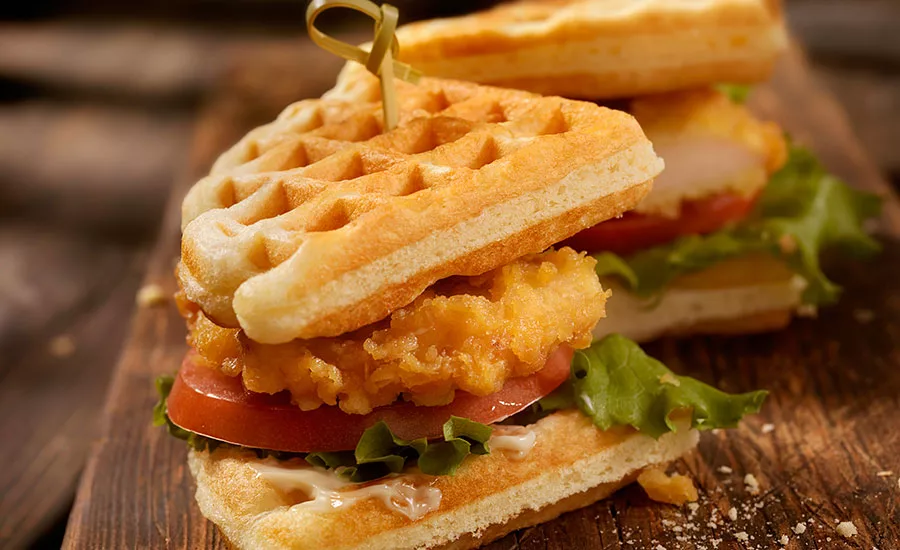
An increase in consumer focus on healthier living has led to a decrease in fried offerings from foodservice operator menus.
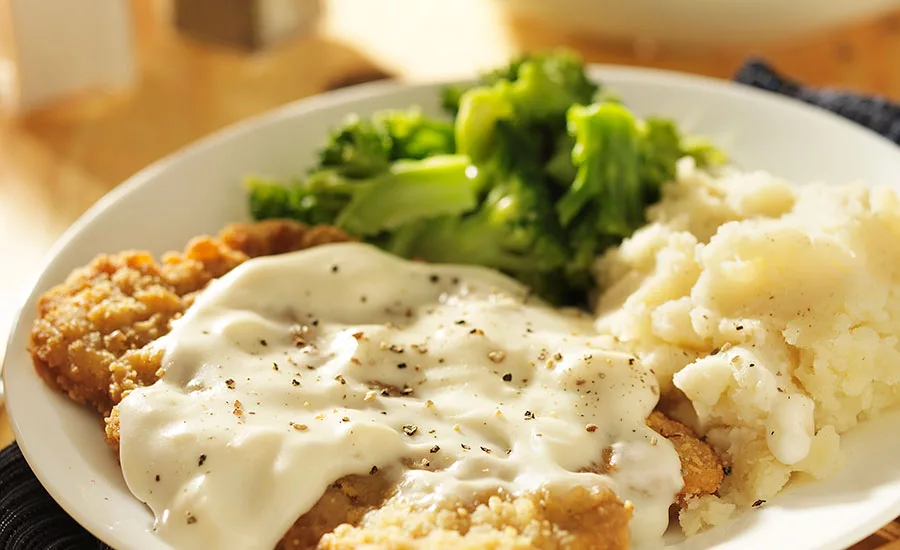
Foodservice operators combat the negative reputation of battered and breaded products by using healthier ingredients and positive terms to describe the elements.
The greater consumer focus on healthier living is altering the design of meat, poultry and seafood selections that contain batter and breading.
As shoppers become more selective about what they consume, items without a wellness aura — including traditional batter and breading selections — are dropping in popularity, leading retailers and foodservice operators to revise their protein options.
Volume sales of fresh and fully cooked meat and poultry with a “breaded” attribute were down 0.6 percent for the 52 weeks ending 8/27/16, reports Nielsen Perishables Group, a Chicago-based fresh foods consulting and research firm.
The health trend also is leading foodservice operators to eliminate more protein recipes with breading and batter from their menus.
Fried offerings, for instance, account for 18 percent of selections at the top 750 U.S. restaurant chains, down 6 percent from last year, notes Technomic Inc., a Chicago-based food and food service research and consulting firm.
“Consumers like foods with breading and batter, but more often than not, they end up feeling guilty after consuming the items,” says Maeve Webster, president of Menu Matters, an Arlington, Vt.-based food industry consulting firm. “They are using such foods for indulgent occasions and, unlike previously, are not purchasing the proteins every other time they go out.”
The name game
To combat the negative reputation of batter and breading, more operators are using healthier ingredients and positive terms to describe the presence of the elements.
Newer descriptors include “encrusted” to indicate that proteins encased in batter and breading have a dryer texture due to the removal of egg and other ingredients that might increase the fattiness of the items, Webster notes, while “dusting” signifies the use of dry ingredients.
“The terms ‘breading’ and ‘batter’ are declining as operators seek to describe the same items in more appealing and less guilt-ridden ways,” she says. “Fundamental formula changes also are spurring the use of new descriptors.”
Some manufacturers working to create lighter batters that maintain crispiness incorporate effervescent liquids such as seltzer, beer and champagne, and different types of milk in recipes, she notes.
“If an original recipe calls for whole milk, operators may instead use 2 percent, skim or almond milk,” Webster says. “They are innovating because while they still want to offer what people enjoy eating, many consumers believe that breading and batter are unhealthy.”
More product developers also are adding ingredients to breading and batter that are similar to the elements that consumers pursue in all foods, says Tom Super, vice president of the Washington, D.C.-based National Chicken Council (NCC). They include more natural and simpler ingredients, along with multi-grain, whole grain and gluten-free coatings, he says.
“Batter and breaded chicken parts are all undergoing improvements for more healthful eating,” Super says. “That includes both skin-on and bone-in; boneless products like nuggets, bites, strips and patties; and items that are frozen, refrigerated or available from the hot and chilled deli departments of supermarkets.”
In addition to wellness concerns, breading also is taking a hit because consumers are more conscious of the effect that foods have on their energy and mental acuity, Webster says.
In with the new
To still appeal to a wide range of potential consumers, retailers and foodservice operators can offer a broader mix of options that include proteins with different types of breading and batter, Webster says.
More selections, for instance, are including panko, a lighter breading commonly used in Japanese cuisine that is made from bread without crust. Panko is increasingly prominent on restaurant menus, growing 5 percent in the last year and 47 percent since 2012, reports Datassential, a Chicago-based food research firm.
Breading and batters with bold flavors also are increasingly popular.
Volume sales of meat and poultry with spicy breading rose 32.3 percent over the last year, while Buffalo style is up 11.4 percent and honey mustard grew 697.9 percent, Nielsen Perishables Group reports.
Sales of proteins with honey-flavored breading, meanwhile, grew 54.7 percent, and Southern style was up 83.7 percent.
“If breaded offerings are going to survive, they need to conform to consumers’ focus on health and wellness,” says Sarah Schmansky, Nielsen Perishables Group director of business operations. “But there also is significant growth occurring from injecting flavors into bread crumbs to make the items more interesting to shoppers.”
As the recipes for breading and batters evolve, it still is paramount for the items to remain tasty, Super says.
“With a little more money in their food budgets, both because retail food prices have generally eased and incomes for many families have marginally improved, consumers are trending toward more gourmet products,” he says.
It is especially important, Super notes, that product developers focus on enhancing the breading and batter in frozen fried chicken parts, which continue to undergo a sales erosion.
“While such products used to be considered convenient, hot to-go or chilled to-go items are now viewed as more convenient options,” he says, adding many shoppers are no longer keeping frozen fried chicken parts in their home freezers as food reserves.
“Spicier fried chicken coatings will receive stepped-up attention,” Super says. “While the trend toward hotter spiced products will remain a niche, it will also be a very important slice of the market for a number of companies.”
The power of perception
In addition to flavor upgrades, items that consumers perceive as being higher quality, such as proteins with breading and batter that operators create from scratch, are becoming more attractive, says Anne Mills, Technomic manager of consumer insights.
Other non-traditional breading, including multi-grain, cracker and additional light varieties, also are gaining popularity, she notes.
Sales of proteins with whole-grain breading was up 284.4 percent in the last year, Nielsen Perishables Group reports.
“There is greater interest in making breading and batter more appealing and better for you attributes, such as ‘made from scratch’ and ‘handmade,’ denote that the items are fresh,” Mills states. “While there still is room for traditional options, having a unique twist will add to the appeal and help items stand out.”
The demand for innovative flavors and ingredients is primarily driven by younger consumers, she notes, adding that more adults younger than 35 prefer beef that is fried for either lunch or dinner, and pan-fried or breaded for lunch.
The availability of meat, poultry and seafood selections with breading and batter, meanwhile, typically varies in accordance with geography and shopper demographics in each retail location.
Some retailers and manufacturers, for instance, still target consumers for whom health is not a major consideration in their food buying, Webster says, or live in regions where breading and batter play a traditional role, such as the south.
“Each individual grocery or restaurant will have to decide what is going to make the most sense for their operations,” she says. “But there never will be one good solution for everyone.”
Operators can attract a broader range of shoppers by appropriately enhancing the batter and brine used in meat, poultry and seafood recipes, says Claire Conaghan, Datassential senior account manager.
“Thinking through what appeals to demographics overall can be applied to the breading and batter categories as well,” she notes. “A more boldly spiced breading may appeal more to Millennials, while traditional accompaniments, like gravy and mashed potatoes, may perform better with Baby Boomers.”
While she agrees more consumers seek healthy and flavorful options with fewer calories, Conaghan says there remains an active market for traditional selections.
Yet operators must ensure consumers get the anticipated satisfaction from such items, she says.
“More and more we are seeing things called out as having been brined prior to frying, which lets consumers know that this splurge is going to have all the flavor and juiciness that they expect from a protein prepared in a splurge-worthy way,” Conaghan says. “Customers need to know that the splurge will be delivered to them fresh and have the crunch they expect.”’
A generational shift
While there always will be a segment of consumers seeking meat, poultry and seafood items with traditional breading and batter, overall demand will likely keep diminishing, particularly as children’s eating behaviors evolve.
While kids are major consumers of fish sticks and other proteins with breading and batter, Webster says a move by schools to offer healthier selections is leading children to sample alternative cuisines.
“Kids will begin eating more foods that do not containing breading and batter and that behavior is likely to carry on through adulthood,” she says. “Breading and battered items may then move away from being part of a standard diet in the U.S.”
Yet, because younger consumers are more willing to experiment with different types of cuisines, they also will drive operators to launch proteins with new formats of breading and batter, Webster says.
The different selections, including healthier breading and batter, will affect ongoing protein activity in varying ways, Super says.
“Organic batter and breadings will continue to appeal to a limited segment of consumers,” he says. “However, there is a growing uptick in non GMO food products. This trend could begin to play a more important role in the coatings of chicken items.”
This makes it more important for merchandisers to offer healthier batter and breading options while maintaining traditional recipes, Webster says.
“Millennials are far more comfortable with the idea of balanced indulgence,” she notes. “They can have something that is very unhealthy by common perceptions one day, and then eat something very healthy the next.” NP
Looking for a reprint of this article?
From high-res PDFs to custom plaques, order your copy today!