Provisioner logo
Provisioner logo
search
cart
facebook twitter linkedin youtube
  • Sign In
  • Create Account
  • Sign Out
  • My Account
Provisioner logo
Provisioner logo
  • NEWS
    • Industry News
    • Supplier News
    • Case Studies
    • Recalls
    • Regulations
    • New Consumer Products
  • EXCLUSIVES
    • Newsletters
    • Source Book
    • Sponsored Insights
    • Events
    • Webinars
    • Classifieds
    • White Papers
    • Provisioner Store
    • Market Research
  • MEAT PROCESSING
    • SUSTAINABILITY
    • Processing
    • Packaging
    • Ingredients
    • Formulation
    • Food Safety
    • Special Reports
    • Commentary
  • PROFILES
    • Processor Profiles
    • Processor of the Year
    • Top 100 Processors
  • MEDIA
    • Videos
    • Podcasts
  • DIRECTORY
  • MIHOF
  • INDEPENDENT PROCESSOR
  • EMAG
    • eMagazine
    • ARCHIVE ISSUES
    • Contact
    • Advertise
  • JOIN!
Meat and Poultry Industry NewsSustainabilityBeef

Feeding grazing cattle seaweed cuts methane emissions by almost 40%, research suggests

Findings at UC-Davis offer solution for more climate-friendly cattle farming.
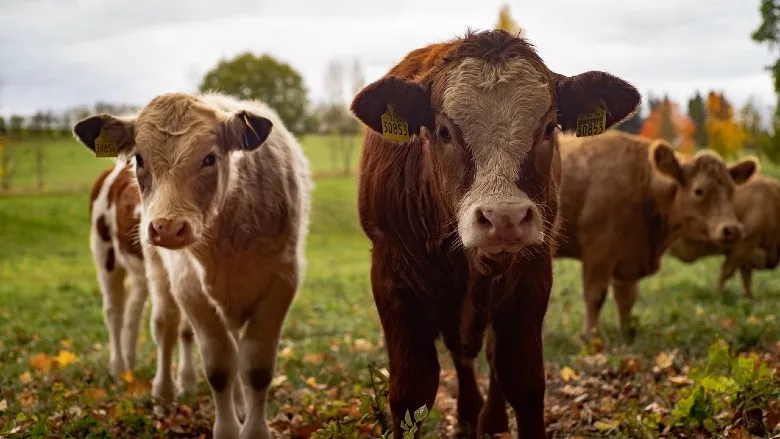
By Amy Quinton
Cattle
Image by René Schindler/Pixabay
December 23, 2024

Seaweed is once again showing promise for making cattle farming more sustainable. A new study by researchers at the University of California-Davis found that feeding grazing beef cattle a seaweed supplement in pellet form reduced their methane emissions by almost 40% without affecting their health or weight.

This is the first study to test seaweed on grazing beef cattle in the world. It follows previous studies that showed seaweed cut methane emissions 82% in feedlot cattle and over 50% in dairy cows.

How much methane do cattle produce?

Livestock account for 14.5% of global greenhouse gas emissions, with the largest portion coming from methane that cattle release when they burp. Grazing cattle also produce more methane than feedlot cattle or dairy cows because they eat more fiber from grass. In the US, there are 9 million dairy cows and more than 64 million beef cattle.

“Beef cattle spend only about three months in feedlots and spend most of their lives grazing on pasture and producing methane,” said senior author Ermias Kebreab, professor in the Department of Animal Science. “We need to make this seaweed additive or any feed additive more accessible to grazing cattle to make cattle farming more sustainable while meeting the global demand for meat.”

Difficulty in lowering grazing cattle emissions

Kebreab said that daily feeding of pasture-based cattle is more difficult than feedlot or dairy cows because they often graze far from ranches for long periods. However, during the winter or when grass is scarce, ranchers often supplement their diet.

For this study, researchers divided 24 beef steers (a mix of Angus and Wagyu breeds) into two groups: one received the seaweed supplement, and the other did not. Researchers conducted the 10-week experiment at a ranch in Dillon, Montana. Since these were grazing cattle, they ate the supplement voluntarily, which still resulted in a nearly 40% cut in emissions.

Most research to reduce methane emissions using feed additives have taken place in controlled environments with daily supplements. But Kebreab noted in the study that fewer than half of those methods are effective for grazing cattle.

“This method paves the way to make a seaweed supplement easily available to grazing animals,” said Kebreab. “Ranchers could even introduce the seaweed through a lick block for their cattle.” 

Kebreab said pastoral farming, which includes large grazing systems, supports millions of people around the world, often in areas vulnerable to climate change. This study suggests a way to make cattle grazing better for the environment and play a role in fighting climate change. 

A related article in the Proceedings of the National Academy of Sciences highlights the need to improve the efficiency of livestock production in low- and middle-income countries using better genetics, feeding and health practices. UC Davis Professor and Cooperative Extension Specialist Alison Van Eenennaam, the article’s author, said it is the most promising approach to meet the global demand for meat while limiting greenhouse gas emissions.

Other authors of the seaweed study include UC-Davis postdoctoral researchers Paulo de Méo Filho Paulo Meo-Filho and John-Fredy Ramirez-Agudelo.

The research was supported by Matador Ranch in Dillon, Mont.

Source: University of California-Davis

KEYWORDS: cattle greenhouse gas emissions livestock methane

Share This Story

Looking for a reprint of this article?
From high-res PDFs to custom plaques, order your copy today!


Amy Quinton is a news and media relations specialist at the University of California-Davis. She writes about agricultural research and veterinary sciences at UC Davis.

Recommended Content

JOIN TODAY
to unlock your recommendations.

Already have an account? Sign In

  • Double Charburger

    Premiumization drives burger category

    Shoppers seek out premium meat offerings to fulfill...
    Special Reports
    By: Sammy Bredar
  • JJS Adult Pekin duck

    Poultry Report 2025: Convenience propels poultry at retail

    Despite continued economic pressures, the poultry...
    Chicken
    By: Sammy Bredar
You must login or register in order to post a comment.

Report Abusive Comment

Manage My Account
  • eMagazine Subscriptions
  • Manage My Preferences
  • Newsletters
  • Online Registration
  • Subscription Customer Service
  • Connect with The National Provisioner

More Videos

Sponsored Content

Sponsored Content is a special paid section where industry companies provide high quality, objective, non-commercial content around topics of interest to the The National Provisioner audience. All Sponsored Content is supplied by the advertising company and any opinions expressed in this article are those of the author and not necessarily reflect the views of The National Provisioner or its parent company, BNP Media. Interested in participating in our Sponsored Content section? Contact your local rep!

close
  • A smiling man carrying a grocery basket is reaching down to pick up a package of meat in a grocery store.
    Sponsored byPIC

    The Green Light: New Data Shows 12-to-1 Support for Pork from PRRS-Resistant Pigs

  • Close up of a grocery cart full of groceries, a cropped image of a couple pushing the cart and a blurred background of the vegetable aisle.
    Sponsored byPIC

    New Market Research Finds Consumers in Eight Key Pork Markets Are Likely to Purchase Pork from Gene-Edited Pigs

  • Close up of a young pig with a blurred background.
    Sponsored byPIC

    New Research Forecasts Significant Economic and Market Impacts with PRRS-Resistant Pig Adoption

Popular Stories

Spam Dog

Hormel rolls out Spam hot dog for foodservice applications

Colorado Premium logo

Colorado Premium acquires Old Hickory Smokehouse

Niman Ranch Uncured Grass-Fed Beef Bacon

Niman Ranch introduces beef bacon

2026 Top 100 Meat & Poultry Processors Report

Events

June 11, 2026

From Fresh to Frozen in 3 Minutes Flat: Unlocking the Secrets to Temperature Control

Join Tony Vacaro, Foods Industry Manager, and Emile Klein, Foods Market Strategy Manager at Air Products and Chemicals, Inc. , as they tackle key questions surrounding heat removal in food processing. 

January 1, 2030

Webinar Sponsorship Information

For webinar sponsorship information, visit www.bnpevents.com/webinars or email webinars@bnpmedia.com.

View All Submit An Event

Products

Food Crime: An Introduction to Deviance in the Food Industry

Food Crime: An Introduction to Deviance in the Food Industry

See More Products
From Fresh to Frozen in 3 Minutes Flat: Unlocking the Secrets to Temperature Control Webinar Sponsored by Air Products

Related Articles

  • Cattle

    Gut genes may hold key to lowering methane emissions

    See More
  • A curious cow peeks through a gate at a UF/IFAS research facility

    Feeding cows seaweed to reduce methane emissions

    See More
  • Cattle herd shrinks to lowest in almost 40 years; Australian feedlot cattle up 11%

    See More

Related Products

See More Products
  • GlobalData_logo_blue_header.png

    Chilled Raw Packaged Meat - Whole Cuts (Meat) Market in the United States of America - Outlook to 2023...

  • utilization.jpg

    Food Processing By-Products and their Utilization

See More Products

Events

View AllSubmit An Event
  • August 23, 2016

    Feeding Quality Forums

    Don’t miss your chance to hear industry experts share current insight on market conditions, a discussion on yield grading, finish dates on cattle, antibiotic stewardship in the feed yard and external influences affecting the industry.
View AllSubmit An Event

Related Directories

  • American Cutting Edge

    American Cutting Edge (ACE) supplies food processing and packaging machine knives and industrial razor blades. Founded in 1965, ACE simplifies industrial cutting by listening to client needs and offering tailored solutions. With a vast inventory, ACE provides off-the-shelf or custom products, ensuring efficient, hassle-free cutting for every application.
×

Stay ahead of the curve. Unlock a dose of cutting-edge insights.

Receive our premium content directly to your inbox.

SIGN-UP TODAY
  • RESOURCES
    • Advertise
    • Contact Us
    • Directories
    • Store
    • Want More
  • SIGN UP TODAY
    • Create Account
    • eMagazine
    • Newsletter
    • Customer Service
    • Manage Preferences
  • SERVICES
    • Marketing Services
    • Reprints
    • Market Research
    • List Rental
    • Survey/Respondent Access
  • STAY CONNECTED
    • LinkedIn
    • Facebook
    • YouTube
    • X (Twitter)
  • PRIVACY
    • PRIVACY POLICY
    • TERMS & CONDITIONS
    • DO NOT SELL MY PERSONAL INFORMATION
    • PRIVACY REQUEST
    • ACCESSIBILITY

Copyright ©2026. All Rights Reserved BNP Media, Inc. and BNP Media II, LLC.

Design, CMS, Hosting & Web Development :: ePublishing