Special Report
2017 Seafood Report: Riding the wave
Seafood consumption is up as consumers reinvent old classics.
Americans consumed about 5 billion pounds of seafood or almost an extra pound of fish and shellfish per person in 2015, according to the annual Fisheries of the United States Report (latest data available at presstime) from the National Oceanic and Atmospheric Administration (NOAA), making it the largest annual increase in seafood consumption in 20 years — and the second largest consumer of seafood in the world after China.
So, the average American ate 15.5 pounds of seafood in 2015, compared with 14.6 pounds in 2014. This extra 0.9 pounds of fish breaks down to 4.77 ounces of seafood a week or four extra meals a year. Not bad, but still a ways off the Dietary Guidelines recommendation of 8 ounces of seafood a week.
“Seafood is proliferating every channel, because consumers are interested in its health halo of being better for you,” says Steven Johnson, grocerant guru and founder of Foodservice Solutions, based in Tacoma, Wash.
What’s holding Americans back from eating even more seafood? A number of factors could be limiting consumption such as confusion over sustainability and warnings about mercury and seafood consumption for pregnant and nursing women.
The USDA’s American’s Seafood Consumption Below Recommendations article also points to consumers’ apprehension about preparation methods, higher retail prices, mislabeling of imported seafood products and unfamiliarity with seafood’s health benefits.
But it could also be as simple as a matter of taste. Chicago-based Mintel’s Fish and Shellfish — U.S. November 2016 report notes consumers avoid seafood because they don’t like the taste (63 percent), don’t like the smell (42 percent) and say they have fish/shellfish allergies (12 percent).
Seafood consumption pales next to the 59.2 pounds of chicken and 51.7 pounds of beef eaten in 2014, according to figures from the North American Meat Institute.
Consumers, however, did spend $96 billion on fishery products in 2015, which includes $64.8 billion at food service and $31 billion in retail sales, notes the NOAA.
The NOAA doesn’t call out the most popular seafood species or products, but the National Fisheries Institute reports shrimp, salmon and tuna are still the most consumed seafoods.
Want more?
Read our Seafood Report Archives to see how 2017 compares to previous years.
Alaska Seafood Marketing Institute shares ideas for promoting Alaskan seafood at retail.
In addition, canned tuna reigns as the most popular canned seafood, as consumers eat 2.2 pounds of it compared with 0.3 pounds of canned salmon.
Dining out at grocerants
The seafood category is expected to grow 8 percent from 2016 to 2021, according to Mintel’s Fish and Shellfish report.
Consumers are certainly seeking fresh options, as the $10 billion fresh fish and shellfish category segment increased 7.2 percent in sales from 2014 to 2016, Mintel reports.
Prepared seafood dishes at the grocerant side of the store should grow as consumers look for meals and meal kits, Johnson says.
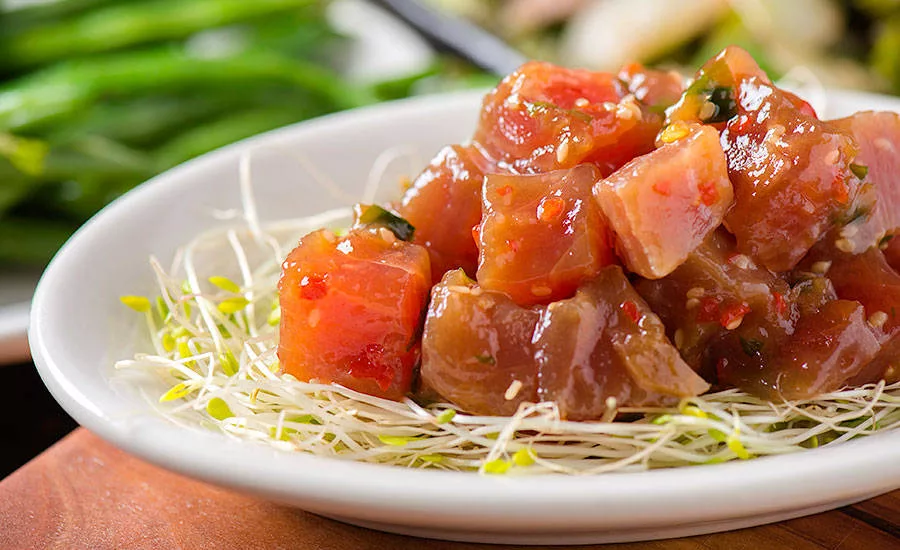
“Consumers will experiment more with fresh seafood, sushi and particularly poke,” Johnson says. “Poke is $15.95 a pound but selling like hot cakes on the West Coast and is driving interest in seafood.”
In fact, the National Restaurant Association named the Hawaiian specialty — a cubed, fresh, raw seafood-like tuna or octopus mixed with soy sauce, green onions and sesame oil served over rice — a hot trend for 2017.
“Millennials and Gen Z don’t have negative stereotypes of seafood, and enjoy discovering new foods for themselves,” Johnson says. “Most don’t know how to cook or prepare seafood, though, so they buy prepared options — fueling the grocerant edge. Meal components are very important to young shoppers.”
Consumers are also interested in wild-caught fish, but worry about its cost and potential toxins, according to Mintel’s report. They may embrace more farm-raised products if they can claim environmentally responsible production methods.
In contrast, the $2.3 billion shelf-stable fish and shellfish category’s sales continue to struggle as consumers seek fresh choices, Mintel reports, which should only continue.
Frozen seafood manufacturers are able to promote their products’ nutrition and flavor from flash freezing, notes Mintel, allowing them to maintain a 0.2 percent increase in sales from 2014 to 2016 of $4.6 billion.
Reinventing classic dishes
The number of shellfish and fish entrees on menus is decreasing, according to seafood data from Datassential’s MenuTrends database.
“Over the past four years, shrimp is down 4 percent in menu penetration, the term fish is down 4 percent, crab is down 10 percent, tuna is down 9 percent, the term seafood is down 13 percent and scallop is down 13 percent,” says Joe Garber, marketing coordinator at Datassential, based in Chicago.
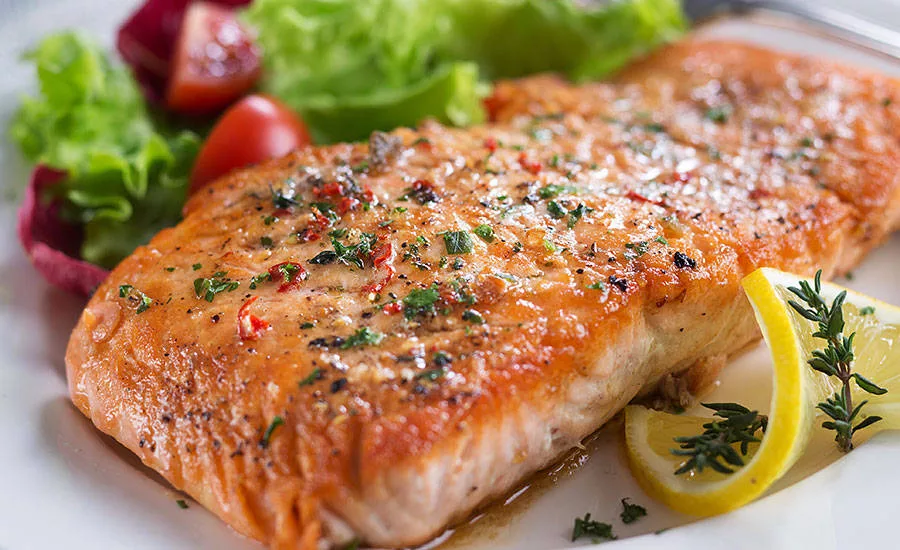
Salmon is one of the only top terms showing growth, up 3 percent over the past four years, Garber says.
Technomic’s MenuMonitor shows fish in entrees has increased 0.8 percent, in appetizers by 3.2 percent and on kids’ menus by 10.3 percent.
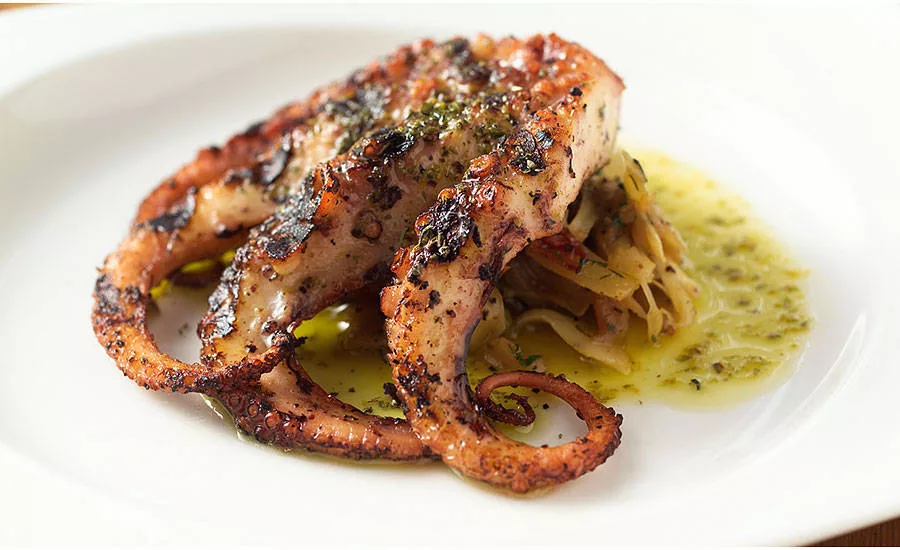
As far as specific proteins in this category, the top growers are grilled octopus (up 140 percent in menu penetration over the past four years), branzino (93 percent), cured salmon (75 percent) and smoked trout (50 percent), Garber says.
“That said, lots of seafood-driven dishes are on the rise: shrimp and grits is up 153 percent over the past four years, crudo [often used with fish] is up 98 percent, tartare [which is most often tuna or steak] is up 59 percent, and poke is up 56 percent,” Garber says.
Beer-battered fish and cod are also growing, up by 35 percent, he says.
“While many classics are decreasing, some of the classics are being reinvented,” Garber says. “While shrimp is down, shrimp and grits is on the rise. Salmon is increasing slightly with cured salmon in particular being a unique presentation.”
Increasingly, diners want to know where their fish was caught.
“Sourcing and prep method are both key,” Garber says. “Many trending terms speak to raw preparations, which indicates to consumers a quality protein that can be highlighted raw. More places are also noting where seafood comes from, using terms like Scottish salmon [up 39 percent] and Atlantic cod [up 39 percent].”
Sustainability terms will gain traction among younger consumers as their definition of healthy eating continues to change. In fact, 40 percent of consumers perceive sustainable foods to be healthier, according to Chicago-based Technomic’s Healthy Eating Consumer Trend Report 2016.
“Eco-friendly sourcing could help chains gain a reputation for quality and health, while adapting to younger consumers’ differing approaches and attitudes toward health,” says Patricia Cobe, senior editor of menu analysis at Technomic.
And consumers are more likely to try seafood entrees at upscale full-service restaurants, notes Cobe. “A fish or shellfish entree was chosen by 44 percent of consumers at upscale concepts, compared to 35 percent at family dining restaurants and 38 percent at traditional casual-dining spots,” she says, pointing to Technomic’s Future of FSR Consumer Trend Report.
New items to watch for are crab-topped fish dishes, chimichurri-topped shrimp entrees, fish belly, redfish and yes, poke, notes Technomic.
“Consumers are also seeking seafood that incorporates fresh, trendy, next-level concepts,” Garber says. “Chicago is one place that has seen several new seafood concepts pop up, from Cajun style buy-by-the-pound seafood boils to house-cured fish.” NP
Looking for a reprint of this article?
From high-res PDFs to custom plaques, order your copy today!