Record-high beef cattle prices squeeze packers
Broiler prices see a strong boost from value-added product interest.
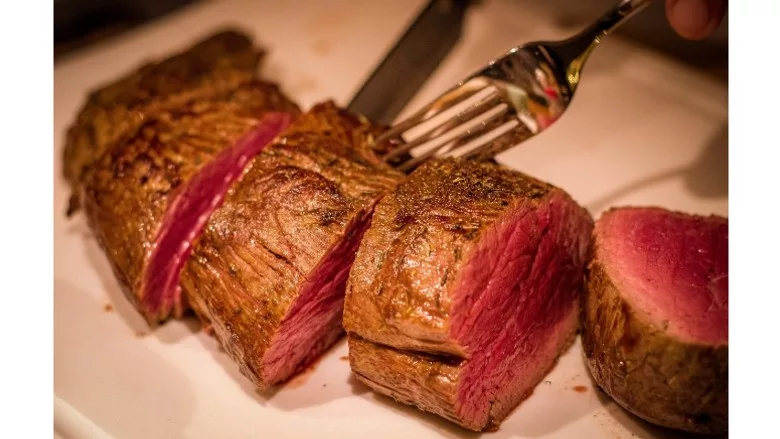
Sliced steak
Photo courtesy of Christoph Gutinger/Pixabay
Declining labor force participation, lower birth rates and a collapse in net migration are combining to squeeze the US labor supply. The looming labor shortage could begin to weigh on businesses and strain economic growth as soon as later this year, according to a new quarterly report from CoBank’s Knowledge Exchange. With the labor supply about to get tighter, businesses and industries operating in rural America should be increasing their focus on technology to overcome labor availability challenges.
“Barring an unforeseen change in labor force participation rates or immigration policies, the pool of available workers is set to shrink precipitously in the next few years,” said Rob Fox, director of CoBank’s Knowledge Exchange. “The problem will be even more acute in states with lower population growth in the Upper Midwest, Corn Belt and the Central Plains. Increased adoption of technology, namely AI and robotics, will likely be at the core of any strategy to address the oncoming labor squeeze.”
The labor force participation rate has trended downward since 2000, and the trend may be accelerating. Nearly 2.5 million working-aged people dropped out of the labor force in the past eight months alone. The US fertility rate has plummeted since the Great Financial Crisis in 2008, reducing the number of native-born citizens entering the workforce. The loss of those new workers coincides with baby boom generation retirements, amplifying the impact on the overall labor supply. Those two factors, combined with more restrictive immigration policies and aggressive deportation efforts, will put significant stress on the US labor supply with the potential to impede economic growth.
US government affairs
President Donald J. Trump scored a major legislative victory with the passage of the One Big Beautiful Bill Act. As with all budget reconciliation efforts, politics took center stage – and this one may have caused the deepest political rift in a decade. Fights over the farm program policy and funding addressed in the OBBBA left the traditional farm bill coalition in Congress fractured, and longstanding industry alliances in doubt. Farmers and ranchers still walked away with significant wins. But rural economic development programs were cut or left out entirely, and domestic food assistance received its largest funding cut in history. In all, total farm bill program funding took a nearly $200 billion hit.
Animal protein
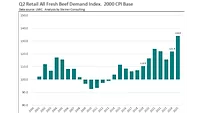
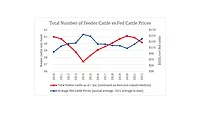
Record high beef cattle prices continue to support strong margins for cow-calf producers and feedlot operators, while squeezing packers. Calf prices hit a record $405 per cwt. in May, up 25% year-over-year. Tight supplies have pushed feeder and fed cattle futures up at a similar pace. Feeder cattle futures for the nearby August contract were trading at $302 per cwt., up 18% from a year ago. The supply of Prime and Choice graded beef is at its highest level since 1988, as US beef producers have focused on improving meat quality to effectively boost demand.
Domestic and international demand for pork is gaining momentum with the start of grilling season and lower cold storage inventories. Hog prices have jumped significantly through June. Lean hog futures on the CME surpassed $112 per cwt. in June, the highest since July 2022. The pork carcass cutout value rose to average $103 per cwt. in the second quarter. Inventories of pork in cold storage were down 7% year-over-year, signaling strong international demand for US pork. Domestically, new marketing campaigns are promoting pork’s taste and flavor, encouraging an upward move in prices for producers.
The US broiler sector entered 2025 well positioned to serve the restaurant industry’s desire to show consumers an inflation-busting animal protein offering. Promotional activity and new chicken menu items throughout the quick-service restaurant sector are meeting consumer demand for a value-added meal. Production of eggs and broiler meat are improving and setting new records to help meet the growing demand. Broiler prices have seen a strong boost from value-added product interest. Seasonal market pressure is likely as the year progresses, but demand should remain relatively stable.
Farm supply
Agriculture retailers and farm supply cooperatives enjoyed strong spring agronomy sales due to good weather conditions and increased corn acres. However, pre-sales for the 2026 growing season are projected to soften due to tariff uncertainty, higher interest rates and farmer profitability constraints. As farmers look to minimize losses, many may choose to limit chemical applications. Agriculture retailers are delaying buying decisions and inventory builds due to higher input prices. USDA’s latest cost of production estimates show no relief in sight and a slight increase from 2025 into 2026.
Food sales
Food brands are reporting less-than-stellar earnings in the most recent quarter, with companies from PepsiCo to Kraft Heinz lowering their fiscal year guidance. Others are taking a wait-and-see approach to the impact of tariffs and higher prices on their overall performance. KPMG’s April 2025 consumer survey found 69% of consumers are eating more at home, with 85% of those citing budget constraints. Restaurants are feeling the shift in consumer spending. Virtually all major chains in the country have experienced notable declines in recent quarters. Restaurants laser-focused on delivering value have had the best success in recent months.
Source: CoBank
Looking for a reprint of this article?
From high-res PDFs to custom plaques, order your copy today!