State of the Industry
State of veal: Housing on track, profitability is back
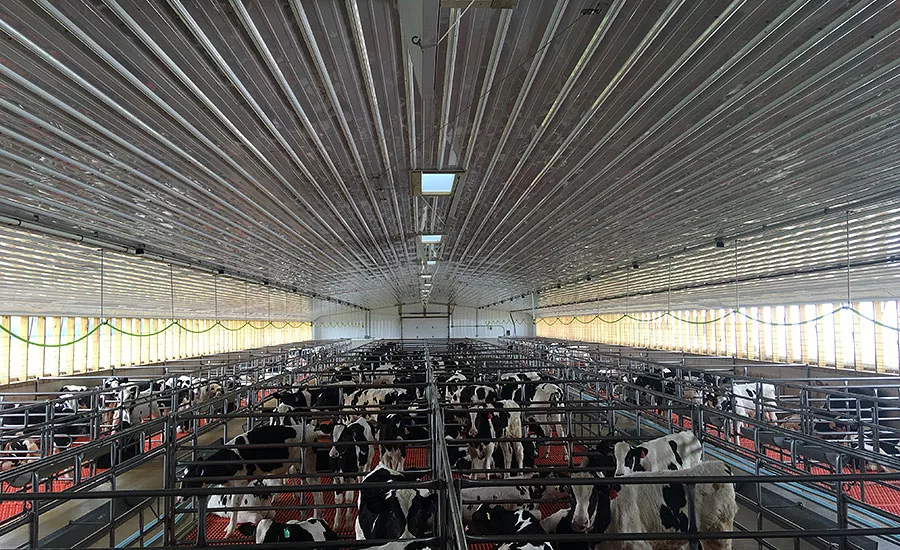
Veal barns now feature group pens, where calves are grouped together based on age, size and temperament.
PHOTO COURTESY OF THE AMERICAN VEAL ASSOCIATION
America’s veal farmers are closing in on a significant achievement. A decade ago when a national conversation on animal housing was in its infancy, veal producers chose to act.
“We made a commitment on animal housing when others were just beginning to talk about it,” says Dale Bakke, president of the American Veal Association. “Around 90 percent of milk-fed veal calves are in group housing today and we expect to complete the transition by the end of next year as we said we would back in 2007.”
By the end of 2017, veal farmers will have invested more than $50 million in new and renovated barns that provide an environment for calves to be comfortable and thrive.
“The housing changes are significant compared to a decade ago,” says Brian Friesen, president of Marcho Farms, an AVA member organization. “Group pens allow calves to stand, stretch, lie down, groom themselves and socialize with other animals. This is now the industry standard for milk-fed veal.”
Veal industry leaders are confident the investment will pay off as animal well-being continues to grow as a consumer selling point, especially among the 18- to 35-year-old Millennial demographic — expected to make up half the U.S. work force by 2020.
“I think we can build support with the younger generation,” says Tony Catelli, Catelli Brothers’ president and CEO and a member of the AVA board of directors. “They will appreciate our commitment to animal welfare and food safety.”
AmericanVeal.com was updated in 2016 to showcase the significant changes. The photo gallery features images of new veal barns in the U.S. One can see how calves are grouped together based on age, size and temperament.
The industry commitment and progress toward group housing makes state initiatives for banning veal crates unnecessary. The veal industry’s efforts demonstrate its willingness to listen to consumers and balance that with the need for science-based practices for animal care.
“Industry solutions that address consumer preferences are more beneficial to everyone rather than regulating that change,” Bakke says.
Profitability equals affordability
From an economic perspective, the veal industry is on the rebound. Production costs, at an all-time high last year, are down dramatically. A week-old Holstein bull calf last year sold for $500 or more per head in some regions. Today, that same calf brings $150.
“We are a very competitive protein now,” Bakke says. “This is a growth year for veal. Lower cost of production means aggressive retail featuring.”
Traditionally viewed as a niche market product, a return to profitability for growers means a more attractive price can be offered at the retail level.
“With production costs down, we are able to lower our pricing to a level that allows the retailer to feature veal on a regular basis, something that was pretty much non-existent last year,” Catelli says. “This has also put many veal cuts sold in foodservice — products such as loin chops, cutlets and Osso Bucco — back at a price point that gives the restaurateur desired margin in comparison to other center-of-the-plate proteins.”
History has shown a veal shopper at the retail level averages a higher ring per basket than a non-veal shopper, Catelli says.
“They tend to have a higher income and are attracted to more expensive beef cuts along with such things as wine and cheese,” Catelli says. “A wide variety of veal cuts at different price points drives that shopper to the meat case. I think we’ll also see veal offered more frequently as a special in many restaurants for the same reasons.”
VQA certifies quality care
Created 25 years ago and updated in 2014, Veal Quality Assurance (VQA) is a program of science-based best practices developed by farmers, industry leaders and animal care experts to ensure veal calves receive quality care through every stage of life and are raised using production standards that result in a safe, wholesome, quality product that meets or exceeds regulatory standards and customer expectations. Specifically, VQA is designed to address all aspects of animal care and on-farm practices that will enhance veal calf quality.
“Veal growers recognize that we are expected to produce food in a responsible manner — consistent with consumer values,” Bakke says. “VQA allows veal farmers to certify their commitment to doing the right thing.”
Education is a key component of the program regarding animal handling, health and nutrition best practices. A veterinarian-client-patient relationship is also required to meet the VQA certification requirements. Individuals raising veal must be recertified every two years. VQA resources are available at www.VealFarm.com. A technical review and update of the program is planned for 2017.
Progressive, innovative
While USDA data shows Americans on average consume only about a half-pound of veal annually, industry leaders are confident a commitment to innovation and continuous improvement will make a difference. Highlighting the veal industry’s commitment to food safety is a key selling point for U.S consumers. American veal is raised with veterinary oversight using only FDA-approved animal health products. State-of-the-art processing plants also have unique USDA-approved interventions to control STECs, making American milk-fed veal the safest in the world.
Bolstered by a return to profitability, veal growers see brighter days ahead and feel enhanced marketplace recognition is well within reach. NP
State of the Industry 2016 segments
| Industry overview | Goes live Oct. 14 |
| Beef (CAB) | Oct. 18 |
| Beef (NCBA) | Oct. 19 |
| Pork (Pork Board) | Oct. 20 |
| Pork (Sun Trust) | Oct. 21 |
| Chicken | Oct. 24 |
| Turkey | Oct. 25 |
| Veal | Oct. 26 |
| Lamb | Oct. 27 |
| Food Safety | Oct. 28 |
| Packaging | Oct. 31 |
Looking for a reprint of this article?
From high-res PDFs to custom plaques, order your copy today!